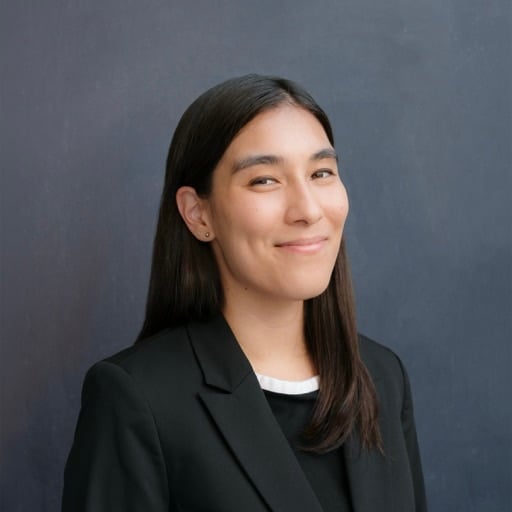
For Kristy Carpenter, PhD, some of the most challenging questions in medicine may have answers hidden within data.
From understanding how drugs interact with proteins at the molecular level to identifying patterns related to the opioid crisis, her research uses computational methods and machine learning to uncover insights that could inform drug discovery and deepen our understanding of human health.
Carpenter will bring that perspective to the Department of Biomedical Informatics (DBMI) at the University of Colorado Anschutz (CU Anschutz) School of Medicine, joining the faculty as an assistant professor after completing her PhD in Biomedical Informatics at Stanford University earlier this year.
“It’s a really exciting opportunity to have the support of the department, and to be able to collaborate with the amazing faculty and students who are here,” Carpenter shared.
As she begins the next chapter of her career at CU Anschutz, Carpenter is looking forward to building an independent research program, developing new collaborations and exploring how computational approaches can help address complex biomedical challenges.
“Dr. Carpenter studies both the molecular and social sides of substance use, which is unusually broad. I expect this will lead her to solutions others wouldn’t think to try,” said Casey Greene, PhD, chair of DBMI.
Finding a home at the intersection of computation and biology
Carpenter’s research journey did not begin with computational drug discovery for substance use disorders.
Instead, what started as a grad-school side project would eventually become a core catalyst for the research she is now pursuing at CU Anschutz.
Carpenter’s undergraduate research at the Massachusetts Institute of Technology (MIT) mostly focused on machine learning for structural biology.
As she began searching for and applying to graduate school programs, Carpenter was primarily looking at bioinformatics and biomedical informatics (BMI) programs. “What drew me towards doing a PhD in a BMI-type department is its interdisciplinarity,” said Carpenter.
“You have people who are fluent in both languages,” explained Carpenter. “You have people who are experts at using computational methods and writing code, but then also well-versed in biomedical domain applications. That's something that I really value.”
Exploring research avenues
As Carpenter moved into graduate school to pursue her PhD in Biomedical Informatics, she continued to explore different research areas while primarily focusing on computational structural biology.
Then, during the second year of her PhD program, Carpenter joined a multidisciplinary collaboration leveraging social media text in service of informing addiction medicine research.
Essentially, the team was looking at how they could use natural language processing (NLP) techniques, including large language models (LLMs), to forecast trends in the opioid epidemic. This would allow them to better understand trends in overdoses, which could help inform intervention needs such as distribution of Narcan.
“The challenge with social media,” Carpenter explained, “is that people use slang terms. They use casual speech. They might have misspellings. And they also will use intentionally evasive language to not get censored by the algorithm. It's different from the type of NLP analysis that can be done on research articles or PubMed abstracts where you can use a fixed vocabulary of opioid-related keywords.”
This became an interdisciplinary project that integrated researchers and perspectives across epidemiology, psychiatry, and psychology. “It was always meant to be a side project, and my main thesis was going to be on developing AI methods for molecular structure. But I started spending a lot of time on the project, and I was really enjoying it—and I think one thing that really motivated me to continue to pursue this area of research is the addiction medicine community.”
Finding new medications for opioid use disorder
During this time, an opportunity came along that opened the door for Carpenter to synthesize her interests. She participated in the Drug Repurposing and Repositioning Insights for Treating SUDs Challenge sponsored by the National Institute on Drug Abuse (NIDA), which would allow her to bring together her interests and experience working across addiction-related research, machine learning and artificial intelligence (AI) and computational structural biology.
“We already have two really good established medications for opioid use disorder,” explained Carpenter. “Methadone and buprenorphine. But they don't work for everybody ... So, we want to be able to expand the toolbox.”
Carpenter began to search for possible candidates. In her research, she came across a drug called telmisartan. “When telmisartan—a hypertension drug—came back as the top result, I thought that was weird because it doesn't make much sense, right? I was expecting something like a psychiatric medication. But then when I looked more into it, I saw that unlike all the other hypertension medications, telmisartan can cross the blood-brain barrier, which means that it can act in the brain.”
This sent her on a journey to learn more about telmisartan and whether it would serve as a possible candidate.
After further research, Carpenter found that there was data suggesting that telmisartan had weak binding activity to mu-opioid (μ-opioid) receptors—receptors that are known to bind opioids. Telmisartan has also been observed to attenuate neuropathic pain, reduce alcohol consumption of alcohol-preferring rats and be associated with neuroprotection. Carpenter submitted the proposal to NIDA, and the team won the challenge.
This experience sparked Carpenter’s work with repurposing drug candidates for substance use disorders—a research ambition that she will continue as she begins at CU Anschutz.
Turning research interests into impact
When Carpenter arrives at CU Anschutz, she won't just be starting a new position; she'll also be taking the first steps toward building an independent research program of her own.
With interests spanning drug discovery, machine learning and substance use disorders, Carpenter sees opportunities to ask questions across different types and scales of biomedical data while collaborating with researchers throughout CU Anschutz.
And after years of training at MIT and Stanford, she's ready to begin the next phase of her career, this time as a faculty member, mentor and collaborator.
“I've been meeting with a lot of great people in different departments. I'm excited to have some cool collaborations, both within DBMI and with clinicians and wet-lab biologists from other departments. And I'm definitely looking forward to working with students. It is all very exciting.”