In the quarter-century that Mamuka Kvaratskhelia, PhD, has been studying HIV, the human immunodeficiency virus, and hunting for ways to defeat it, he has reached a conclusion about his adversary.
“HIV is smarter than us,” he says. “It's a tiny, tiny virus, but it's very complex. We’re still trying to figure it out and develop new drugs against it, because this tiny virus has evaded vaccines and developed resistance to amazing drugs we have been using against it. We still don't have a cure for HIV. So, how does this virus manage to do that? And how can we deal with it? It’s a quite fascinating problem.”
Kvaratskhelia, a biochemist by training, is a professor in the University of Colorado Anschutz Department of Medicine’s Division of Infectious Diseases. His research into HIV-1— the most common type of the virus that causes AIDS (acquired immunodeficiency syndrome)—seeks to answer how the virus works at a molecular level to enter a cell, copy itself, and spread; and to translate those findings into new therapies—especially long-lasting drugs that don’t need to be administered as often as existing treatments.
Kvaratskhelia is widely esteemed in the field of HIV structural biology and antiviral drug discovery, accumulating thousands of research citations of his work, receiving frequent invitations to speak at scientific meetings, and serving as principal investigator on multiple major National Institutes of Health (NIH) R01 grants over the last two decades.
Kvaratskhelia’s basic-science research has helped expand understanding of the mechanism of action of currently used therapies and of resistance to them. It has also helped pioneer new drug classes in clinical trials for HIV treatment.
“Mamuka is incredible. He is an important figure in scientific discovery in HIV, and what he is doing is so important clinically for patients. It’s huge,” says Wendy Armstrong, MD, FIDSA, herself a leading expert on HIV. Armstrong is head of the Division of Infectious Diseases, and president-elect of the Infectious Diseases Society of America.
A disease of disparities
Today, HIV does not loom in the public consciousness as prominently as it did when it emerged in the 1980s, a time when developing AIDS amounted to a death sentence. Today, there is an arsenal of treatments as well as pre-exposure prophylaxis—known as PrEP—to reduce the risk of infection.
But HIV is still with us. An estimated 1.2 million people in the U.S. have the virus, and about 38,000 people in the U.S. were diagnosed with HIV in 2022 alone. Worldwide HIV infection is estimated at 41 million people, with deaths from AIDS-related illnesses in 2024 alone estimated at 490,000 to 820,000.
“HIV is a disease of disparities,” Armstrong says. “There are many people, globally and in the U.S., who don’t get to benefit from a lot of these advances. That’s why the advent of long-lasting therapies the last few years is so important. Having that available for folks who have so many social and other barriers to care, for folks who have struggled to control their HIV, has brought remarkable results.”
→ ‘An Unsung Hero’ Brings Expert HIV Care to Rural Colorado
Adherence a major problem
A native of the republic of Georgia, Kvaratskhelia received his PhD at Moscow State University and worked for several years in the biotech industry before doing post-doctoral training in the United Kingdom.
In 2000, he joined the HIV drug resistance program at NIH’s campus in Frederick, Maryland, as a post-doc researcher on HIV molecular biology. “That was my first exposure to studying HIV,” he says, “and I got hooked on it.” In 2003, Kvaratskhelia launched his independent research career at the Ohio State University.
In the early 2000s, when Kvaratskhelia began his HIV work, treatment for HIV had already evolved from single antiretroviral therapies like AZT, which were introduced in the late 1980s, to a cocktail of three different medications that would target the virus in different ways, suppressing it for longer periods of time than before. And treatment evolved from taking a handful of medications to a single daily tablet for most people with HIV.
Antiretroviral therapies (known as ART) don’t cure HIV. But over time, if a person diligently stays on ART as prescribed—known in medicine as adherence—the amount of the virus in their blood can be reduced below a level that a test can detect, and they can live long lives with the virus. Also, a person with an undetectable viral load essentially is incapable of transmitting HIV to a sex partner, halting the virus’ spread.
→ Living a Long Life With HIV: CU Research and Care Strive for Successful Aging
“Daily pills work amazingly well in suppressing HIV replication and maintaining normal immune function,” Kvaratskhelia says, but adherence to ART prescriptions “remains a major problem.”
Successful HIV therapy requires that people have consistent access to medications for their entire lives, or else sub-optimal drug concentrations can lead to emergence of drug-resistant strains, he says.
Yet studies show that only 65% of people living with HIV in the U.S. today have the virus controlled by ART. There are many factors that lead to suboptimal adherence in the U.S., Armstrong says, including behavioral and psychosocial barriers as well as inconsistent access to medications and care for financial reasons.
That’s a key reason why “the field is focused on developing long-acting therapies that last six months or possibly a year,” Kvaratskhelia says.
Focusing on capsid
In 2017, Kvaratskhelia moved to CU Anschutz to continue his HIV-1 work.
At the Division of Infectious Diseases, Kvaratskhelia’s research lab focuses on understanding how HIV-1 interacts with the human cells it infects, drawing on a multidisciplinary approach that includes biochemistry, structural biology, pharmacology, and virology. The lab also contributes to development and refinement of new, longer-acting HIV-1 drugs.
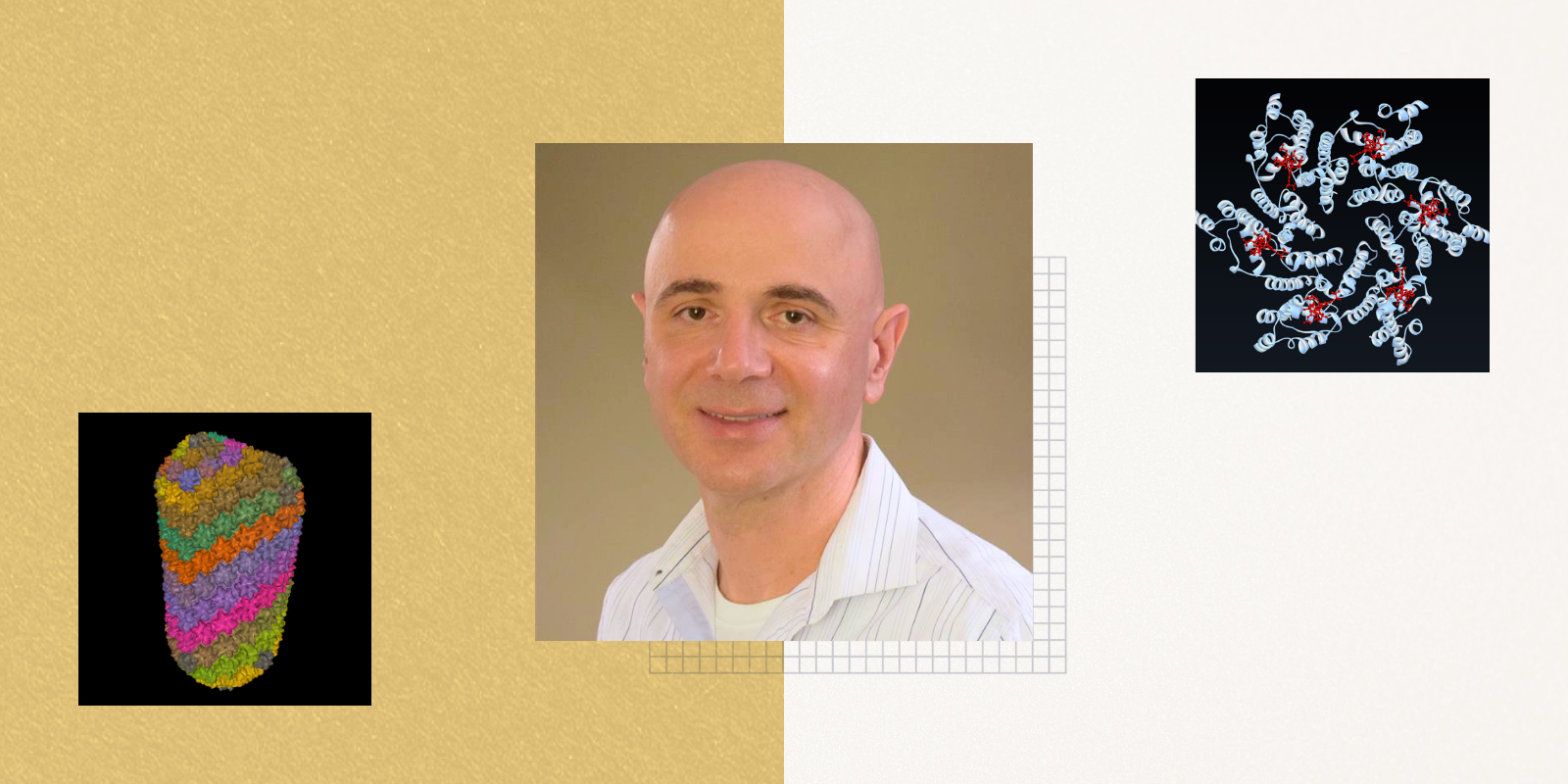
A large portion of that research involves HIV’s capsid, the protein protective shell that surrounds the virus's genetic material. When HIV fuses with a human cell, the capsid carries genetic material to the cell’s nucleus, then releases viral DNA to infect the cell.
His team’s work on lenacapavir, which at the time was an experimental drug developed by Gilead Sciences, led to a landmark 2020 publication in the journal Science. Kvaratskhelia and his colleagues explained how the drug binds to the HIV capsid and renders the virus non-infectious. They also identified ways that viral variants develop resistance to the drug.
Following that research and other studies, lenacapavir was approved in 2022 as an HIV treatment that’s administered once every six months.
Since then, Kvaratskhelia’s team and others have been working on potential designs for second-generation capsid inhibitor therapies.
Molecular glue
As important as lenacapavir is, “it’s not enough” on its own for treatment of infection, Kvaratskhelia says.
“We need a companion drug to go along with it, because people with HIV can develop resistance to it,” he says. “We’ve described in several papers how the virus is very skilled at evolving resistance to lenacapavir. At the moment, there is no companion drug that would last six months. So, to overcome that resistance, we need at least two long-acting therapies, if both drugs are really good, or a triple therapy. Triple therapy works really well.”
Meanwhile, Kvaratskhelia’s team has worked to better understand how HIV navigates through a human cell’s defenses to reach the cell’s nucleus. His lab discovered that a human protein in cells called Sec24C binds to HIV’s capsid, thereby helping the invading virus to infect the cell. That research was published in 2021 in Nature Microbiology.
→ Researchers Find Protein That Helps HIV-1 Navigate Through Cell
Kvaratskhelia and his colleagues also have done pioneering work on an entirely new class of antiretrovirals called allosteric HIV-1 integrase inhibitors (ALLINIs), which work like a “molecular glue” to bind a viral protein, integrase, into a clump, disrupting its ability to infect new cells.
In turn, the mechanistic studies with ALLINIs led Kvaratskhelia and his collaborators to uncover a previously unknown function of HIV-1 integrase to directly bind and position the viral RNA genome inside the capsid, which is essential for the formation of infectious viruses. These seminal studies were published in 2016 in Cell.
Continued efforts from Kvaratskhelia helped to develop the first-in-class ALLINI pirmitegravir, which has been successfully advancing through clinical trials in the U.S.
The once-a-year goal
While the search continues for additional once-every-six-months drugs, Kvaratskhelia is looking ahead at even longer-lasting therapies.
“The goal is a once-a-year injectable, which could address adherence challenges, and HIV rates could go down very significantly” he says.
At CU Anschutz, Kvaratskhelia has been co-director of an HIV-focused basic and translational training program for post-docs, funded through a five-year NIH Institutional National Research Service Award (T32), alongside a clinical-research track now led by his Division of Infectious Diseases colleagues Kristine Erlandson, MD, and Joshua Barocas, MD. “It's been very rewarding for trainees who are PhD scientists to be exposed to their colleagues from the clinical side,” he says.
→ How CU Anschutz Training Prepares Infectious Diseases Fellow for Future Goals
After previously working in focused basic science settings, Kvaratskhelia says he’s grateful to be working in a more expansive environment at CU Anschutz alongside HIV clinicians and scientists from other fields, as well as having chances to interact with patients.
“I’ve learned a lot from my colleagues, and they’ve been excited to learn about our work,” he says. “I’ve been involved in developing new HIV inhibitors, and learning how the investigational drugs advance through to the clinical trials is fascinating. I’m happy to be on this campus.”
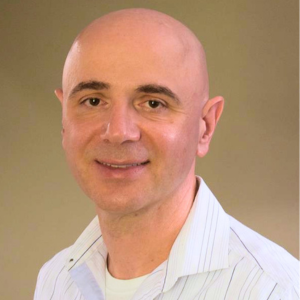
Image at top: Center, Mamuka Kvaratskhelia, PhD. Lower left: An illustration of a cone-shaped HIV-1 capsid protein shell housing the genome inside a viral particle. Upper right: An illustration of lenacapavir drug molecules binding to the protein rings of a HIV-1 capsid shell. Illustration credit: iStock.