
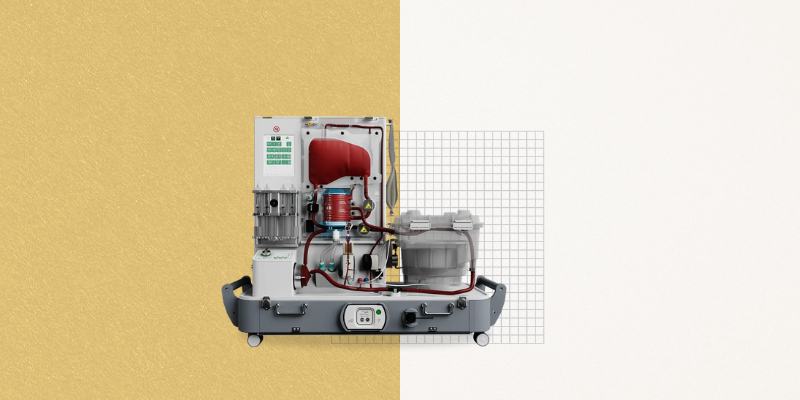
A new device that improves the transplant potential of deceased-donor livers made its debut at the University of Colorado Anschutz Department of Surgery in May.
Called OrganOx, the machine pumps warm, oxygenated blood through the liver after it is procured from the donor so it continues to function as it would inside the body.
“It has an oxygen supply, it has blood, and it has nutrients, so it's not just sitting on ice, which is the traditional method of preserving organs,” says Michael Rizzari, MD, associate professor of transplant surgery, who oversaw the operation that used OrganOx to keep the liver working. “You can see how it's functioning — you can check labs on it, you can see it make bile, so you get some idea of how the liver is working prior to the transplant.”
Better than ice
OrganOx offers multiple advantages over keeping donated livers on ice, Rizzari says — cold temperatures can damage the organs, and being able to test a liver’s function on the machine prior to the operation reduces the risk of transplanting faulty organs. It also means that borderline organs that may have been rejected in the past because of their perceived quality can be tested and used if they meet quality standards.
“You can take organs that we may not have necessarily been comfortable using before and put it on the pump and see how it performs, then potentially use them if they perform well, because you can assess the function in real time,” Rizzari says.
Patient process
The May operation was a retransplant on a 43-year-old patient who had primary sclerosing cholangitis — a disease that causes scarring of the bile ducts. His first liver transplant was failing due to a problem with the donor graft. The patient is now doing well, Rizzari says, aside from being treated for a small amount of rejection — a normal reaction after an organ transplant.
“The procedure went well,” Rizzari says. “It was the first one, so it was a learning experience. We're learning ways to streamline things and make the processes better, but overall it went quite well. Our transplant surgery fellow, Keith Hansen, did a great job. The perfusionists are really outstanding here, so they drove a lot of the process.”
Advancement in patient care
Now that the Department of Surgery has OrganOx as part of the technology it can offer patients, Rizzari foresees an increase in liver transplants and better outcomes for the patients who receive them.
“I think there are going to be a lot more organs that are accessible to them, and we'll have a lot more flexibility on time,” he says. “It's going to be a great advancement for patient care and getting transplants done."