Note: This article deals with suicide. If you or someone you know is having thoughts of suicide, confidential help is available 24/7 nationwide for free. Call or text 988 to reach the Suicide and Crisis Lifeline.
One by one, representatives of small firearms businesses that serve military members and veterans spoke of encounters with people considering or dying of suicide.
“There are quite a few suicides with firearms, which is so unfortunate,” said Alec Henkelman, owner of High Country Armory in Denver and a veteran of the U.S. Army’s 82nd Airborne Division. “I was in the military, and our unit lost nine guys due to suicide. So, it's personal, right? If you can prevent this and help people – just give them an option out, even if it’s buying time, so they can go get help or see family – I think it's worth it.”
“I have some suicide stories, too,” said Juan Bell, training director at The Marksman, a shooting range and training facility in Newport News, Virginia. “One guy came in, shook my hand, said, ‘I appreciate you always being good to me.’ He was having trouble with his wife. He killed himself in a hotel in Virginia Beach.”
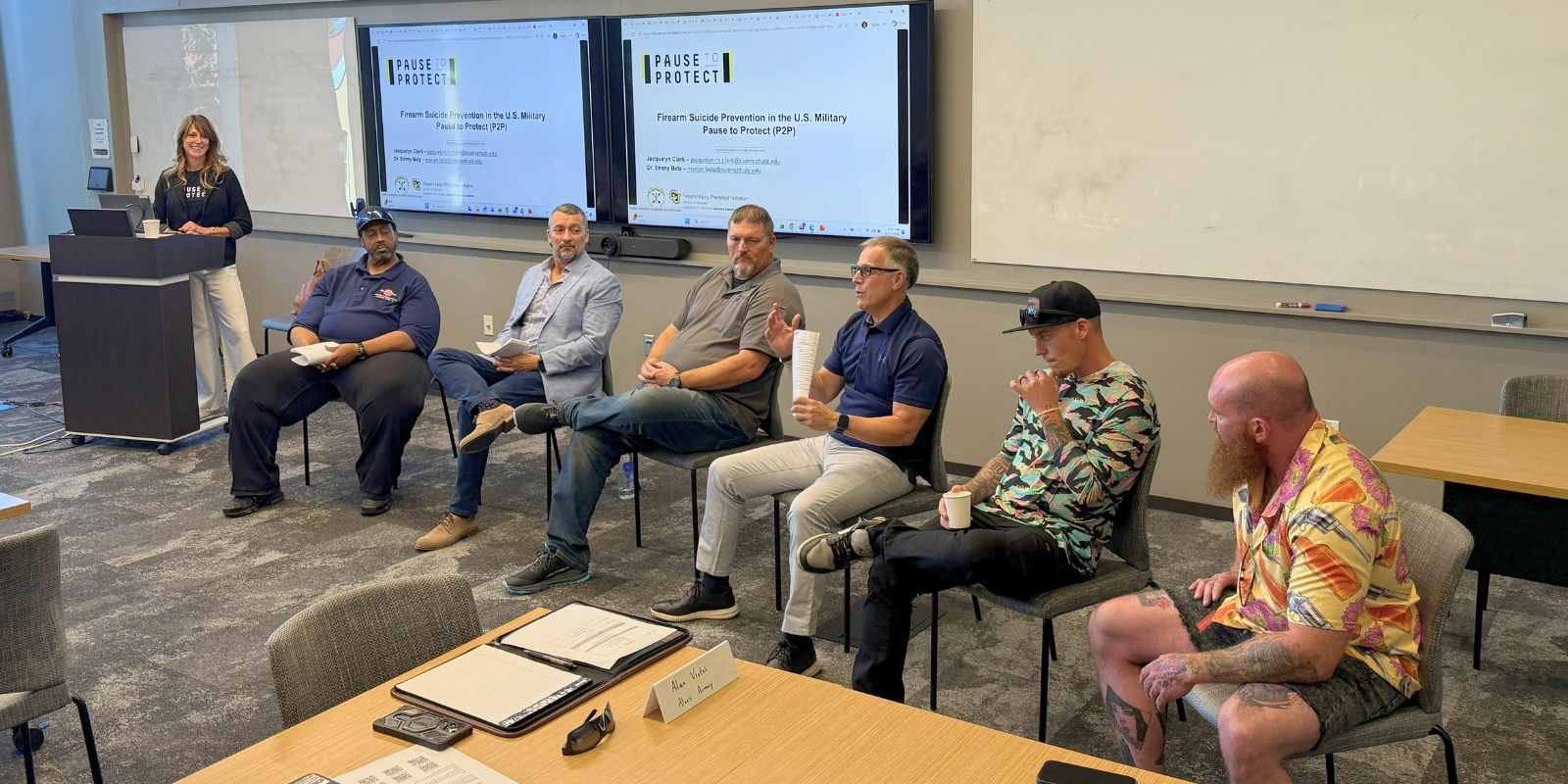
They and several other representatives of firearms businesses came from across the country to the University of Colorado Anschutz for a forum on June 17, organized by the Pause to Protect program, which was launched in 2024 by the CU Anschutz Department of Emergency Medicine’s Firearm Injury Prevention Initiative (FIPI). They joined armed-services leaders in suicide prevention, CU Anschutz researchers, and others to talk about a common concern: Firearm suicide prevention in the U.S. military.
Pause to Protect works with firearm businesses – including retailers, shooting range operators, and trainers – as well as firearm owners on voluntary steps to help prevent suicide, accidents, and other harm involving personal firearms.
Those steps include businesses offering temporary on-site firearm storage to their customers and promoting the use of locking devices, both of which have been shown to help reduce firearms-related deaths and injuries. The military and veteran communities are a key focus of the initiative. Currently, Pause to Protect partners with 37 firearms businesses across the country.
The Pause to Protect forum was held in conjunction with the annual summit on Firearm Suicide Prevention in the U.S. Military at CU Anschutz, led by FIPI and CU Emergency Medicine’s Combat Medicine Research Center.
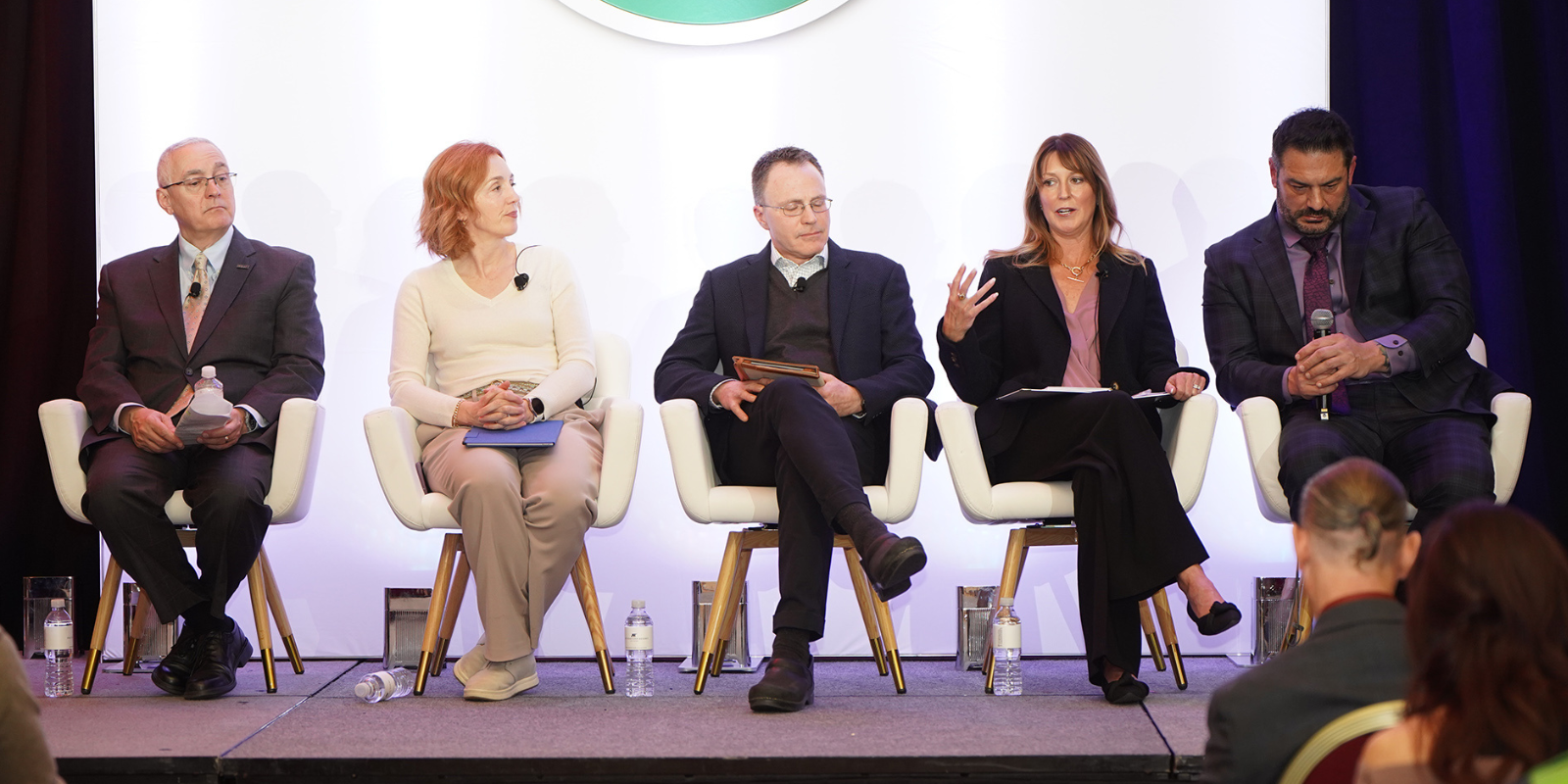
Photo at top: Firearms business operators speak at the Pause to Protect forum on firearm suicide prevention in the U.S. military on June 18, 2026, at CU Anschutz. At left is Jacquelyn Clark, outreach coordinator for Pause to Protect. Photo by Mark Harden | CU Anschutz Department of Emergency Medicine.
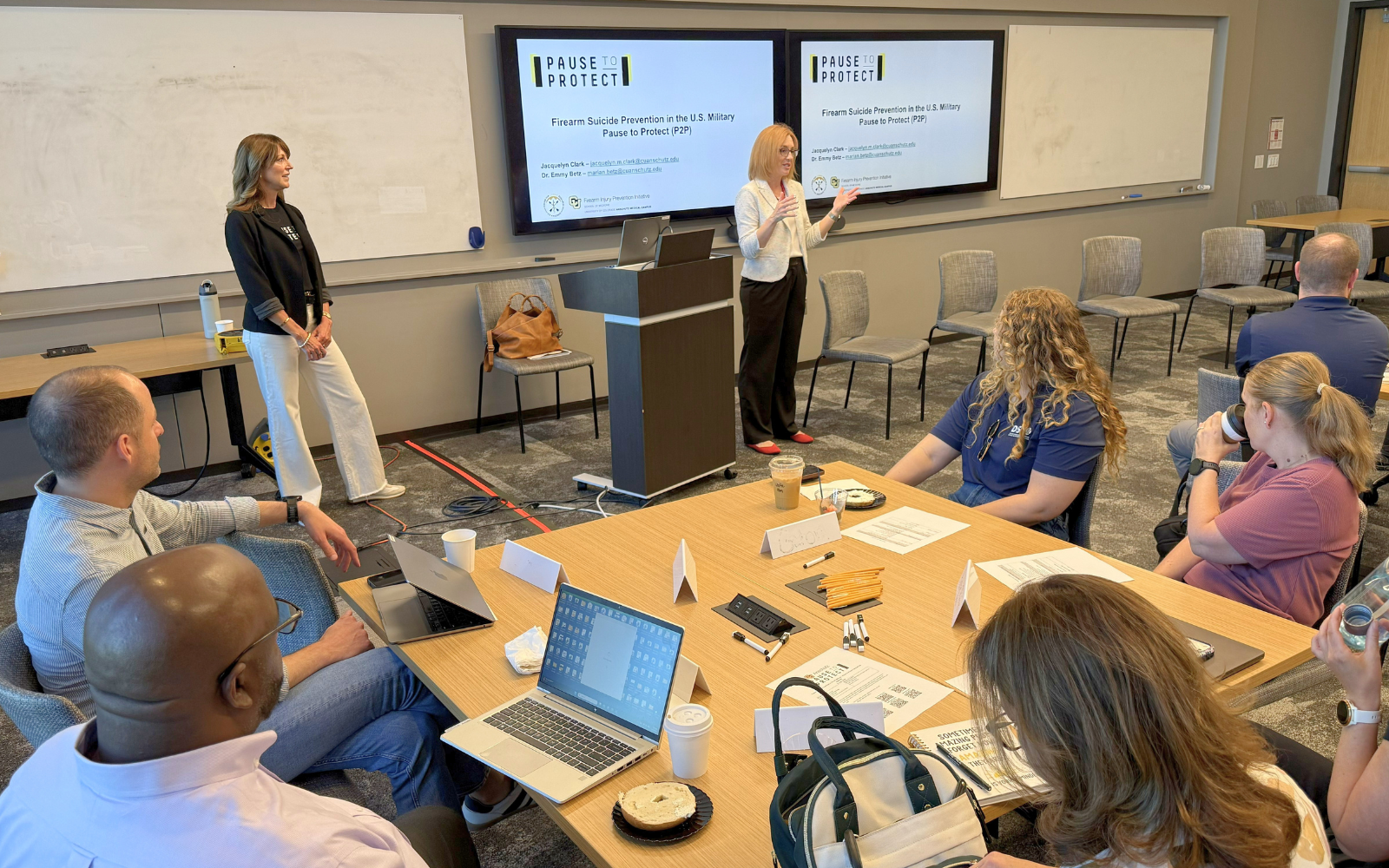
Emmy Betz, MD, MPH (center top), professor of emergency medicine, speaks at the Pause to Protect forum on firearm suicide prevention in the U.S. military on June 18, 2026, at CU Anschutz. Photo by Mark Harden | CU Anschutz Department of Emergency Medicine.
A little nudge
At the forum, the business representatives talked about the things they do, big and small, to help customers who might be in distress.
“We learn who our customers are when we look people in the eye,” said Jason Martin of Fallbrook Guns and Ammo in San Diego County, California, located at the back gate of the U.S. Marine Corps’ sprawling Camp Pendleton, and close to U.S. Navy SEAL installations. “I always ask people when they come in, ‘What do you need a gun for?’” Martin said.
The speakers also talked about logistics – for example, how to navigate legal and business issues around offering gun storage, how to connect with leaders at military installations, and what language to use in talking to customers about firearms safety.
“I think it’s great,” Joe Connor, co-owner of Shoot Indoors Buckley in Aurora and an Army veteran, said of Pause to Protect. “Anybody who's been in the military, or even outside the military, knows people who aren't having a good time. If you can help people out, maybe give them a little nudge in a good direction, I think that's good for the community.”
→ Building the Next Generation of Firearms Injury Prevention Scholars
Promoting secure gun storage
The U.S. Defense Suicide Prevention Office (DSPO) reports that in 2024, suicide rates among U.S. service members were 23.2 per 100,000 (higher than the national rate of 14.4 per 100,000), and that about two-thirds of service-member deaths by suicide that year involved a firearm. DSPO says suicide rates among active-duty service members increased between 2011 and 2024, although they decreased between 2023 and 2024.
Recent research drawing on data on 6,561 firearm-owning U.S. Army soldiers found that leaving a firearm unsecured was associated with greater risk of suicide. And various studies have shown that temporarily storing guns outside the household while someone is at risk for suicide is important for suicide prevention.
Jacquelyn Clark led the Pause to Protect forum. She is FIPI’s firearms industry partnership coordinator and the outreach coordinator for Pause to Protect. She is also co-owner of Bristlecone Shooting, Training, and Retail Center in Lakewood.
“The program empowers these businesses to offer secure storage opportunities to their community and support the military community and their families with safety options,” she said before the forum convened. “We created a blueprint to help these businesses stand up secure storage programs at their locations, or they can give out locking devices. They choose which opportunities they want to offer to the community, for free or at a discount, that best fits their business model.”
The initiative “has been very successful, as evidenced by the group that’s here today,” Clark said. “They’re enthusiastic about meeting each other and finding out how each of them implements the program a little bit differently – what’s working and what’s not. That will go a long way towards the sustainability of the program.”
→ Finding a Path Forward on Firearms Issues: A Panel with Diverse Views Shares Ideas
A trusted messenger
Emmy Betz, MD, MPH – professor of emergency medicine and FIPI’s founding director – spoke to forum attendees. Before the forum, she said Pause to Protect “grew out of multiple years of work in wanting to support firearm suicide prevention efforts in the community. We recognized that firearm businesses are a critical piece of that, and often want to play a role, but they may not have some of the logistical help that would support them.”
Part of the Pause to Protect mission, she said, involves working with the DSPO, which helps support Pause to Protect, “in building the program around military bases, specifically to support military communities.” Several DSPO representatives took part in the forum.
Also on hand for the forum was Ian Stanley, PhD, an associate professor of emergency medicine and director of CU Emergency Medicine’s Translational Research to Understand Suicide and Trauma (TRUST) Lab.
Stanley said Pause to Protect “works to engage firearm businesses in the catchment area of military installations across the United States, equipping those businesses with the skills and resources to provide secure storage options for service members and their families, recognizing that when a firearm is stored in a secure manner, risk of injury – suicide or other forms of injury – is reduced. If firearm businesses are the trusted messenger of a public health recommendation, folks might be more likely to listen to them than to a clinician, for instance.”
→ Learn more here about Pause to Protect and how to get involved. Learn more here about the program’s available business tools.