<img height="1" width="1" style="display:none" src="https://www.facebook.com/tr?id=799546403794687&amp;ev=PageView&amp;noscript=1">

‘A Legacy of Readiness and Service’ at the CU Anschutz Combat Medicine Research Center

Founding director Vik Bebarta, MD, talks about the origins of the renowned center built to bridge the speed of war and speed of academia.

minute read

by Mark Harden | May 20, 2026
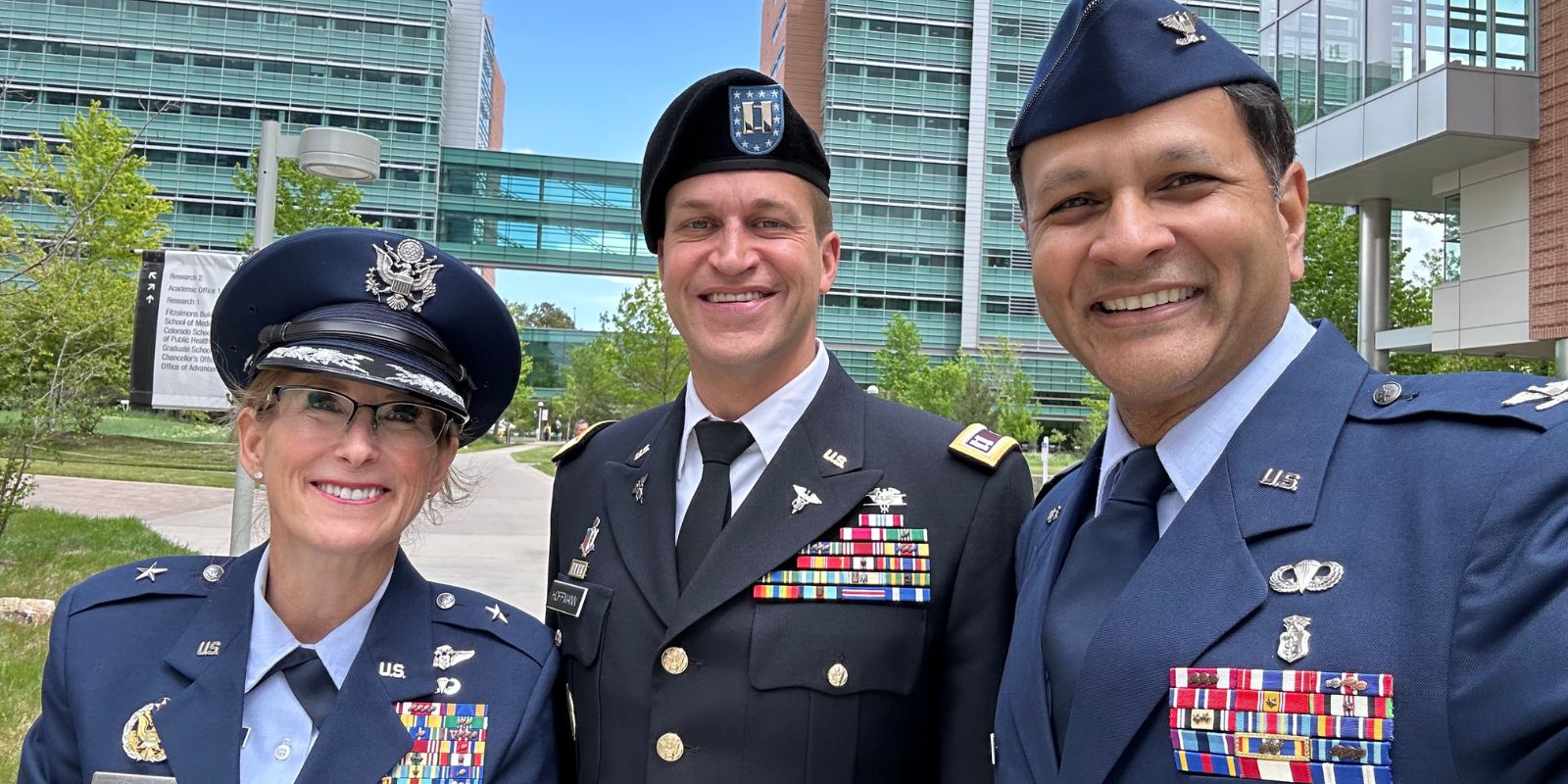
CU Anschutz COMBAT Research members dressed in military uniforms.

Throughout history, many key advances of emergency medicine have happened on the battlefield – new ways to transport wounded soldiers and triage patients in the Civil War, blood transfusion in World War I, air evacuation and widespread antibiotic use in World War II, and much more.

Today, the Combat Medicine Research Center at the University of Colorado Anschutz applies multidisciplinary scientific capabilities to solving the toughest medical challenges facing U.S. combat forces, and translates that research to improve health care at home.

Launched in 2019, the center draws on the work of more than 100 investigators and dozens of government, academic, and industry partners. And that work happens on a campus that, for almost a century, was a military facility caring for those who fought in the nation’s wars.

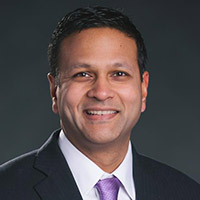
To learn more about the origins of the Combat Medicine Research Center, we turned to its founding director, Vik Bebarta, MD, who is also chair of the CU Anschutz Department of Emergency Medicine and a noted researcher. Bebarta served 14 years on active duty as a U.S. Air Force combat physician, with multiple deployments, and is a colonel in Air Force Reserve.

Students Explore Ties Between Military Medicine and Civilian Health Care
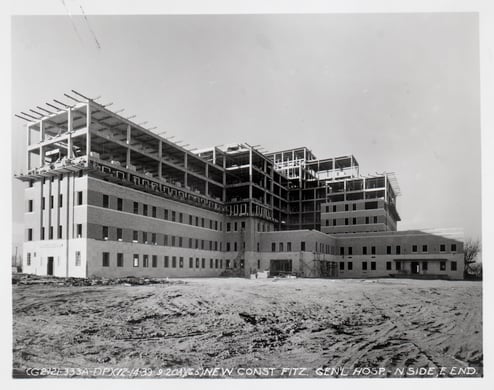
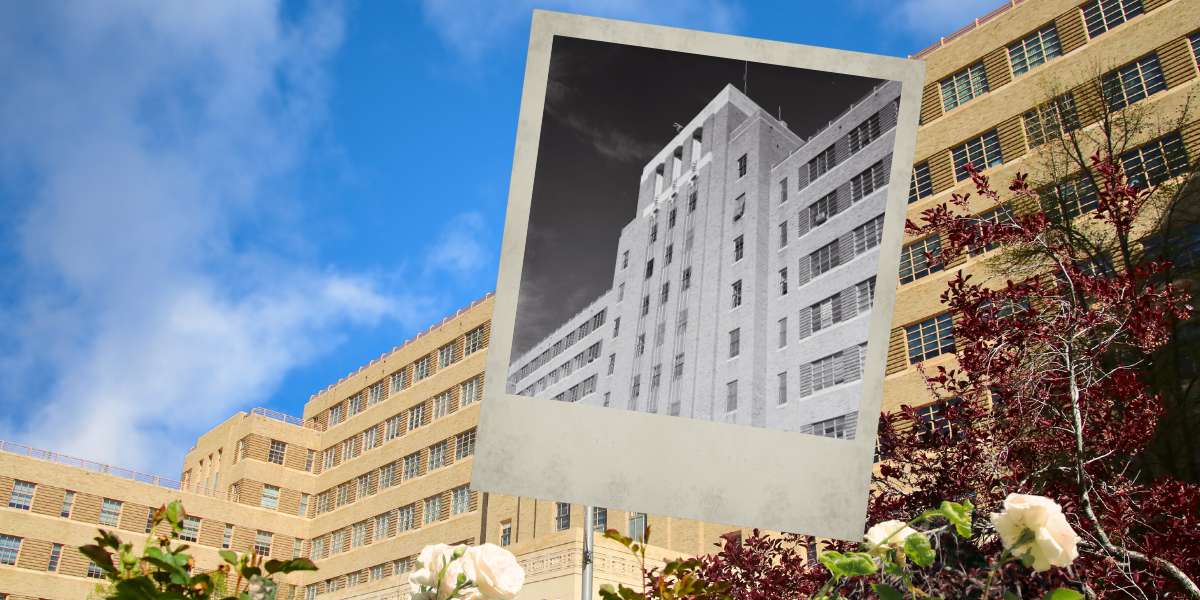
1938 Fitz construction

Construction on the Fitzsimons General Hospital started in 1938. In 1941, just days before the attack on Pearl Harbor, the hospital opened and boasted being the largest structure in Colorado and housed up to 2,252 beds at its peak. Today, the campus of the former hospital has been revitalized into the CU Anschutz medical campus. The hospital, known as Building 500 throughout history, houses various CU Anschutz and School of Medicine offices. Historic photo from the Strauss Health Sciences Library.

Q&A Header

How did the Combat Medicine Research Center come about?

When I was on active duty, I saw how fast the battlefield was changing – new threats, new technologies, new injury patterns. As a research leader in the military, I found that the U.S. Department of Defense was not always getting the best outside talents to apply for its research proposals and getting the best solutions for battlefield issues like traumatic brain injury, suicide, blood transfusion, burns, and more. We needed to close those gaps, but our academic partners just weren't moving at the same speed.

When I came to CU Anschutz 10 years ago, I realized we have remarkable talent here, in a state with a military focus, and the gaps in the military’s research needs could be easily filled by a lot of our people here. So we decided to build a bridge between civilian researchers and the military to close those gaps. We took the scientific depth of this top-tier medical campus and aligned it with the real-world needs of the military health system.

Lessons From Ukraine’s Frontlines: Medical Research Continues Even in Wartime

What did the center look like at the beginning?

It was a grassroots program that started bottom up. Co-founder Kathleen Flarity, DNP, PhD, and I launched the center with 1.2 FTEs and just a couple of investigators, but the Department of Defense was wildly impressed. Our folks were coming to the table to say, ‘What problem do you need us to solve?’ We went after each problem and solved it.

We built the center to close the gap between the speed of war and speed of academia, and not just studying problems in theory, but problems that show up in a helicopter at 2 a.m.

Basically, we met our three-year goals in three months, and continued to grow. In the military community, we went from unheard of to the leader in the field of military casualty-care research. We focus on building trust that we will deliver on time, and we want to move fast – rigorously, but with urgency.

Answering the Call: CU Anschutz’s New Emergency Medicine Chair on Service, Leadership, and Impact

Given your background treating service members in war zones, what does the center mean for you at a personal level?

Service members are sacrificing for our country, and they deserve the best science we can deliver, coming from people at CU who care about that work. That’s the personal component to it for me.

You speak often about the spirit of collaboration at CU Anschutz. How important is that spirit to the Combat Medicine Research Center's work?

It’s very important, because we can leverage all the capabilities on this campus to solve these problems – and not just at this campus, but at CU Boulder and elsewhere. A problem might need a bioengineer, an orthopedics PhD, a wound-care infection specialist, a hospitalist, and an ER doc to come together to find a solution. Collaborators are a force multiplier here.

The Combat Medicine Research Center is based on a campus with a rich history as a military medical center, and a major Veterans Administration hospital is next door. How meaningful is that background to the center’s mission?

 The spirit of military medicine and veteran care has always been here. History has shaped the culture here. It’s a legacy of readiness and service. But we’re not operating in the past. We’re operating something that’s modern and nationally relevant. The throughline from Fitzsimons to the Combat Medicine Research Center is a focus on service, readiness, and impact.


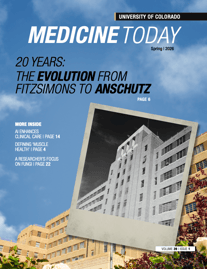
This interview originally appeared in the Spring edition of the University of Colorado Medicine Today Magazine

 
CU Anschutz Magazine Cover 2026


Featured Experts
Staff Mention

Vik Bebarta, MD