Using a device that temporarily takes over the work of a failing heart, the lungs, or both has been on the rise at hospitals. Some media accounts describing dramatic patient rescues call it a “miracle machine.”
The machine powers extracorporeal membrane oxygenation, or ECMO – pronounced “eck-moe” by clinicians. It’s considered the most aggressive form of life support available, often employed when ventilators or medications fail.
ECMO was widely used during the COVID-19 pandemic for patients with acute respiratory distress. It’s sometimes used after severe heart attacks or cardiac arrest.
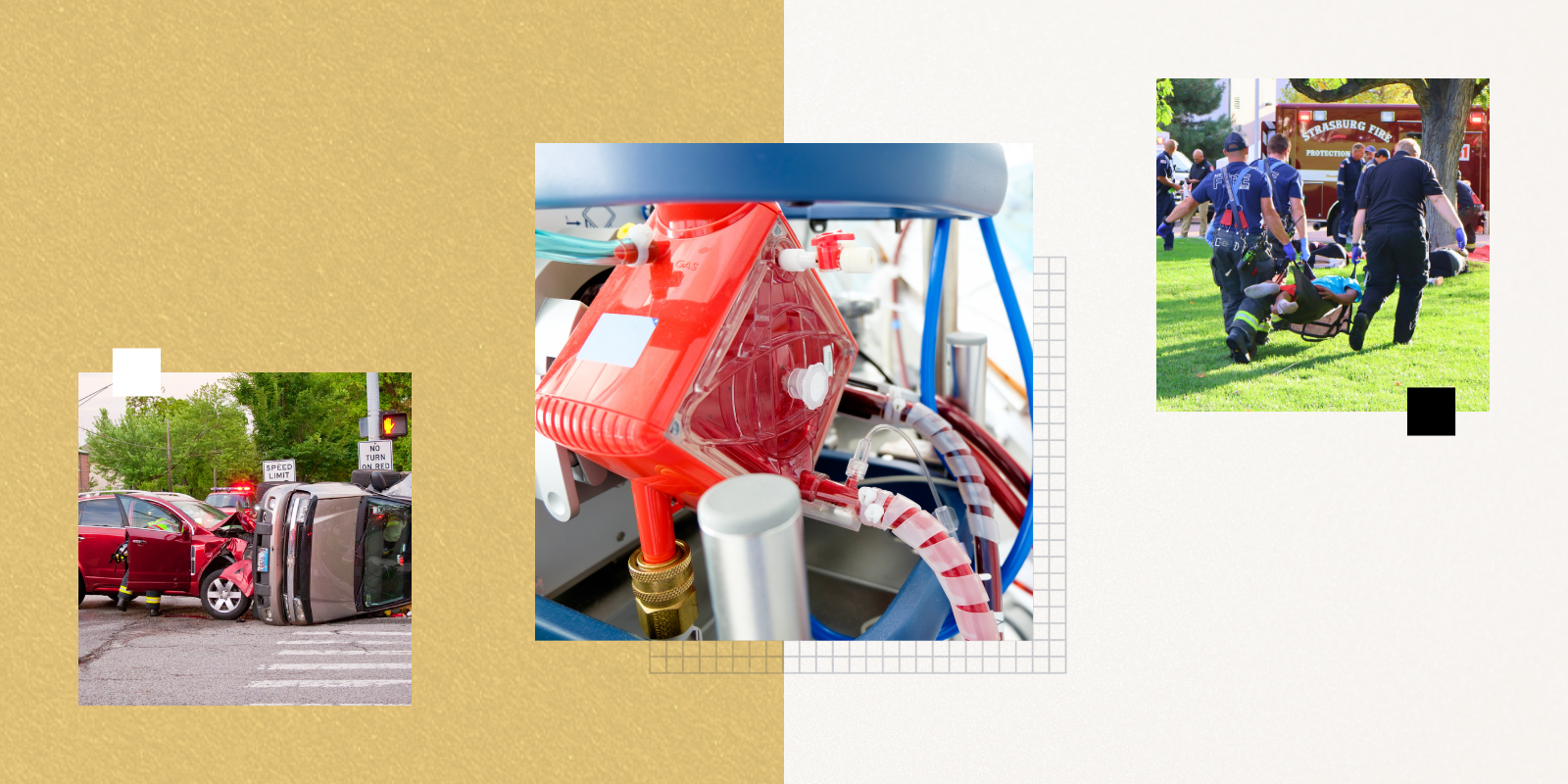
Meanwhile, ECMO’s use in trauma care to help save the most critically injured patients is also rising. However, there’s little data available on exactly how ECMO is being used across the U.S. trauma-care system, which patients get it, and what the results are.
Those are knowledge gaps that Marianne Wallis, MD, an assistant professor in the University of Colorado Anschutz Department of Emergency Medicine, and her colleagues set out to fill in a new study published online in April by the journal Injury. They examined 8 million trauma patient encounters from a database compiled from more than 900 U.S. trauma centers.
The study found that nearly two out of three trauma patients who received ECMO survived to leave the hospital – an encouraging rate, given how severely injured these patients are.
The research also looked into the widespread notion that using ECMO requires administering blood thinners to prevent clotting in the tubes used by the machine to transport blood. Blood thinners can be highly dangerous for trauma patients because they can significantly increase the risk of severe bleeding.
“Historically, there’s been some hesitancy to use ECMO” in trauma settings, Wallis says. “For patients with head bleeding and injuries who require surgeries, a lot of times providers have said, ‘Maybe they shouldn’t go on ECMO, because if we have to give them a blood thinner, it could be really bad.”
→ Women-Led ICU Team Drives Clinical and Educational Innovation
How ECMO works
ECMO works by continuously pumping blood out of the body through a tube called a cannula that is inserted into a large blood vessel. The machine then adds oxygen to the blood, removes carbon dioxide, and warms the blood before returning it to the body through another cannula. While ECMO by itself does not treat the patient’s underlying disease, the hope is that using ECMO can support the patient while the heart and lungs rest and heal.
There are two main configurations of ECMO, depending on a patient’s condition. Veno-venous (VV) ECMO supports the lungs only when the heart is functioning properly. Veno-arterial (VA) ECMO supports both the heart and lungs, or just the heart. In adult trauma cases, VV ECMO is more common.
ECMO is used primarily in highly specialized intensive care units (ICUs). VV ECMO is more common in medical ICUs; VA ECMO use is more typical in surgical and cardiac ICUs. Some hospitals use ECMO in their emergency departments for patients who arrive in cardiac arrest after a major reversable event such as a heart attack or pulmonary embolism, Wallis says.
Wallis’ study analyzed anonymous data on 8,014,737 U.S. trauma patient visits from 2017 to 2023 drawn from the American College of Surgeons’ Trauma Quality Improvement Program database. From that data, researchers identified 1,919 cases in which ECMO was used. Most patients given ECMO were adults; 224 were children under 18.
Researchers found that 64% of the ECMO patients in their sample were injured in vehicle crashes, 17% in firearms incidents, and 13% in falls. About 70% had sustained chest injuries, and 34% had head and neck injuries. And 81% were male.
They found ECMO was most commonly used on patients with acute respiratory distress syndrome (ARDS), in which fluid leaks into the air sacs of the lungs, preventing the lungs from filling with air.
On average, ECMO was started 44 hours after a trauma patient arrived at the hospital, although the start times varied widely from a few hours to several days.
→ ECMO and a Transplant Quieted the ‘Electrical Storm’ in a Patient's Heart
The big take-home
As for survival rates for trauma patients following ECMO, the study found that about 64% of all ECMO trauma patients and 71% of pediatric patients survived to hospital discharge. The survival-to-discharge rates were 69% for VV ECMO and 56% for VA ECMO. Surviving patients stayed on the machine an average of 20 days.
The “big take-home” finding of the study, Wallis says, is that survival rates of trauma patients following ECMO were roughly comparable to those of non-trauma patients, such as those of people with pneumonia or other causes of respiratory or cardiac failure.
“There’s no reason to say that trauma patients have a worse chance on ECMO, because they don’t,” she says.
On the issue of the use of blood thinners (also known as anticoagulation) with ECMO, the study found that over 20% of trauma patients in the study received no blood thinners while on ECMO, and about 30% of those patients survived to discharge.
“A pretty high number of people were able to be on ECMO without anticoagulation, which is pretty cool,” because it increases the likelihood of safe use of ECMO in trauma cases, Wallis says.
Laying the groundwork
Wallis sees the study results as laying the groundwork for more precise clinical guidelines for the use of the life-saving technology in trauma settings.
And while the study showed that the number of U.S. trauma centers performing ECMO grew over the six years of the study from 103 to 158, the research may help make the case for even more trauma centers considering ECMO technology, including in rural areas where there is an ability to transfer patients to higher level of care, Wallis says.
“The use of ECMO is much less common in rural places, so unfortunately, there is a bit of inequality there,” she says. “If you have an injury in rural Wyoming, for example, it’s possible you’ll make it to a hospital and either get put on ECMO or get transferred to a place that has it, but it’s also possible that timing may preclude that, which may impact survival.”
Further study is needed into the best ways to use ECMO in trauma settings, Wallis says. “This is not the definitive, be-all-and-end-all study, but as long as patient selection is appropriate, we can already make a perfectly reasonable argument that we should be giving these trauma patients a chance with this type of life support. It won’t be a 100% chance, but a reasonable chance.”