Emergency medical services (EMS) play a crucial and expanding role at the front end of the emergency care system. But in some places, such as Colorado’s vast rural areas, EMS resources are stretched thin, so the University of Colorado Anschutz Department of Emergency Medicine has been stepping in to help.
When there’s an accident, a heart attack or stroke, or a disaster, EMS teams – highly skilled prehospital clinicians and their colleagues – are the first at the scene to render aid and transport patients. Often, they also serve as an early warning system for community health crises, such as spikes in overdoses and heat-related illnesses.
On top of that, in outlying areas, where a full-service hospital may be a long ride away, EMS personnel may take on additional medical duties to help keep patients alive, such as blood transfusions.
On Aug. 12, a new Colorado law took effect recognizing EMS as “an essential service in the state,” joining police and firefighters.
But to take on all the roles that EMS programs are being asked to handle required expertise and training. That’s what Andra Farcas, MD, FAEMS, and her colleagues are helping to provide across Colorado.
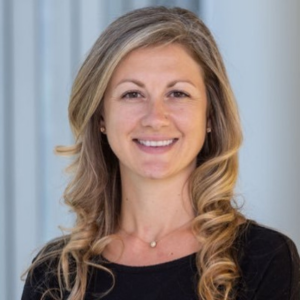
Farcas is an assistant emergency medicine professor and a leader of the department’s Program for EMS and Prehospital Care. Farcas, who is dual board-certified in emergency medicine and EMS, focuses on rural EMS medical direction, quality assurance and improvement, and prehospital education.
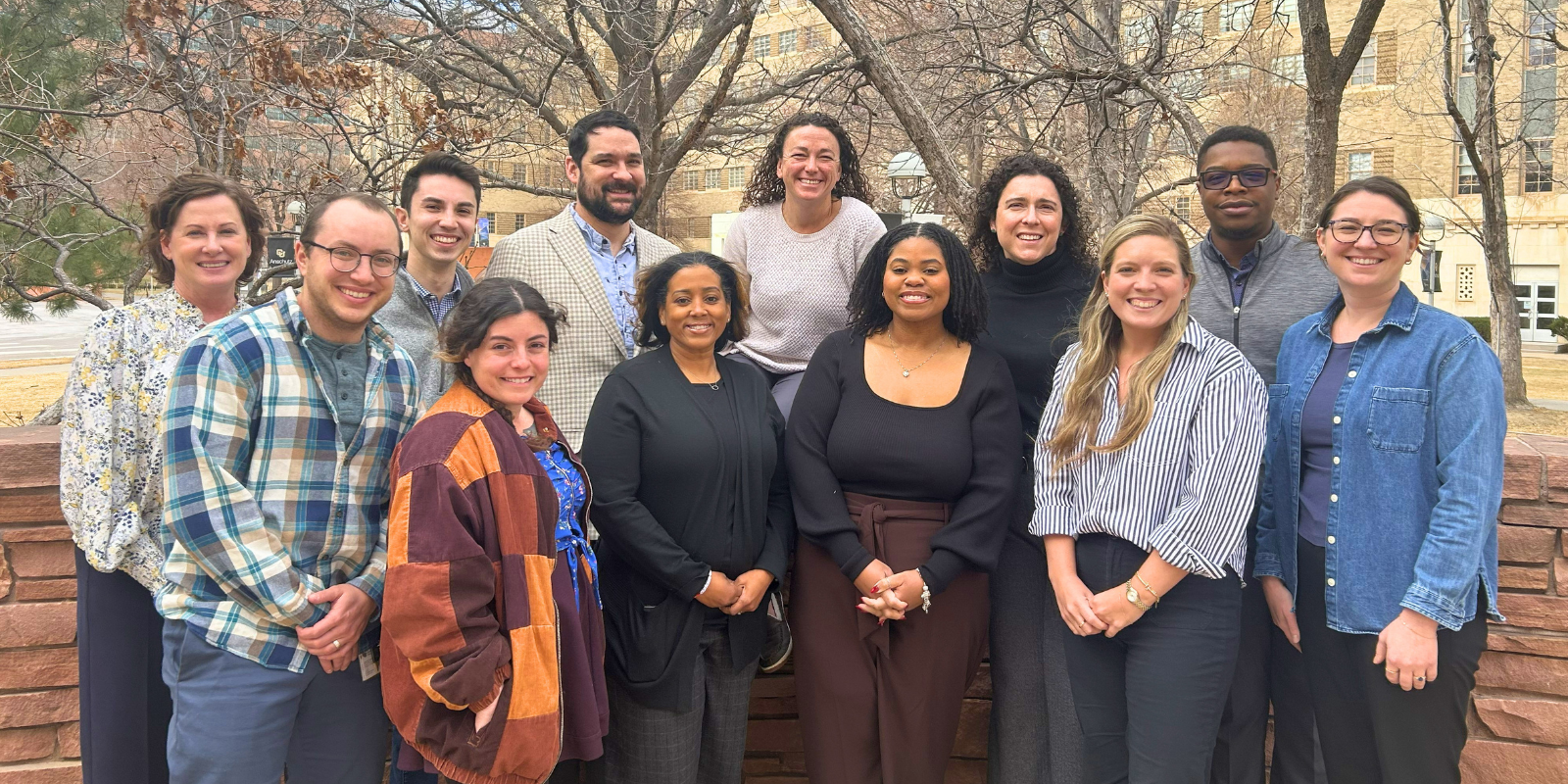
Farcas and two CU Emergency Medicine colleagues – Michael Duerson, MD, and Lesley Osborn, MD – serve as medical directors for 19 EMS agencies across Colorado, many of which are in rural areas. On top of that, the program has been expanding its educational and community outreach activities across the state.
A 45-minute drive
Staffing is a big hurdle for many rural EMS agencies, Farcas says. “A lot of them are volunteer-run, and it's challenging to recruit and retain clinicians to respond to 9-1-1 calls in small, rural communities, especially with the limited funding rural EMS agencies face.”
She cites an example of a rural agency where two emergency medical technicians (EMTs) get a 9-1-1 call. “They’re responding from home, and they could have a 30-minute response time to get to the scene of the call because they have to go to the station first and get the ambulance.”
On top of that, she says, “you might have a 45-minute drive to a hospital, depending on how far away the patient lives. And that hospital might be a critical access facility that also faces limited resources.”
There’s also a difficulty encountered in educating EMS personnel in places far from urban areas, she says. “There are not a lot of programs that make it easy for somebody who lives in a rural town to get education without having a significant drive to and from class.”
→ A Major Study Will Test Automated Oxygen in Ambulances and Helicopters
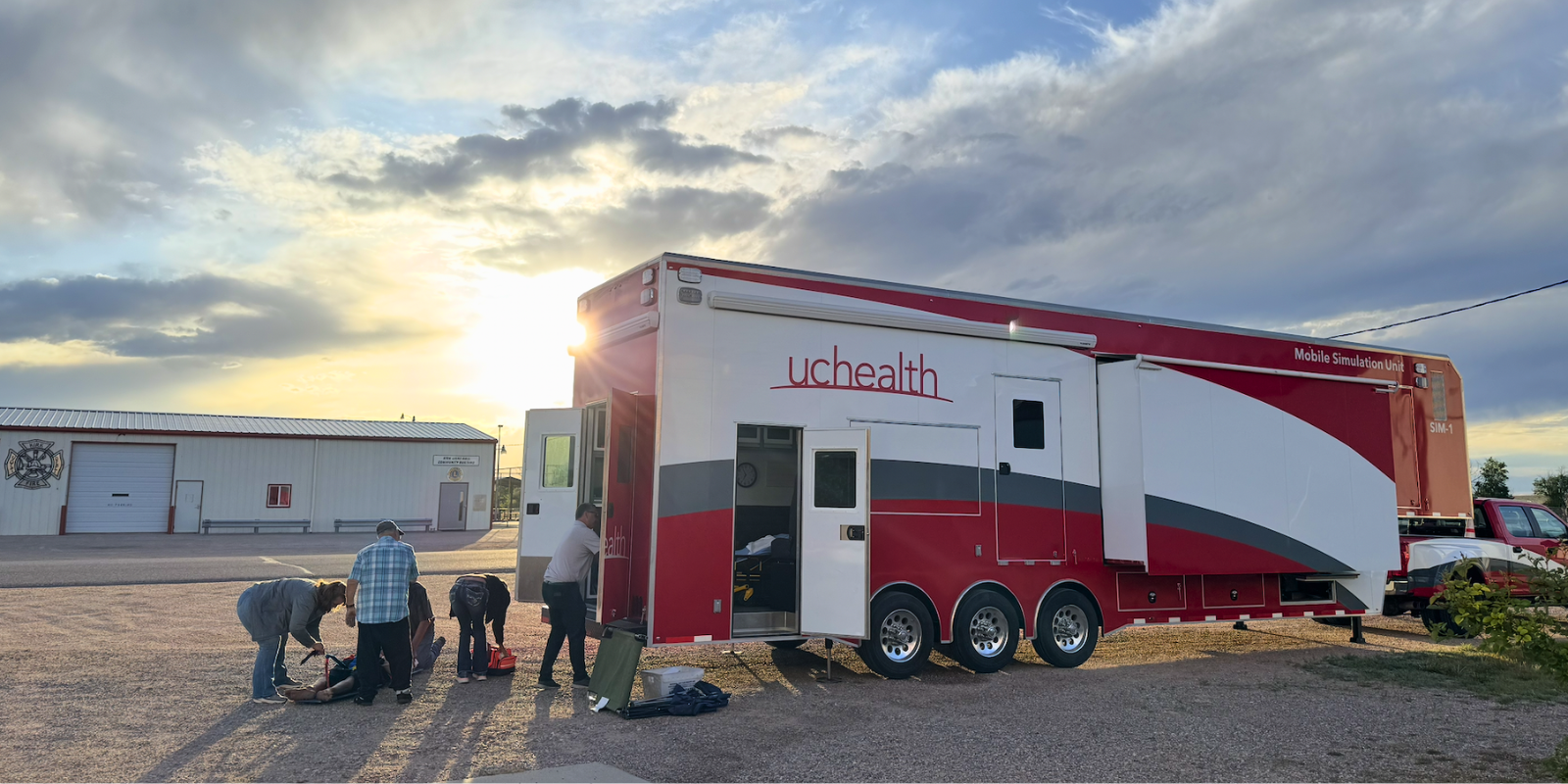
Photo at top: The UCHealth Mobile Simulation Unit, a high-fidelity simulation trailer used for training of EMS personnel. All photos provided by Andra Farcas, MD, FAEMS.
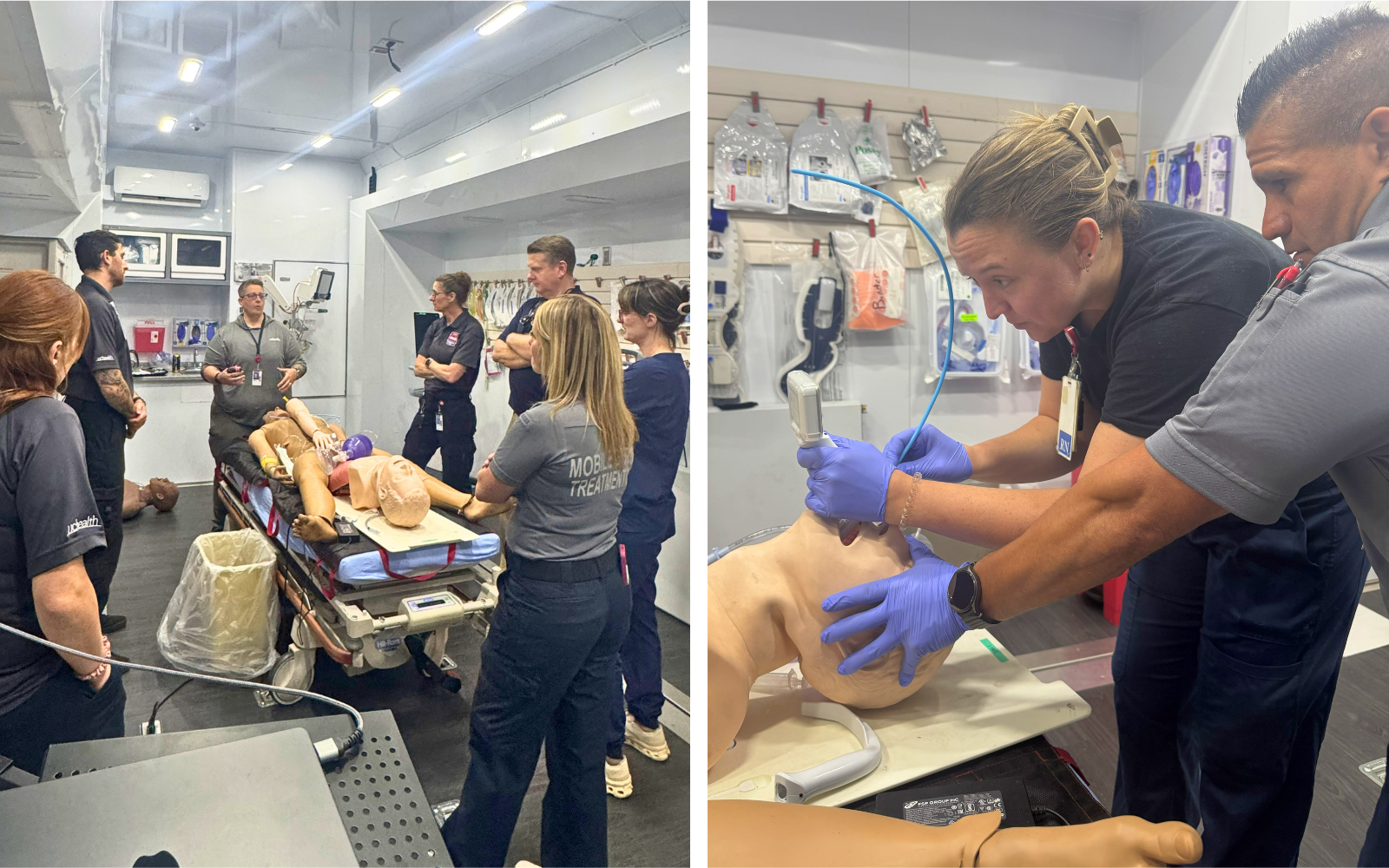
A training session inside the UCHealth Mobile Simulation Unit.
High-fidelity simulation trailer
In 2023, in collaboration with UCHealth, the Medical Education on the Delivery of Innovative Care (MEDIC) program launched to provide training to become a paramedic or EMT as well as continuing-education programs and advanced EMS certifications.
“We’ve grown a lot,” Farcas says. “We started with one paramedic class, and now we do everything from emergency medical responder training all the way up to critical care paramedic training. We’ve trained over 500 students in just the past few years.”
MEDIC’s programs are customized to accommodate learners who work full time or who live far from CU Anschutz, she says. For rural trainees, “we do a hybrid program where content is delivered online, and then you either have a local instructor in your town or one of our educators travels to the area to teach the hands-on skills, so that the learners don't have to travel all the way here.”
Alongside that initiative, in their role as medical directors of rural EMS agencies, Farcas and her colleagues frequently fan out across the state, sometimes covering hundreds of miles.
A medical director for an EMS agency sets the protocols – evidence-based clinical guidelines for assessing, treating, and transporting patients – and performs clinical training, Farcas says. They also do quality assurance and quality improvement – known as QA/QI –"to make sure that the care provided is evidence-based and high quality. So as part of that, we go out to communities quite frequently,” she says.
They often bring along a “high-fidelity simulation trailer”: the UCHealth Mobile Simulation Unit, a 42-foot trailer with state-of-the-art training equipment. “At least once a year, we do a traveling roadshow. We get in vehicles, pull the trailer to multiple small towns, and do trainings along the way,” she says.
At a June 27 stop at the Morgan County fairgrounds in Brush, Colorado, providers from across northeast Colorado gathered. Farcas lectured on airway management, and her CU Emergency Medicine colleague Michael Duerson, MD, discussed trauma presentations. That afternoon, attendees practiced hands-on skills in managing obstetric and trauma scenarios.
‘Doing an amazing job’
In between jaunts with the training trailer, “we’ll go out as needed to agencies and do hands-on training with providers,” Farcas says. “The best part is getting to ride along in the ambulance or fire truck when a 9-1-1 call drops.”
The program also offers virtual EMS continuing education sessions for a variety of audiences, including a monthly program for rural communities supported through a grant from the six-state Mountain Plains Regional Disaster Health Response System.
Another objective for Farcas and her Prehospital Care and EMS team is community outreach, a way to familiarize local residents with EMS. “We just took the trailer to a community barbecue event,” she says. “We did stop-the-bleed training and demonstrated EKGs for kids.”
As Farcas sees it, this menu of education and outreach programs aligns with local agencies in their efforts to improve care to medically underserved rural communities.
“Rural agencies and hospitals in Colorado are doing an amazing job caring for their patients, often with limited resources,” she says. “Our goal is to support their efforts and help overcome inequities in care by taking the resources we are very thankful to have at a major urban academic medical center into small communities. We work with those agencies to help further equip them with the tools they need to provide care to rural populations that is just as high-quality as the care provided in urban areas.”
→ Emergency Medicine Faculty Help Meet Colorado’s Need for First Responders with MEDIC Program
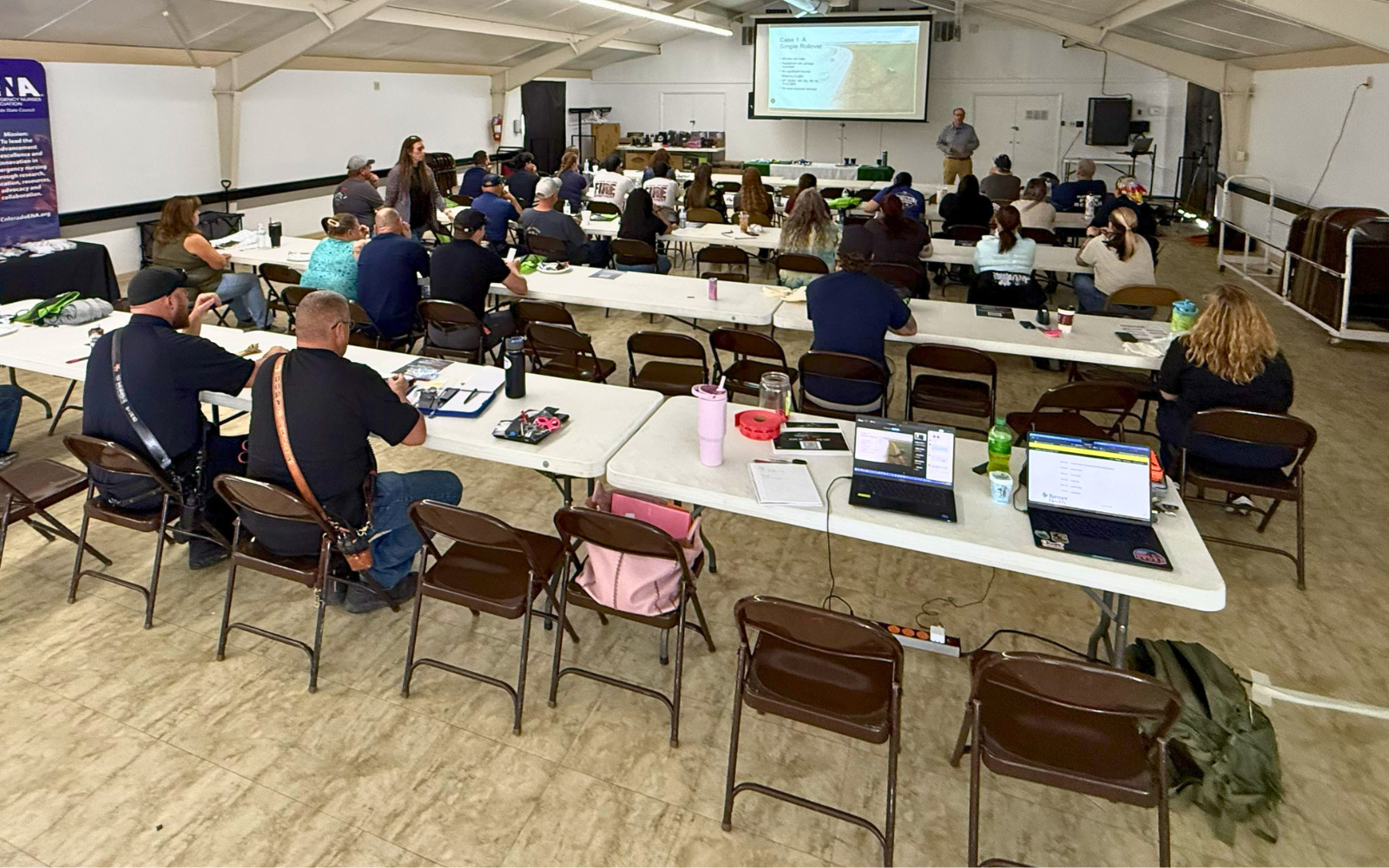
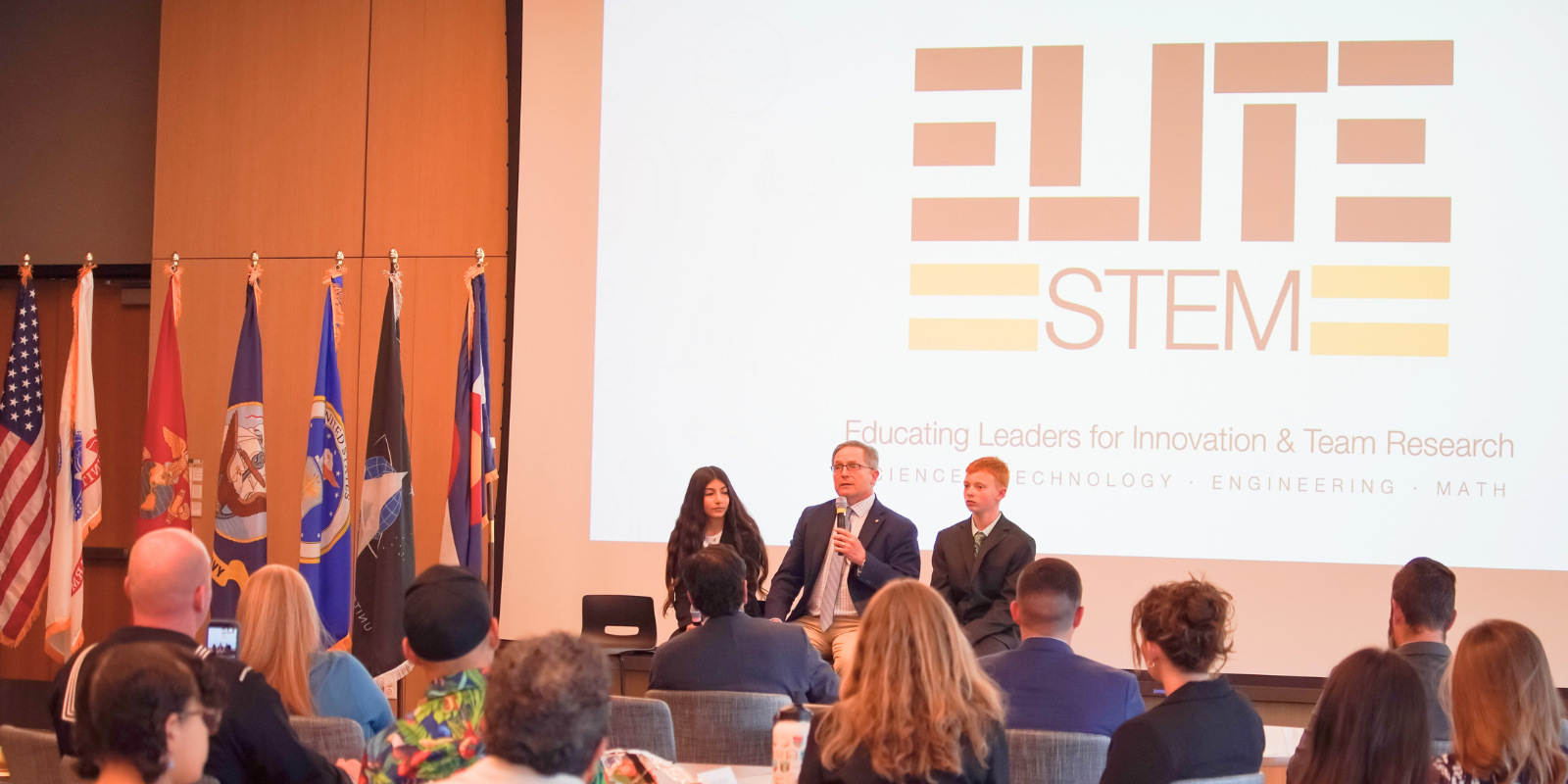
An education session for regional first responders at the Morgan County fairgrounds in Brush, Colorado, in June 2026.
Transporting blood
As a possible future initiative for the Prehospital Care and EMS program, Farcas talks about the rise in prehospital blood transfusions for patients with acute hemorrhagic shock from blood loss.
“There’s data showing that if these patients get blood before they get to a hospital, their outcomes are better,” she says. “In a rural area, you might need this the most. If you get in a bad car accident, you’re losing blood, and it's a 45-minute drive to the hospital, you need that EMS agency to give you blood in the ambulance, probably even more so than if you crashed two blocks away from a level I trauma center.”
But there’s a big challenge: Often there’s a severe shortage of blood supplies available to EMS agencies in rural areas. So Farcas and her colleagues have applied for a grant to support development of a blood distribution program to supply prehospital transfusions in rural areas along the Interstate 70 corridor. And she hopes aerial drones might one day be used to carry perishable blood supplies quickly from urban blood banks to far-flung communities where it’s needed.
“I know it sounds wild, but it’s not too far outside the realm of possibility,” she says.
‘Our door is always open’
Farcas says that in rural communities, residents recognize the importance of EMS programs.
“They appreciate the fact that they can call 9-1-1 and have a community member come to their home to provide aid,” she says. “Right now, in one community of around 60 people, there’s an all-volunteer EMS staff of about six people – six out of 60. That shows the community support.”
While the program has standing integrated medical direction agreements with 19 EMS agencies around the state, additional local communities often reach out to ask for training.
All of which helps explain why Farcas and her teammates are passionate about doing their best to support EMS programs across the state, she says.
"Our door is always open” to EMS teams, she says. “The philosophy of being accessible bleeds into everything we do. We want to be present, to be the face that people know and can reach out to for support.”