What does this recognition mean for you at this point in your career?
This recognition is incredibly meaningful because it reflects something much larger than any one individual. I've never viewed leadership as a personal achievement. Throughout my career, I've been fortunate to work alongside extraordinary teams dedicated to improving lives.
For me, it represents the opportunity to elevate awareness of brain health, particularly for our service members, veterans, first responders, and others living with invisible injuries. The most rewarding part of this honor is knowing it shines a light on the mission, the people we serve, and the remarkable team that makes that work possible every day.
→ Running Toward the Chaos: How Kathleen Flarity Turned a Traumatic Brain Injury Into Leadership and Healing at CU Anschutz
Not everyone wants to be a leader. What makes you want to be one?
I've always been drawn to opportunities where I could help build something, solve difficult problems, and create conditions for others to succeed. I've found fulfillment in helping people reach their potential and in serving a bigger mission than myself.
I believe leadership is really a form of service. If you can improve outcomes, remove barriers, and inspire people toward a common purpose, then you have a responsibility to step forward and lead.
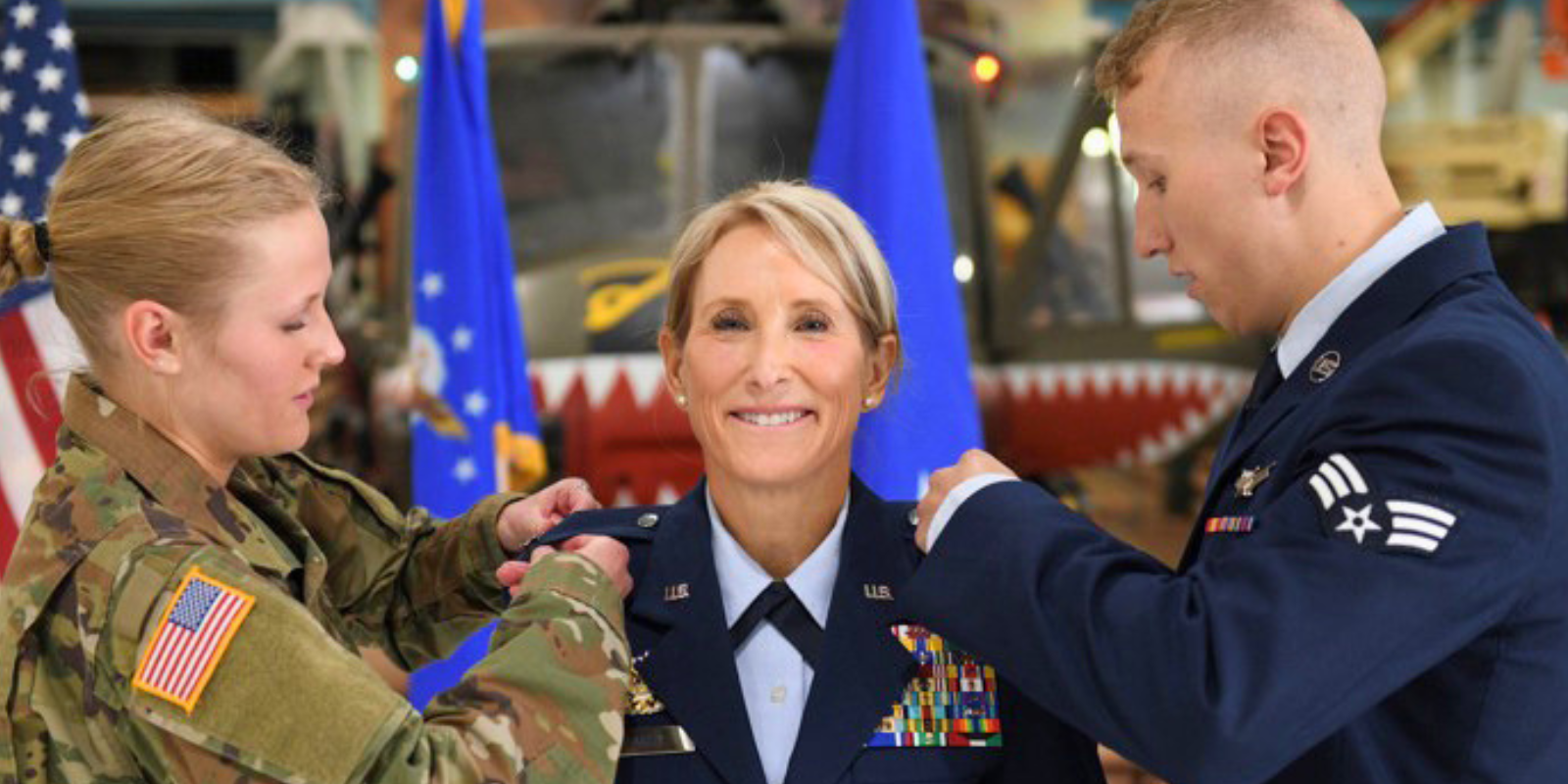
Then-ROTC Cadet Tori Flarity and Senior Airman Patrick Flarity -- pin stars on their newly promoted mother, U.S. Air Force Brig. Gen. Kathleen Flarity, during a 2020 ceremony at Wings Over the Rockies Air and Space Museum in Denver. Photo provided by U.S. Air Force Reserve.
What does leadership mean to you?
Leadership is the ability to inspire people toward a shared purpose while creating trust, accountability, and a vision for the future. I also believe great leaders listen more than they speak. They create environments where people feel valued, heard, and empowered to contribute their best ideas.
My career has taught me that leadership is less about power and more about purpose. The leaders who make the greatest impact are those who use their influence to serve others, create opportunities, and leave organizations stronger than they found them.
→ CU Anschutz Professor Flying High as She Joins Nation’s Most Accomplished Nursing Leaders
Across your career, including your military service, you've faced a lot of challenges that many leaders don't have to face. How have those challenges made you a better leader?
Military service teaches you very quickly that leadership is tested most during adversity, uncertainty, and high-stakes situations. Experiences such as deployments, high operational assignments, and physically demanding training environments taught me resilience, adaptability, and the importance of teamwork.
Those experiences also reinforced a critical lesson: No one succeeds alone. The strongest organizations are built on trust, shared purpose, and mutual accountability.
Working through demanding situations helped me become more comfortable making difficult decisions, managing risk, and maintaining focus under pressure. And it deepened my appreciation for the people who carry out the mission every day. Leadership begins with understanding and supporting those you serve.
If there's one thread connecting my career, it's helping organizations grow while improving the lives of the people they serve.
What are some special obstacles or challenges that women face in becoming leaders?
I’m often asked, “How did you do it? How did you excel in male-dominated worlds?” My response is: Do an exceptional job in whatever role you’re in. Focus on excellence where you stand. When you consistently deliver, new opportunities have a way of presenting themselves.
Over time, I’ve learned that leadership is not about being the loudest voice in the room. It’s about being the most grounded. It is about modeling what is possible so that the women coming behind us do not feel they need permission to lead boldly. They will simply know that they can.
My journey from Army private to Air Force general was not a straight line. With every new position, I had to earn trust and respect all over again. I chose to see that as an opportunity to make an impact. I did not want to simply be invited to the table. I wanted to contribute meaningfully and be a valued member of the team.
→ Military Leader, Classroom Innovator Model Gender Equity in Medicine and Beyond
You started your career as a combat medic in 1980. How are things different now for women?
The differences are remarkable. When I began my career, there were relatively few women in senior leadership positions. Role models were limited, and many women were navigating paths that had not been traveled before.
Today, women have greater visibility, more mentors, stronger professional networks, and more opportunities than ever before. Organizations increasingly recognize the value of diverse perspectives and integrated leadership.
That doesn't mean the work is finished. There are still gaps in representation and advancement, but the trajectory is encouraging. One of the most rewarding aspects of my career now is seeing talented young women assume leadership roles with confidence and ambition that simply weren't as common decades ago. More women are leading organizations, driving research, shaping policy, and serving at senior levels across industries and the military.
I believe the goal is not simply to create opportunities for women but to create environments where every talented individual can contribute fully and advance based on their abilities and impact.
→ Setting goals and sticking to them: The ins and outs of believing and achieving
What advice would you offer to a young woman who aspires to become a leader herself?
First, don't wait until you feel completely ready. Growth happens when you step into opportunities that stretch you.
Second, seek mentors and sponsors. Mentors provide guidance, but sponsors actively advocate for your advancement. Both are invaluable.
Third, be willing to take on challenges that others may avoid. Some of the most important opportunities in my career came from assignments that were difficult, uncertain, or outside my comfort zone.
Fourth, lead where you are. Leadership is not dependent on a title. It begins with how you serve others, solve problems, and earn trust.
Finally, stay connected to your purpose. Titles come and go, but a meaningful mission will sustain you through challenges and inspire others to follow. The world needs talented, compassionate, and courageous women leaders. Don't be afraid to claim your seat at the table – and when you get there, make room for others to join you.
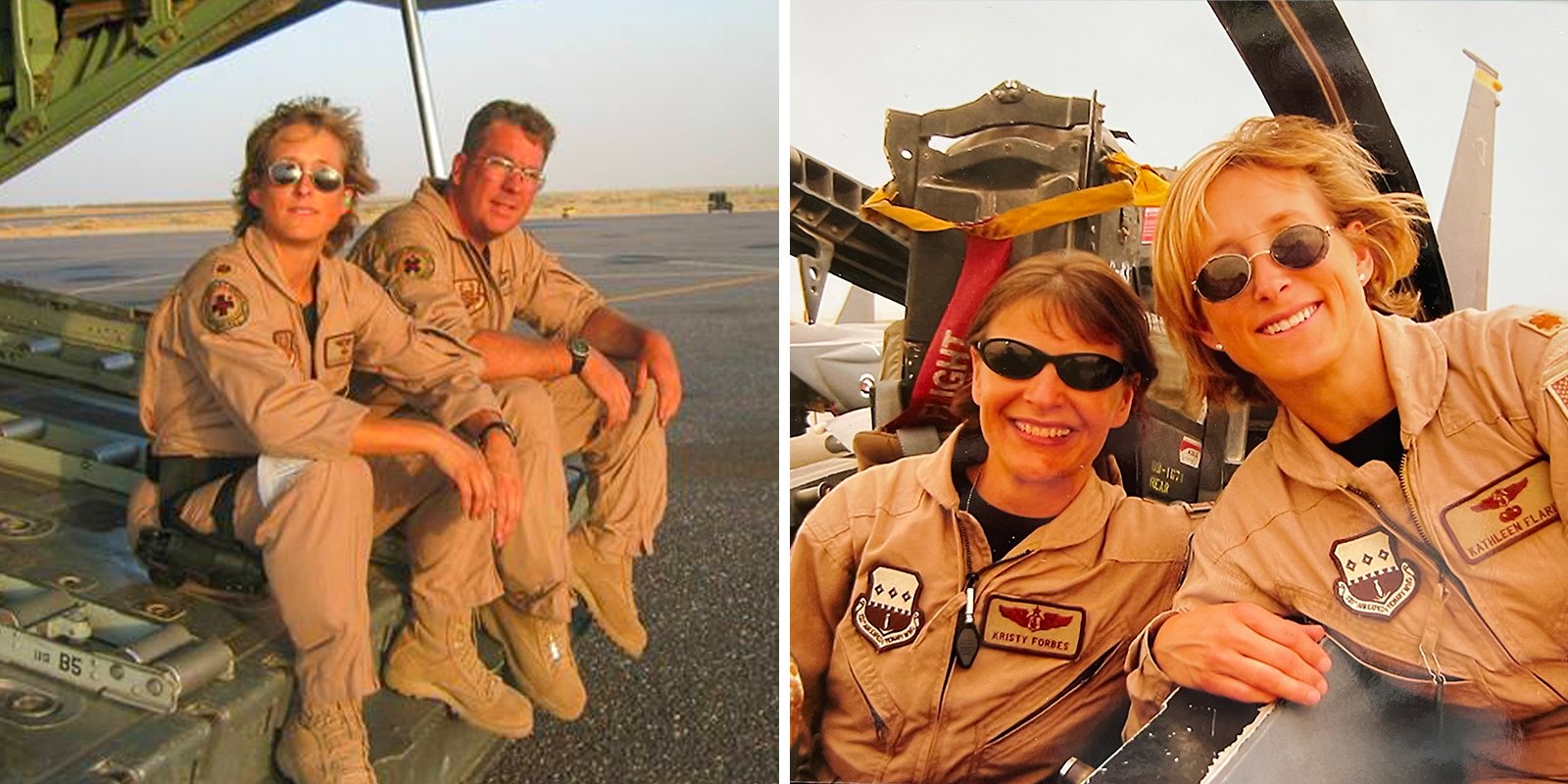
Left: As the sun rises over Iraq, then-Maj. Kathleen Flarity and MSgt. Chuck Hunt pause aboard a C-130 following an overnight combat aeromedical evacuation mission. Right: Capt. Kristy Forbes (left) with Flarity, deployed in support of Operation Iraqi Freedom. Photos provided by Kathleen Flarity.