The University of Colorado Anschutz and UCHealth, its clinical partner, will be the inaugural site as the U.S. Army Office of the Surgeon General and the U.S. Army Medical Command launch a comprehensive military-civilian medical partnership through the new U.S. Army STAR Program.
The initiative is designed to serve as a national model for health care collaboration and integration. Military and civilian health care providers will share clinical expertise, strengthen medical readiness, and develop best practices with the potential to improve care for service members and civilian patients alike.
The new STAR partnership was announced Sept. 14 in a signing ceremony at CU Anschutz featuring Lt. Gen. Mary Izaguirre, U.S. Army surgeon general and commanding general of U.S. Army Medical Command. A number of leaders from the campus and beyond were in attendance, including Colorado Lt. Gov. Dianne Primavera and Aurora Mayor Mike Coffman.
“We are taking a journey together,” Izaguirre told the gathering, recalling her visit last year to CU Anschutz, where she met with leaders of the Combat Medicine Research Center at the Department of Emergency Medicine and discussed ways to foster medical collaboration.
The Combat Center brings together physicians, researchers, military partners and others to solve tough medical challenges facing U.S. combat forces and translates that research to improve health care at home. Izaguirre said she was “blown away” by the center’s work.
“After our visit over a year ago, we discussed a model of military-civilian partnerships that would integrate the best of what our organizations could bring together,” she said. “We needed a framework that was comprehensive, mutually beneficial, and rapidly scalable; something that wouldn't constrain the innovation piece that we knew was required. We know that military medical readiness is forged in busy trauma bays, in high-acuity ICUs, and in the rigorous and relentless pursuit of excellence. That vision became the Army STAR model.”
The STAR Program “joins a growing number of military and federal partnerships on this campus,” said Vik Bebarta, MD, founding director of the Combat Center and chair of CU Emergency Medicine. “But what the Army is building with us goes deeper than anything we’ve done before. We have spent years making the case that military and civilian medicine are stronger when we work together. STAR puts that idea into action. It builds readiness before we need it, relationships before a crisis, and a team that can respond when the country calls. Today, we make that real.”
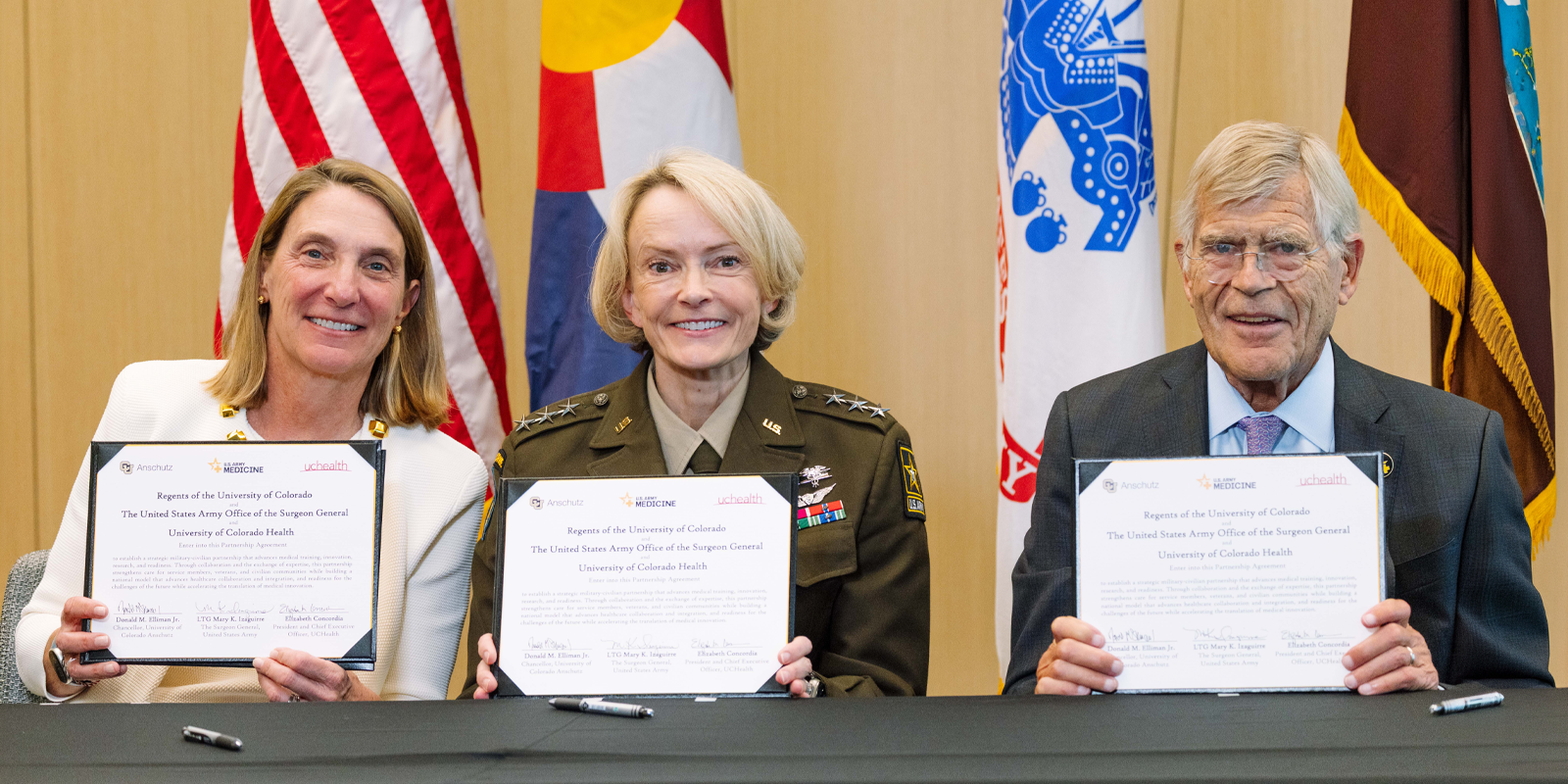
Photo at top: From left, Elizabeth Concordia, president and chief executive officer of UCHealth, Lt. Gen. Mary Izaguirre, U.S. Army surgeon general; and CU Anschutz Chancellor Donald Elliman Jr. at the signing ceremony for the Army STAR Program on Sept. 14 at CU Anschutz.
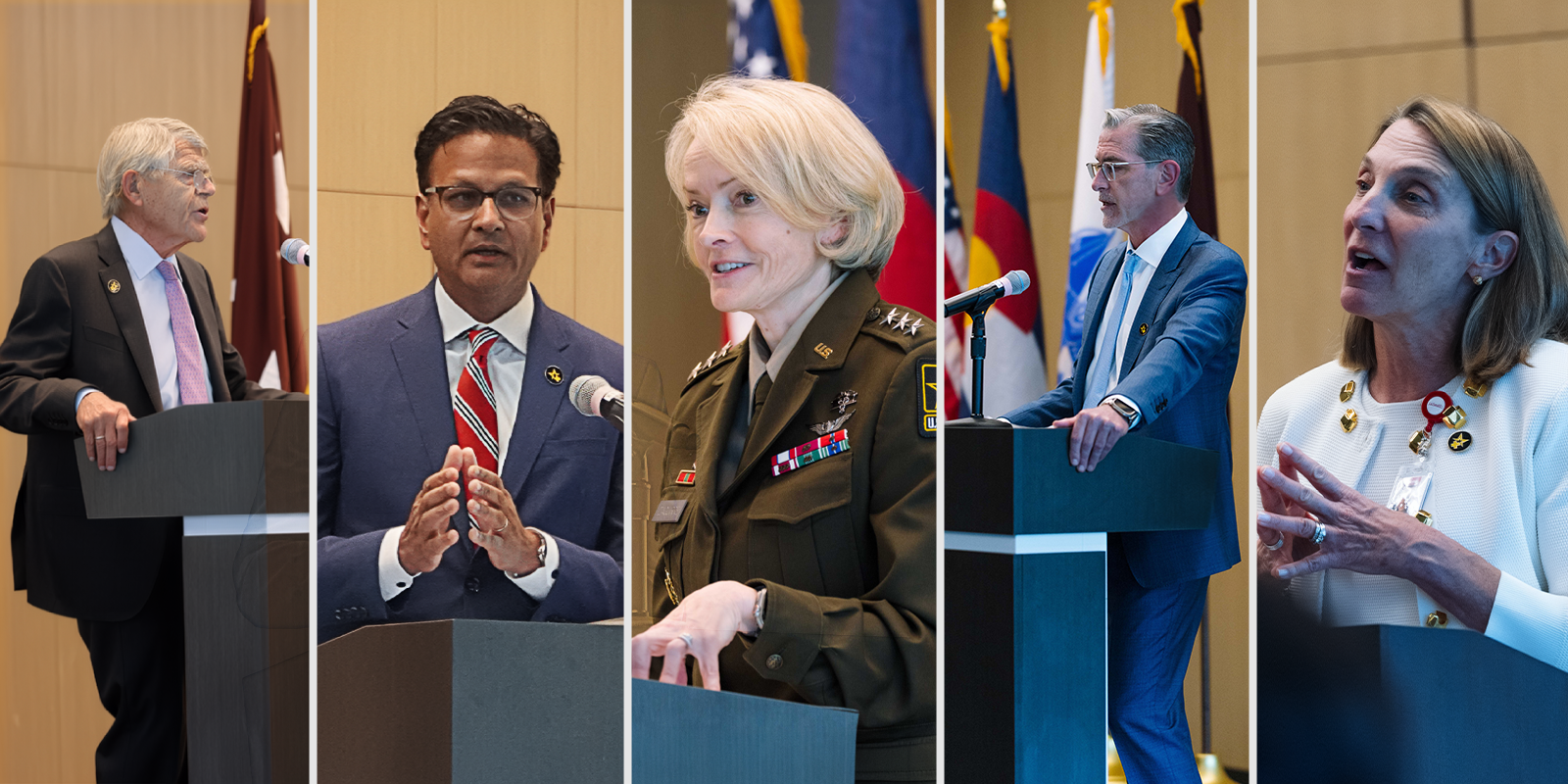
From left: Chancellor Donald Elliman; Vik Bebarta, MD; Lt. Gen. Mary Izaguirre; John Sampson, MD, PhD, MBA; and Elizabeth Concordia speak at the signing ceremony for the Army STAR Program on Sept. 14 at CU Anschutz.
A five-point framework
Currently, the Army has several partnerships of various sizes with medical centers across the country as part of its Army Military-Civilian Trauma Team Training (AMCT3) program. The STAR Program is a new initiative built on a five-point framework of objectives: medical skill sustainment, training and education, health system collaborations, research and innovation, and disaster preparedness and response. The “STAR” name is a reference to those five points.
Under the skill-sustainment part of the program, military providers will be embedded into UCHealth operations, where they can keep their skills sharp between overseas deployments.
When military medical personnel aren't deployed overseas, they are often stationed at medical facilities where they can practice high-volume, complex medical care. The idea is to avoid a well-documented "peacetime effect," in which the military providers’ skills erode without regular exposure to serious trauma cases.
The STAR Program aims to carry out that skill-sustainment goal by embedding an Army Forward Resuscitative Surgical Detachment (FRSD) full time at UCHealth. An FRSD is a small, highly mobile medical team providing rapid resuscitation and surgery in a battle zone, stabilizing casualties and serving as a bridge between point-of-injury care and combat hospitals.
The initial UCHealth contingent will include a trauma surgeon, an emergency physician, an intensive-care nurse, an emergency nurse, and a nurse anesthetist. The first surgeon will arrive at UCHealth Memorial Hospital in Colorado Springs in October 2026.
Then, UCHealth University of Colorado Hospital at CU Anschutz will receive its first embedded trauma surgeon in January 2027, followed by other FRSD team members in mid-2027. Over time, additional embedded medical personnel may be established at UCHealth.
Other program objectives
As for medical training and education, the STAR Program calls for establishing CU Anschutz Graduate Medical Education slots for Army personnel with campus residency programs starting in 2027.
The Army, CU Anschutz and UCHealth also plan to conduct coordinated research and innovation efforts aligned with Army medical capability gaps. The partnership will coordinate identification of research priorities, execute high-impact research, and accelerate the development, testing, and implementation of medical solutions for both military and civilian use.
Under the category of health system collaboration, the STAR Program partners will work to advance military-civilian integration and leadership development through joint initiatives and shared best practices, placing a special emphasis on veteran health care needs.
And the partners will share expertise to strengthen Colorado and national disaster preparedness and response capabilities. That objective parallels CU Emergency Medicine’s ongoing Hotel2Hospital research initiative developing ways to quickly convert hotels into hospitals in the event of a sudden surge of patients caused by war, pandemic, or natural disaster.
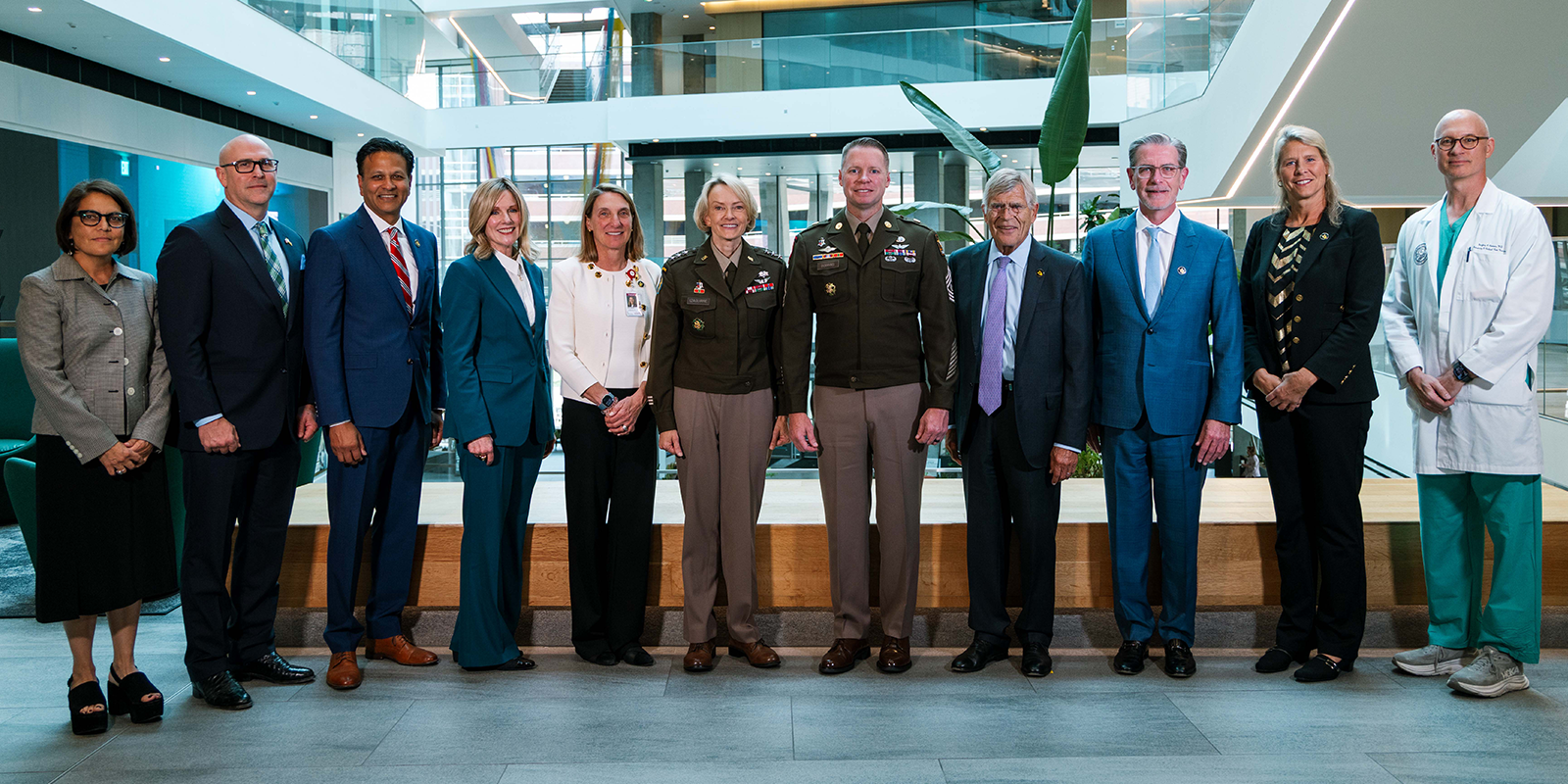
Participants at the signing ceremony for the Army STAR Program on Sept. 14 at CU Anschutz.
What CU Anschutz does best
Both CU Anschutz Chancellor Donald Elliman Jr. and John Sampson, MD, PhD, MBA, vice chancellor for health affairs and dean of the School of Medicine, noted in their remarks that the campus has a longstanding connection to military health care, dating back to its origins as a U.S. Army hospital more than a century ago.
“The Army STAR Program brings our institutions together in a partnership that draws on our collective strengths, advancing medical readiness while expanding opportunities to collaborate on research, training, and clinical care,” Elliman said. “This kind of work is what CU Anschutz does best: Connecting people and expertise across disciplines and organizations to solve real-world problems and improve lives.”
“Under this partnership, Army physicians, nurses, and medical specialists will work alongside faculty and the UCHealth team, participating in education, research, and clinical care at CU Anschutz,” Sampson said. “This clinical experience will help sustain the skills they need when called to serve to protect us. Our patients and learners, in turn, will benefit from the experience that they bring.”
Elizabeth Concordia, president and chief executive officer of UCHealth, said the STAR Program aligns with the hospital system’s “cultural and mission values,” noting that it will support military providers while “also ensuring that once they are finished with active duty, they have a place to come, practice and continue to provide a lot of wonderful experience in serving our patients.”
Officials hope to grow the new STAR partnership over time based on all parties’ needs. Bebarta and Anne Ritter, DrPH, MPH, the Combat Center’s senior director, will oversee daily operations of the STAR Program on behalf of CU Anschutz.