This fall, Grace Thompson and Cabrey Allison, students at the University of Colorado Anschutz School of Medicine who spent some of their training in Colorado Springs, channeled their passion for pediatric and disability care into a day of community, education, and play.
Thompson, a fourth-year medical student preparing for an internal medicine residency, and Allison, a third-year medical student, organized an adaptive toy event with The Resource Exchange, a southern Colorado non-profit organization that works with children and adults who have a variety of disabilities, and Jaxon Engineering, based in Colorado Springs.
With funding from Slay Community Scholars, which lends financial support to community engagement efforts by those in the CU Anschutz community, they were able to assist nearly a dozen families in adapting electronic toys to have bigger buttons, switches, and toggles to make them more accessible. The inaugural event was a success, the organizers say, and there’s hope that it will continue to help families in the future.
“This has been far and away one of the biggest highlights of my medical school experience,” Allison says. “It’s made me think a lot more about multidisciplinary care and how important it is to have those teams and be able to treat the whole person.”
A chance at real play
Play is an important part of social, psychological, and physiological development for children – but it can often be a challenge for families of children with sensory, motor, or cognitive impairments to find toys that are accessible or engaging. Adaptive toys are designed to accommodate a wide range of needs by offering customized features such as larger buttons or switches or alternative input methods that allows children to interact with the toy in a way that aligns with their abilities.
When they are available, these toys are typically more expensive, and unlike a lot of supplies needed for daily life, adaptive toys aren’t covered by insurance.
“These families are completely on their own,” Thompson says. “We saw a big opportunity to make a difference.”
At the event, children picked out toys and staff and volunteers from The Resource Exchange and Jaxon Engineering made the necessary modifications to bring the toys to life for the children. The SLAY Scholars Program funding helped purchase supplies to make the event possible.
“It was inspiring seeing everyone work together to be able to supply these kids with a toy specifically made for them,” Thompson says. “I think the most rewarding part was watching the kids play with the toys after they had been created — in particular the bubble machines were a huge hit — and it was heartwarming seeing these kids be able to hit the large switch or toggle button and see the bubbles turn on in a toy that was originally designed with a small button that they would have otherwise not been able to interact with.”
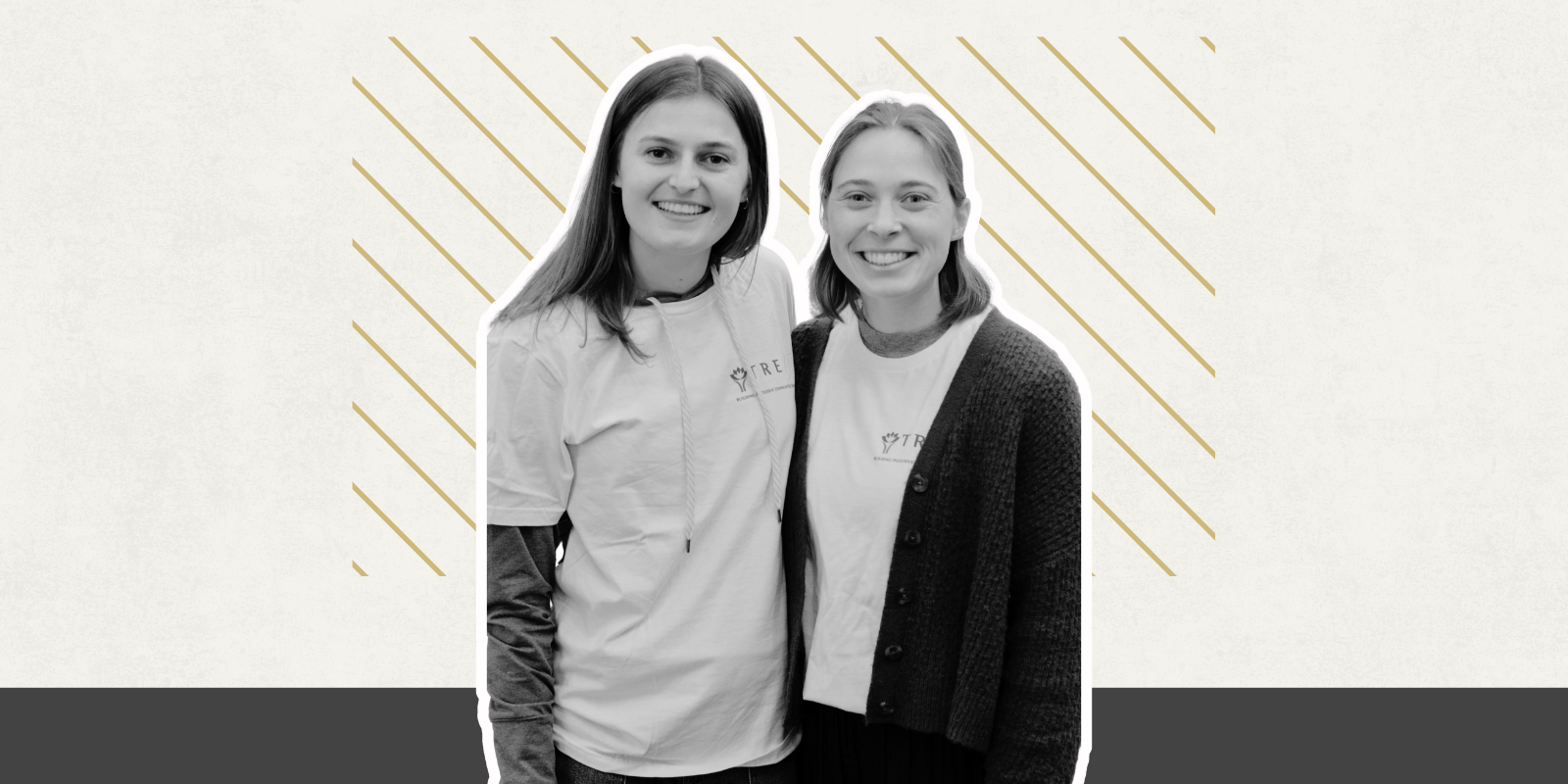
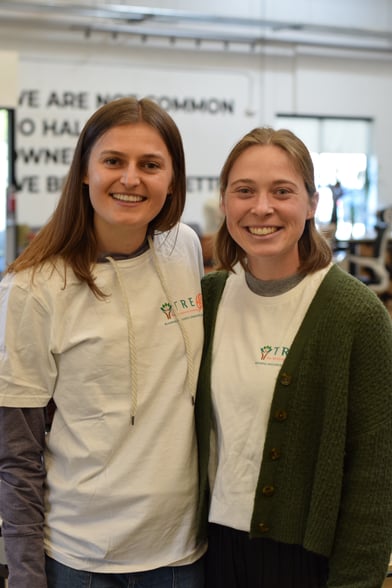 Grace Thompson, left, and Cabrey Allison at the adaptive toy event they organized this fall. Photo courtesy of The Resource Exchange.
In addition to the adaptations, Thompson and Allison wrote instructions and made a video so that parents could make the same modifications at home with other toys in the future.
“Parents of children with disabilities are so incredibly resourceful and will figure things out, and so to have this kind of workshop that they then can learn from and then continue adapting on their own, made it a really great opportunity,” Allison says.
Kim Matthews, a volunteer at TRE who also started the Christopher Ames Matthews Project (CAMP) Scholarship to support CU Anschutz medical students studying in Colorado Springs learn more about diagnosing, treating, and supporting individuals with intellectual and developmental disabilities, says seeing the event come together was rewarding, especially because the students care so deeply about taking care of children and adults with disabilities.
“The power of this event is the collaboration,” she says. “This kind of event allows children with disabilities to enjoy the same toys that non-disabled children enjoy without having to think about it. They don’t have to press that tiny on/off switch, they have another mechanism to make that play possible.”
‘Meet people where they’re at’
For Thompson and Allison, the work to enhance access to toys has helped pave a solid foundation for a career in medicine. While the event wasn’t medical in nature, it reinforced the idea that medicine often goes beyond the clinic doors or a treatment plan.
“This experience has inspired me to meet people where they're at,” Thompson says. “Especially as a student in medical school, you can get wrapped up in learning all the material, but in this work, you are able to recognize that each person’s path is different, how they interact with the world is different, and that their values of care are different. It emphasizes the importance of individualized care and how one option for one person may be inaccessible to another.”
The two students also see an opportunity to share what they’ve learned and help other medical students and health care professionals enhance their community engagement.
“Medicine, a lot of the time, can be very cerebral and brainy, but it’s important to take it back down to the baseline of connecting with people,” Allison says. “It’s been so refreshing for me and the whole team to recognize the personal connection that we have with people and the impact that we can have by developing those personal connections and relationships.”