
University of Colorado School of Medicine faculty at Denver Health have led the development of a new telehealth program to complement the network of health clinics housed in the Denver Public Schools – a program that makes available a host of medical services to thousands of students.
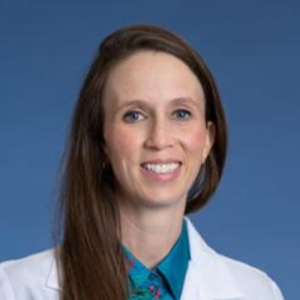
“There are kids who really need to see doctors and nurses, and we can make it possible through technology. That’s what I really love about it,” says Honora Quinn Burnett, MD, MScPPM, an assistant professor of pediatrics who practices at Denver Health, a clinical partner of the CU School of Medicine.
Burnett is medical director of the new initiative, known officially as the Denver Health Pediatrics at Denver Public Schools School-based Virtual Care Program.
So far, the virtual-health initiative in the Denver Public Schools (DPS) has increased access to health services at dozens of schools with more than 11,000 students combined. The program was launched in 2021, a year when chronic absenteeism in DPS rose to 36% and is seen as a way to help keep more students healthy and in class.
DPS is an urban school district with more than 90,000 students at its 207 schools. Nearly two-thirds of its students are eligible for free or reduced-price lunch.
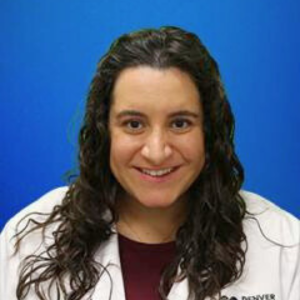
“School-based health care, and particularly virtual care, helps vulnerable students that wouldn’t get care otherwise,” says Sandra Cherabie, DO, an assistant professor of family medicine and medical director of Denver Health Pediatrics at Denver Public Schools, the on-site clinic program. “Telemedicine is a powerful way to get children connected to a provider when they have barriers like a lack of transportation, financial constraints, or working parents.”
Burnett, Cherabie, and their collaborators have published a “practitioner’s perspective” article on their program, “A Roadmap for Designing and Implementing a Hub-and-Spoke Virtual School-Based Health Clinic in Denver Colorado,” in the Journal of School Health.
Taking care to another level
Currently, 19 school-based health centers provide vital on-site medical services free of charge to students at DPS schools who might otherwise find it difficult to obtain them.
The health centers, operated by Denver Health, see about 15,000 users a year in 52,000 visits. Services include care for acute injuries and illnesses, dispensing medications, routine lab tests, conducting sports physicals, and providing mental and behavioral health care.
“Our health centers are robust in elevating the model of nurse-based care in schools to another level,” Cherabie says. “Usually, we'll have an advance practice provider, a nurse practitioner, or a physician assistant there, and occasionally a physician. We also partner with our dental and behavioral health teams and health educators.”
“We see a lot of children that you might call unreachable – children we don’t usually see in a clinic,” says Burnett. “We see a lot of new immigrant children, for example, and maybe their parents don’t know how to navigate the health system. So, it’s a doorway for children to get the urgent care they need within their school, and then to get connected to a medical home.”
Still, only about one in 10 of DPS’ schools has a school-based health center, leaving about 80,000 DPS students without on-site access to a center. DPS does employ about 140 registered nurses circulating among its schools, but they are not able to dispense medications without a provider order.
“The nurses were asking for more services within their own schools,” Burnett says. “If you ask any school nurse if they want a school-based health center on site, they’ll often say yes. Many were eager for the services that an on-site center can provide, but we have limited resources to offer them.”
The power of telemedicine
Meanwhile, during the COVID-19 pandemic, “we were able to see the power of telemedicine, and we began to look at what we could leverage in that way,” Burnett says.
So, plans were devised to supplement health services at DPS sites lacking an on-site center through telehealth appointments with a physician or other provider, facilitated by a school nurse.
First, Denver Health staff fanned out across the district to find schools where administrators and nurses would buy into supporting the Virtual Care Program, Burnett says. They also had to obtain consent for students to take part “and discuss with parents what we would and wouldn’t do – we weren’t going to vaccinate their children against their will, for example.”
Then, the project team secured funding from the Colorado Department of Public Health and Environment (CDPHE) to cover the pilot program’s first 2-1/2 years.
This Denver Health video demonstrates how the Virtual Care Program works in DPS schools.
Passion for the program
The Virtual Care Program launched in fall 2021 at 10 schools. As of March 2025, the initiative is active in 43 schools with a combined enrollment of 11,348 eligible students. Uptake in terms of telehealth visits was initially slow, but it gradually increased, and now 877 visits have taken place.
According to project records, 68% of those served by the program so far are at or below 200% of the federal poverty level, 63% are Hispanic, and 21% are uninsured.
When a student comes to the school nurse with anything from headaches or menstrual pain to asthma complaints or ear infections, the DPS school nurse can connect them to a Denver Health practitioner, they can receive over-the-counter medication as needed with parental consent, and then they can go back to class. Parents can be included in the visit virtually or updated after the visit.
If a visit is deemed unsuited for virtual care – a fractured hand needing imaging, for example – a student might be sent to a physical school-based health center or the Denver Health emergency department.
“The nurses and other people who agree to partner with us are really passionate about what they do and about the kiddos,” says Karen Sosa-Sanchez, clinical project coordinator of the telehealth program. “They have this extra task on their plate, but this program would definitely not work without them.”
Students and their families do not pay for services through the school-based health centers and the virtual program. Their insurance (if they have coverage) or Medicaid may be billed, but there are no deductibles or co-pays for parents.
Expansion and challenges
Burnett and her colleagues say they are gratified by the feedback they’ve received so far from nurses, students, and parents about the new program. One nurse commented: “It was amazing to be a part of this team and to provide visits in school for student who would not have otherwise been able to see a provider!”
And as for keeping students in class, Sosa-Sanchez notes that “last year we ended up seeing about 400 kiddos, and only about 5% went home sick after that.”
The project team is looking at ways to expand, but it also faces financial challenges with the expiration of its initial CDPHE funding. “Now it’s up to us to make this program sustainable,” Burnett says. “We’re continuing to look for philanthropic and grant funding. We’d like to expand this to be in all the schools, and this year we’re launching testing for sexually transmitted infection.”
Similar virtual initiatives have been implemented or are being discussed in school districts across country. The recent publication was intended to offer one model for such a program, Burnett says.
“There is interest in doing this work that’s growing around the nation,” Burnett says. “We’ve heard from two other districts in Colorado already.”
Sonja O’Leary, MD, an associate professor of pediatrics and Denver Health’s chair of ambulatory pediatrics and community programs, also collaborated on the project.

.png)