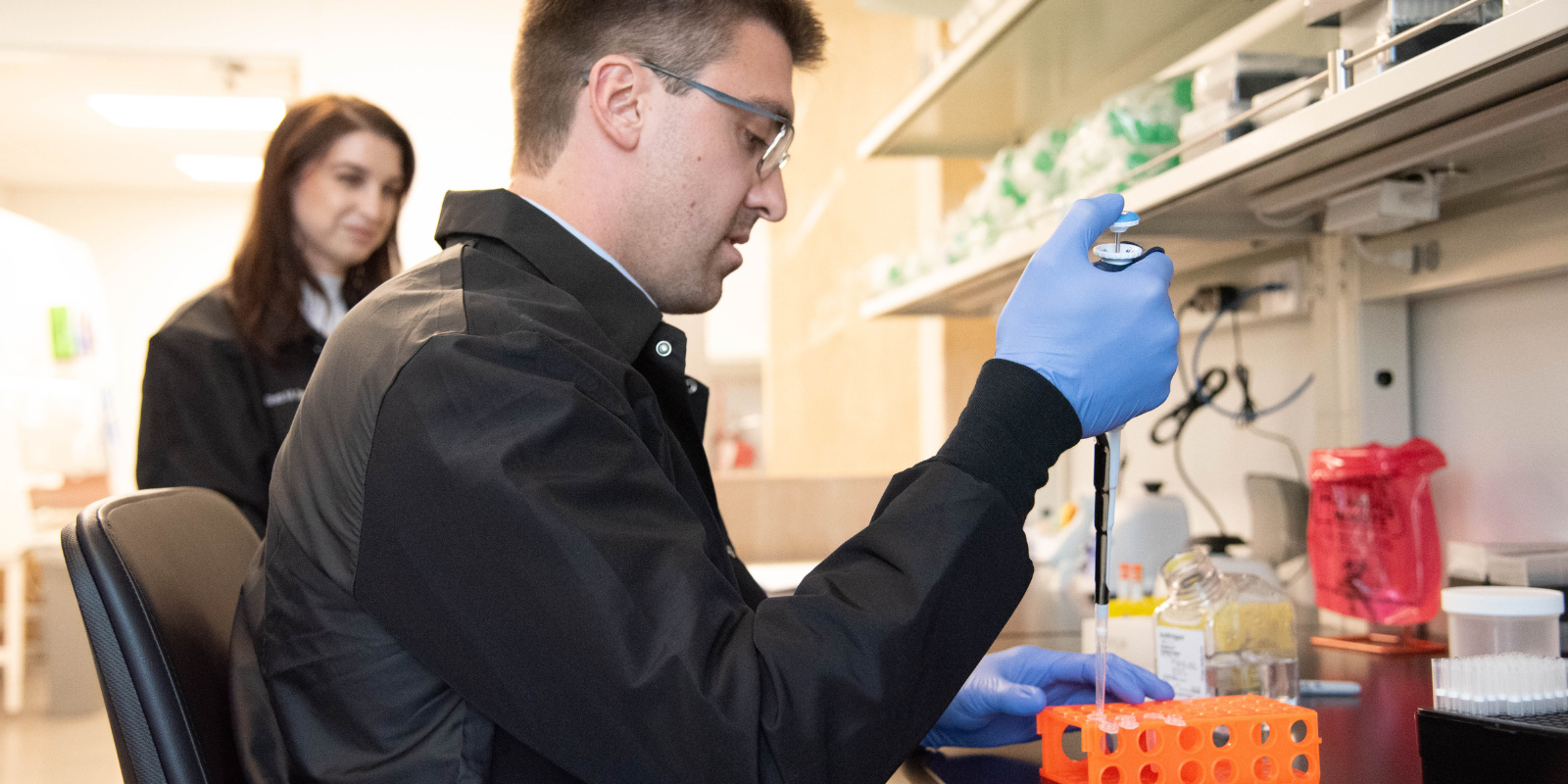
Addressing burnout in health care professionals continues to be a top priority in the medical field. At the University of Colorado Anschutz School of Medicine, it’s been the mission of Lotte Dyrbye, MD, MHPE, and her team to improve well-being among faculty and identify the best ways to reduce factors that result in burnout.
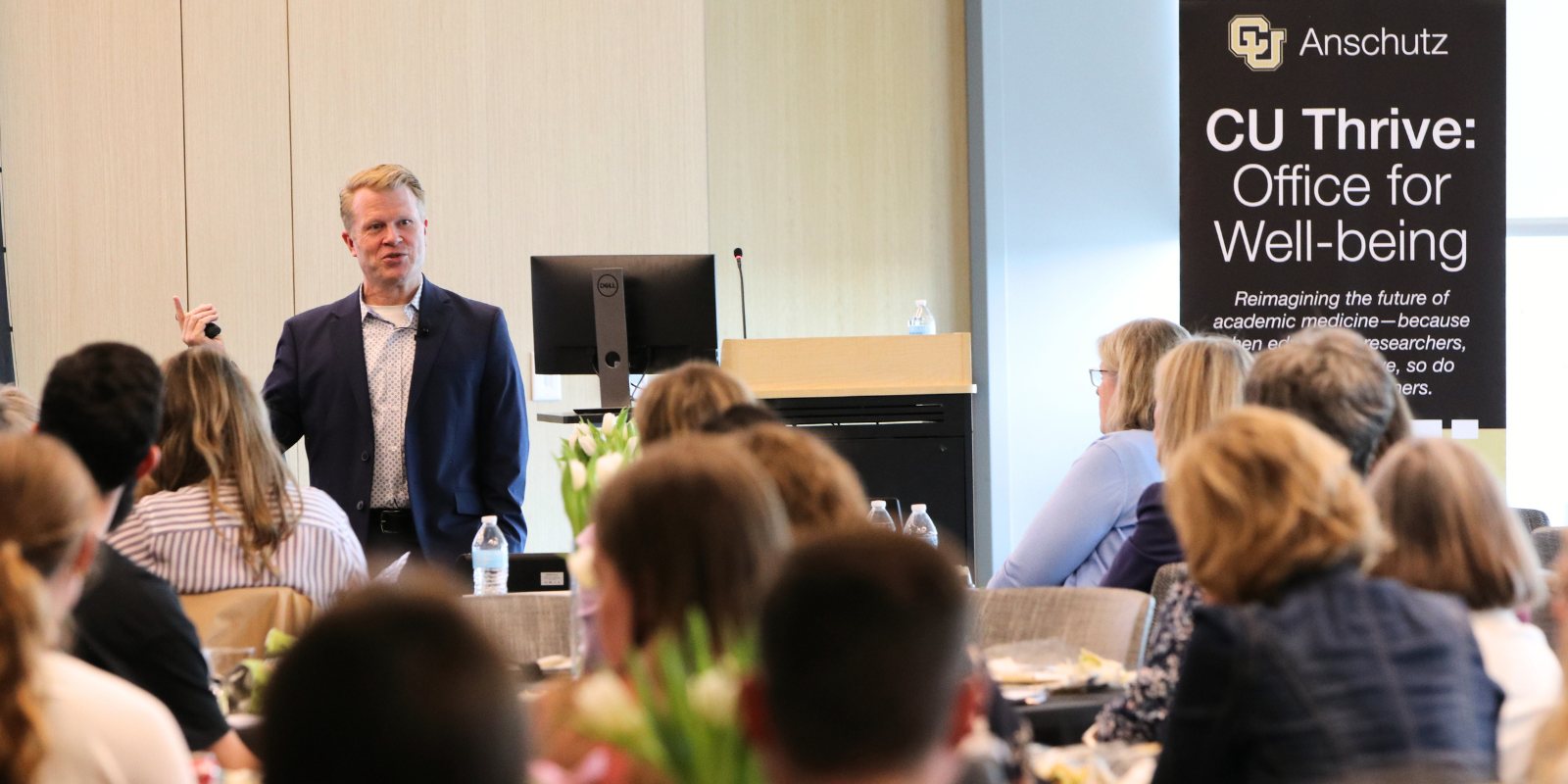
At the inaugural CU Thrive Well-Being Innovation Day, hosted March 24, leaders in medicine at CU Anschutz and beyond joined Dyrbye, senior associate dean for faculty well-being and chief well-being officer, in sharing evidence, innovations, and practical solutions.
“When our workforce thrives, our patients, our learners, and our communities thrive,” Dyrbye told attendees.
The event reflects a growing movement among researchers and leaders to advance well-being in health care and strengthen the experience of faculty across clinical, research, and educational roles.
Far-reaching impacts
A 2023 national study of U.S. physicians found that 45% experienced burnout – a rate higher than other workers across the country.
“This persistently high prevalence of burnout among physicians is concerning because it threatens ongoing efforts to improve quality, safety, and cost of care as well as access to care,” Dyrbye and fellow well-being researchers wrote in a recent paper testing whether smartwatches could be a helpful solution in helping prevent and manage burnout.
What contributes to these higher rates of burnout? The event’s keynote speaker, Tait Shanafelt, MD, chief wellness officer at Stanford University, said it’s a combination of factors.
“Although we're compassionate with others, we tend to be harsh, perfectionistic and self-critical in the way we interact with ourselves,” said Shanafelt, who started his journey in medicine at CU where he graduated from medical school in 1998. “We hold ourselves to incredibly high standards, and there is amongst clinicians a much higher degree of belief that all my accomplishments are not good enough.”
Shanafelt added that a physician’s “ability to find and solve problems makes us good diagnosticians, our ability, our desire to serve leads to our commitment to provide high quality care.” However, that can come with a “dark side” and contribute to delaying personal needs.
In a recent paper Dyrbye and Shanafelt collaborated on, researchers found that moral distress is common among physicians and experienced at higher rates than the general U.S. working population. While distinctly separate from burnout, moral distress stems from “situations in which upholding professional ethical values is challenged.”
The researchers point out that understanding moral distress and burnout can help health systems and organizations more effectively implement interventions to address concerns among clinicians.
Building a solid foundation
At the CU Thrive event, more than a dozen researchers presented on topics focused on well-being.
Alexandra Kilinsky, DO, assistant professor of pediatric hospital medicine at the School of Medicine, discussed optimizing cognitive load of nocturnists through a swing shift intervention, while Tyra Fainstad, MD, professor of internal medicine, presented on a coaching program she and Adrienne Mann, MD, created called Better Together, which “helps physicians shift from external validation and survival mode to internal agency in the midst of demanding training environments.”
Anna Maw, MD, associate professor of hospital medicine, walked attendees through how documentation burden can contribute to burnout and why artificial intelligence tools such as Abridge, a documentation tool that captures clinical conversations and turns them into structured medical notes, may play a part in improving clinician wellness.
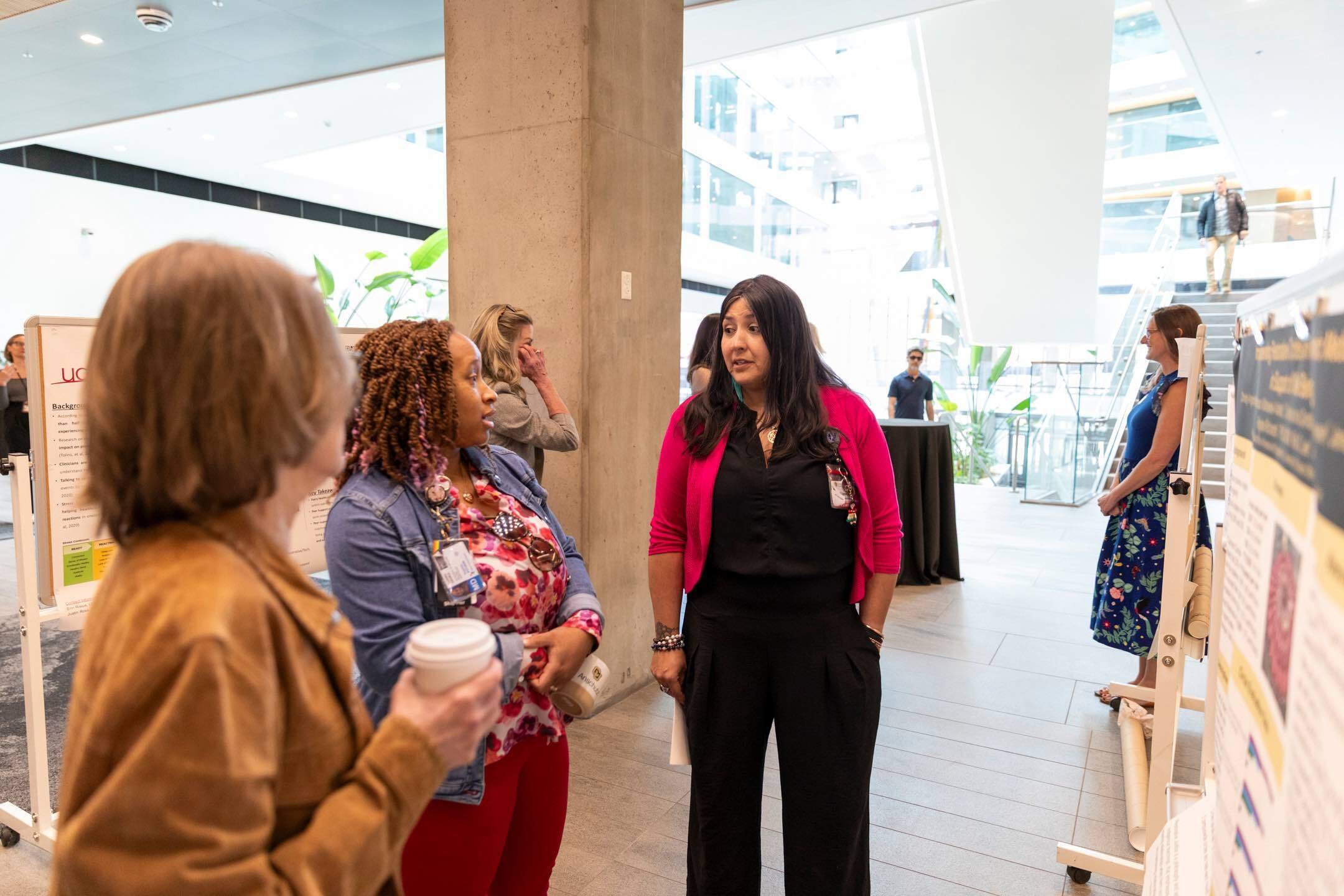
CU Anschutz Health Equity Education and Training Program Manager Christy Angerhofer discusses her poster at the first CU Thrive Well-Being Innovation Day. Photo by Justin LeVett.
Posters at the event covered topics from preventing violence in the emergency department and fostering peer support in all health care roles to how observing art may improve clinical awareness.
Kilinsky’s oral presentation on nocturnists won Best Oral Presentation Award for the day, and CU Anschutz Health Equity Education and Training Program Manager Christy Angerhofer won People’s Choice Poster Presentation Award via live attendee voting for her work on implementing restorative circles — described as brave spaces for individuals to process and connect — in academic medicine.
Dyrbye deemed the first CU Thrive Well-Being Innovation Day a success with more presentation entries than the event had time.
“A thriving workforce isn’t aspirational—it’s achievable when we align science, leadership, and action. CU Thrive Well-being Innovation Day wasn’t just about ideas—it was about building the future of how we work in healthcare,” Dyrbye said.