


The University of Colorado Anschutz is advancing the way it partners with major pharmaceutical and biotechnology companies on clinical trials.
Currently, the university collaborates with a wide range of industry partners on clinical trials and research. These industry partners typically design the trials themselves and bring them individually to university faculty for implementation.
But CU Anschutz has begun seeking out deeper, longer-term partnerships at an institutional level that can accelerate and strengthen research opportunities, provide industry partners coordinated access to top-notch scientists, and lead to treatments that transform patients’ lives.
Campus leaders are brimming with enthusiasm about the prospects that such partnerships can bring. Adit Ginde, MD, MPH, senior associate dean for clinical research with the CU Anschutz School of Medicine and assistant vice chancellor for clinical trials, says one of the most exciting opportunities will be for CU Anschutz researchers to help design and shape new clinical trials. By forming deeper partnerships, it will be possible to get involved with innovative new clinical trials in their beginning stages.
“We’re getting an earlier view into the clinical trial pipeline. We’ll get to see what’s coming and be a part of that journey,” Ginde says. “This allows us to go faster, be able to treat more patients, and be more effective so our contributions can be greater.”
Clinical trials give hope to seriously ill patients for whom existing treatments aren’t adequate. Supercharging the clinical trial process can help more patients access innovative and potentially life-saving therapies. It also reflects the university’s commitment to excellence in patient care and research across a wide range of health conditions.
‘Making the science stronger’
CU Anschutz’s recently announced partnership with Bayer, an international pharmaceutical, food, and agriculture company, is a prime example of the university’s new clinical trial partnership approach.
The alliance, which also includes partners UCHealth and Children’s Hospital Colorado, will boost clinical trial research and add dozens of new trials across multiple crucial research areas, including oncology, cardiology, neuroscience, personalized medicine, ophthalmology, women’s health, gene therapy, and acute care to the university’s portfolio.
Clinical trials are just one example of the industry partnerships that exist across campus. The University of Colorado has been selected as a marquee university to partner with Medtronic to collaborate on disruptive areas in health care such as AI, robotics, sustainability, and advanced materials to drive breakthrough solutions that advance healthcare. CU Anschutz has also partnered with Verily to transform how healthcare data and artificial intelligence is used in research and clinical care.
These collaborations are facilitated in part by the CU Anschutz Innovations office under the leadership of Kimberly Muller, vice chancellor for innovation and partnerships. The office forges strategic alliances, develops business ventures, and commercializes technology alongside industry partners, entrepreneurs, and investors.
Recent strategic collaborations, such as the one with Roche H10, further demonstrate CU Anschutz Innovations’ role in connecting campus expertise with leading industry partners to advance discovery, clinical research, and patient impact.
In addition, campus-affiliated organizations like Colorado Prevention Center (CPC) Clinical Research, led by Executive Director Marc Bonaca, MD, MPH, professor of medicine in the Division of Cardiology, have extensive experience in partnering with industry. CPC enables therapeutic development through supporting investigator and CPC-sponsored studies as well as coordinating center functions within traditional sponsored studies.
“The CPC was founded by the campus in order to enable faculty to partner with a variety of funders including industry partners in an innovative and impactful way,” Bonaca says. “And science is more than just answering a question — it’s doing it in a way that enables the question to lead to drug approvals, provider acceptance, and implementation. It’s not just, ‘Hey, let’s do a study and write a paper.’ There’s a major need for industry partnerships to help us go from concept to broad application in an effort to improve human health.”
Ginde says that entering into deeper industry partnerships will offer unprecedented opportunities for the university.
“We can be a part of trial development to make the science stronger, innovate on the way we use novel tools to conduct these studies more efficiently and effectively, and figure out new ways to be able to reach more patients after the trial is successful,” he says.
These trials could become even more impactful for the faculty and researchers who take part in designing them, especially if they can tailor studies to their areas of expertise. Researchers will also have access to resources and dedicated personnel who are there to support the partnership.
Ginde also emphasizes that CU Anschutz researchers need not worry about their existing projects being deprioritized. He anticipates these partnerships will make the clinical trial process more efficient overall and expand, not detract from, the work already being done at the university.
“These trials won’t happen at the expense of the rest of our research portfolio,” he says. “We're continuing to improve our ability to start other trials faster and help provide support around them. This partnership puts the clinical trials process on hyper speed and provides additional support so that existing personnel can focus on the regular portfolio.”
More major partnerships are on the horizon for the university in the coming years, according to Ginde.
‘Investing in hope’
The human impact of strengthening clinical trials also cannot be overstated. Patients can access new therapies years before they receive formal approval, and the results can be miraculous.
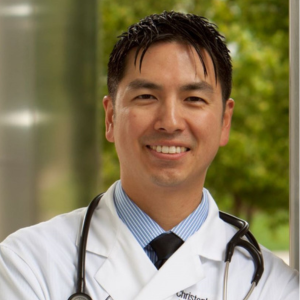
“What we believe is that clinical trials offer an opportunity to reach into the future and offer tomorrow's therapies today,” says Christopher Lieu, MD, associate director of clinical research at the CU Anschutz Cancer Center, gastrointestinal oncologist, and professor of medical oncology at the CU Anschutz School of Medicine.
Lieu emphasizes the need to advance research into new cancer treatments. He shares stories of two young patients who recently came to the CU Anschutz Cancer Center. One was a 35-year-old man with two children and a metastatic colorectal cancer diagnosis. His disease had been progressing despite trying several different types of chemotherapy. He had few other options.
“The drugs that we currently have FDA-approved will offer two months of additional overall survival and a response rate around 5 percent,” Lieu says. “Can we offer these patients better than that?”
Another patient, a 42-year-old mother of three with cancer, was more fortunate. After undergoing a successful clinical trial for an immunotherapy treatment, she is still alive and off treatment five years later.
According to Lieu, there are currently more than 1,000 residents with cancer in the Aurora area who are eligible for a cancer clinical trial but don’t have access to one. Collaborating with industry partners to accelerate clinical trial research could change the landscape for these patients and make them more accessible to people from all walks of life.
Lieu framed investing in clinical trial research as “investing in hope.”
“To do clinical trial research faster, to do it better, is honestly one of the most exciting things that I'll ever be a part of in my career,” he says.


.png)