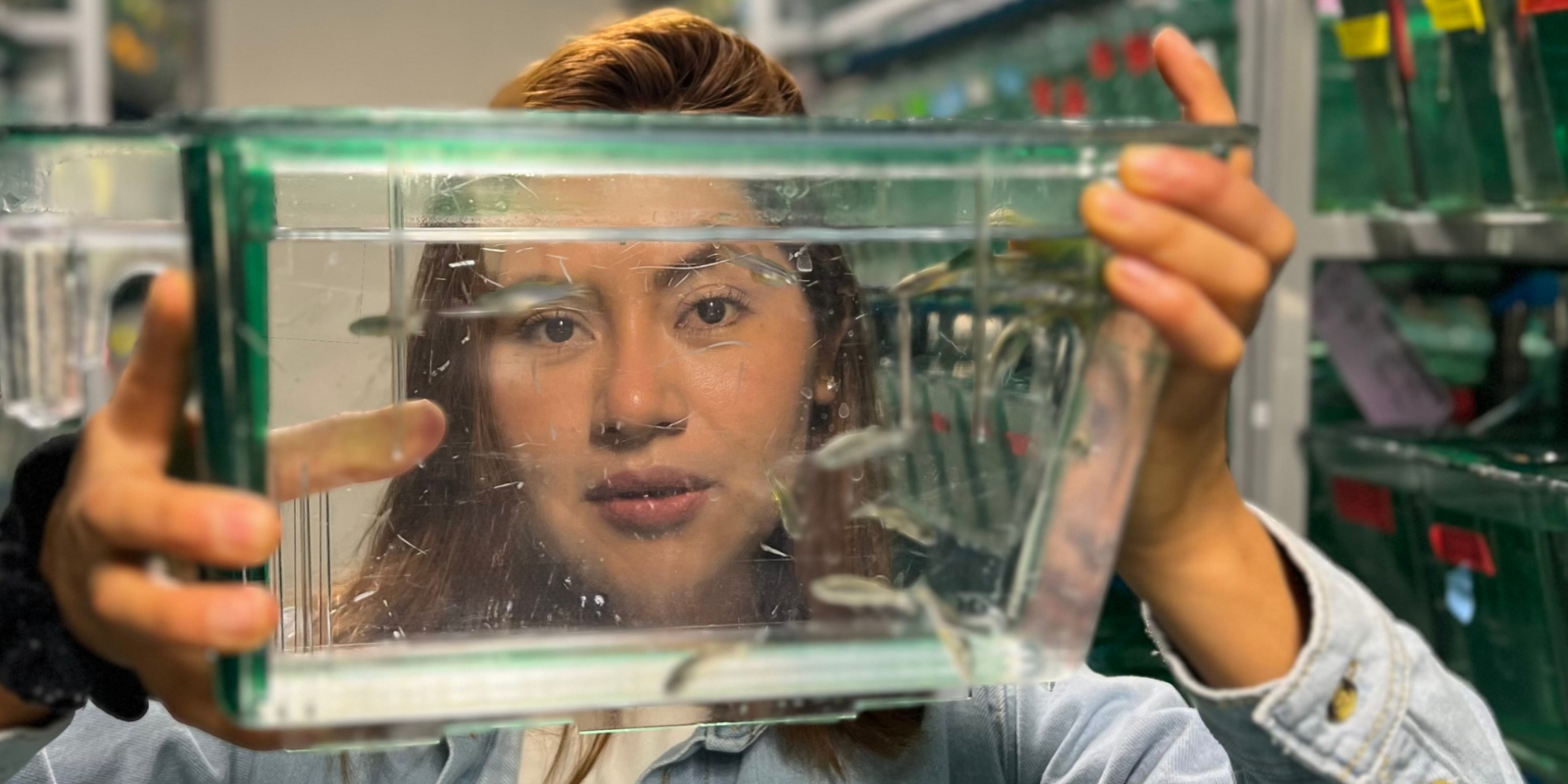
Marycruz Flores-Flores, PhD, a postdoctoral fellow in the Department of Pediatrics at the University of Colorado School of Medicine, is one of 10 U.S. researchers to be named a 2025 Pew Latin American Fellow in the Biomedical Sciences.
The 10 postdoctoral fellows from five Latin American countries — Argentina, Bolivia, Brazil, Chile, and Mexico – will receive two years of funding from The Pew Charitable Trusts to conduct research in laboratories throughout the United States. Fellows who choose to return to Latin America to launch their own research labs will receive additional funding from Pew.
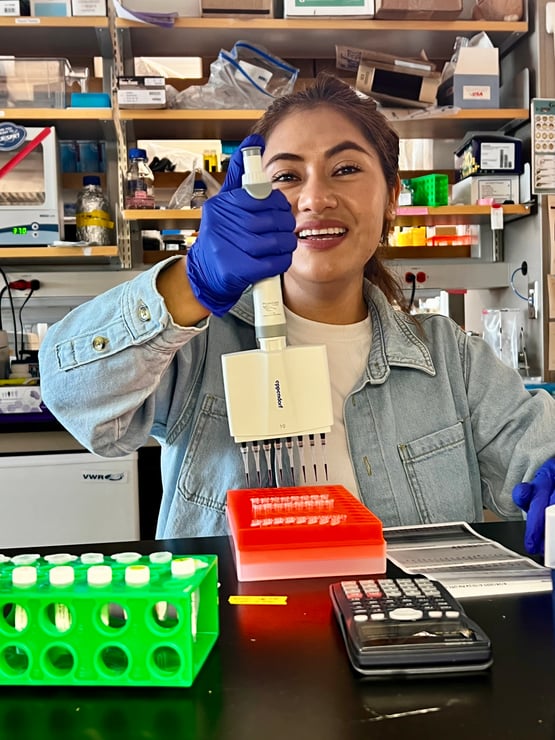
Marycruz Flores-Flores
“Some days I still don't believe it. I first heard about this fellowship 10 years ago, and now being selected as a Latin American fellow is a dream come true,” says Flores-Flores, who received a doctorate in molecular and cellular physiology in 2024 from the Center for Research and Advanced Studies (CINVESTAV) in Mexico City in her home country of Mexico.
“They see the potential the Latin American fellows have,” she says of Pew. “The fellows who have returned to Latin America are now playing an important role in the development of science in Latin America."
Origins of cardiac development
At CU, Flores-Flores works in the lab of Christian Mosimann, PhD, associate professor of pediatrics in the Section of Developmental Biology, where she is exploring how membrane potential — the distribution of ions across cell membranes that triggers various physiological functions — helps to orchestrate cardiac development.
“If we could find the early pattern of membrane potential, we may be able to describe new diagnosis or treatments for electrical heart diseases,” she says.
Valuable team member
Mosimann says that since starting work in his lab in March 2024, Flores-Flores has become an indispensable member of his team.
“She's now the go-to person for a lot of technical and conceptual things,” he says. “She has a big drive and ambition to look at how electrical potentials over membranes of cells are involved in early development. The initial spark for the research came from her, which is every professor’s dream.”
Flores-Flores being named a Pew Latin American Fellow, he says, is evidence of how the international reputation of CU Anschutz has grown in recent years.
“I was aware of the Latin American Fellows Program, but I was also painfully aware of the fact that the recipients usually are at big visible universities on the international level,” he says. “But we applied, and she got it, which tells me quite a bit about what CU Anschutz is in the eyes of other people.”
Mosimann says awards like the Pew Latin American Fellow also show the importance of international perspectives in research.
“On a personal level, this has been fantastic,” he says. “I'm from Switzerland, originally, and my mom is from Greece, so I grew up in an international household. When I was a postdoc in Boston, we had people from all over the world. That’s when I realized how significant that international exposure is — on an interpersonal level, but also scientifically, different ways of thinking, different ways of training. In my lab, we have had people from the Netherlands, Italy, Canada, Mexico, Serbia, and India, and we have a graduate student from Ghana. I've always wanted to foster an atmosphere like this, and now I get to do it.”
Grateful to give back
Flores-Flores says she is grateful to Mosimann and his team for their support, which she credits in part for the award that will allow her to help other young Latin American scientists.
“I'm excited for the future, but I also know that this is a huge responsibility,” she says. “Going back to Latin America and having this advantage could help me to support the young scientists that are coming up. I had a lot of opportunities that at the beginning I didn't know how to navigate, so now I want to go back show people, ‘Hey, you could do this.’ I want to support them through my experience.”