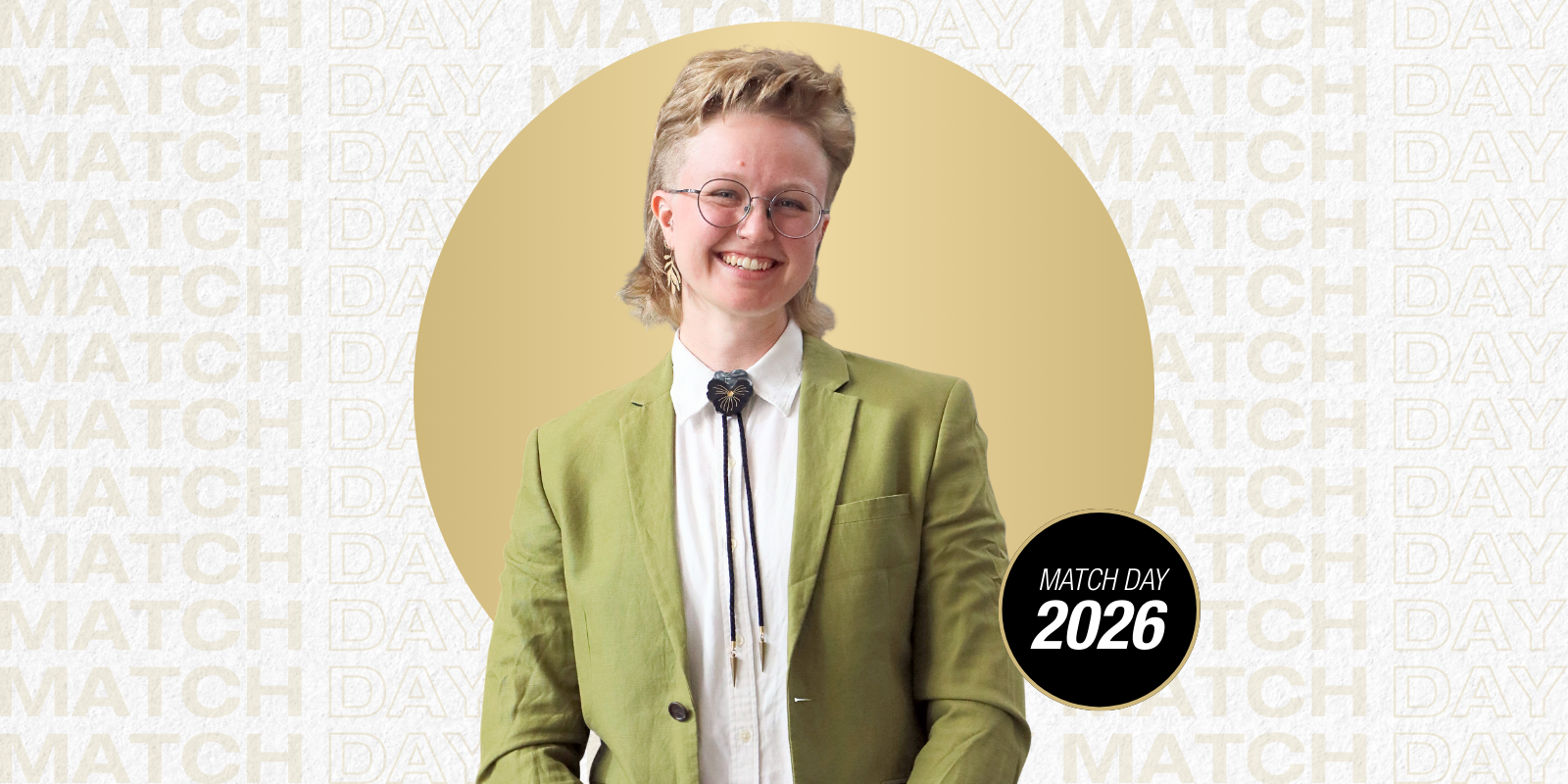
Ry Hemond knew that being part of the Rural Program at the University of Colorado Anschutz School of Medicine would accelerate their medical school experience — they just didn’t think it would happen so quickly.
“In the rural areas, there are no fellows, no residents,” Hemond says. “It's usually just you and your attending, so you're expected to know how to scrub in and be ready to go your first day. The running joke in the program is, ‘We teach you all this stuff your first year so that your first day, you could scrub into a C section.’ We all laughed, but that is exactly what happened to me.”
Hemond had just arrived at a medical center in Salida, Colorado, at the start of their second year and was logging onto their computer for the first time when a doctor asked for assistance treating a patient who was about to give birth.
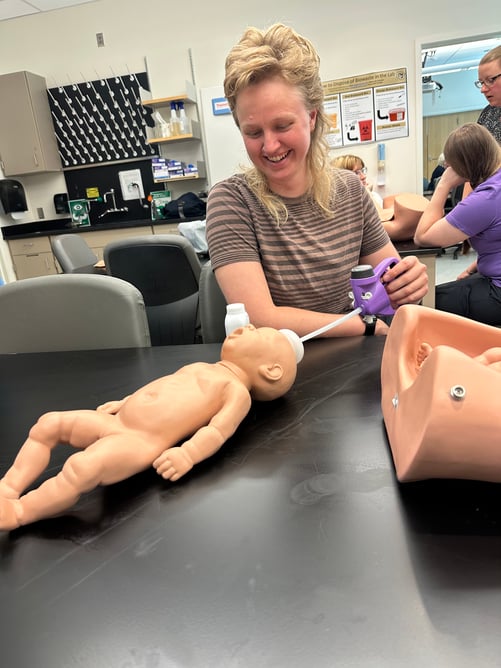
Ry Hemond learning how to deliver babies and do a vacuum-assisted delivery during a rural program workshop during their first year. "I ended up using this skill several times during my second year!" they say. Photos courtesy of Ry Hemond.
“We were in the middle of doing a training, and one of the docs poked their head in and said, ‘Do you guys know how to scrub in?’” Hemond says. “I was second assist on a C section my very first day of clerkship.”
Rural appreciation
Hemond, who grew up near Boston, says “a big part of my heart is in rural areas.” As a child, they spent their summers at their grandmother’s house in rural Maine. In high school and college, Hemond spent a lot of time in the wilderness, teaching outdoor education classes and hiking the Appalachian Trail.
“I'm queer and I'm nonbinary, and there's an assumption that people like me don't live in rural areas or don't exist in the outdoors,” says Hemond, who stays involved in the Rural Program as an ambassador for Rural Program students entering their clerkship year. “But I have honestly found so much more acceptance in rural areas, because they just know me as Ry. They know me as the person teaching their kid how to go mountain biking, or as the medical student helping their grandpa. It has been a joy to be accepted in these rural areas.”
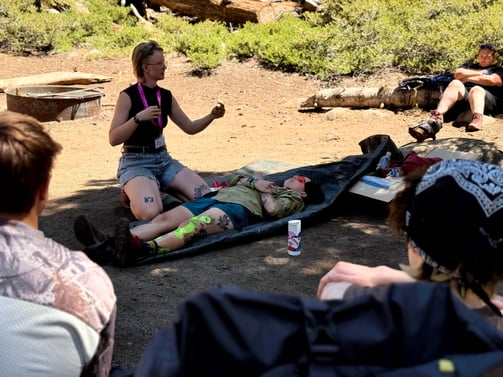
Hemond teaches campers in Wilderness Medicine at Brave Trails, an LGBTQ+ summer leadership camp. "Getting to teach this was such a fun way to combine my love of teaching with my passion for using education to empower young people in understanding their bodies and health care."
Neurology focus
As much as they loved the rural portion of their training, Hemond also was excited to return to CU Anschutz after a year to complete the rest of their training at a larger hospital system. Among the highlights were rotations in immunology, cardiology and neurology, the latter of which led to their residency focus. On Match Day on March 20, Hemond will find out where they are going for their residency in pediatric neurology.
“I love working with kids; I lead backpacking trips every summer at a camp for queer and trans youth,” Hemond says. “It's very meaningful to get to be their medical staff and help heal some of the medical trauma a lot of these kids have gone through. And I loved neurology when we were learning about it first year — I was always the kid who did Mensa puzzles, logic puzzles, and I loved a mystery. Neurology is like collecting enough of a story that you can put everything together and it forms one of those optical illusion photos where you have to move it back and forth and look at things from different angles, and then a picture appears. I really like that kind of thinking.”
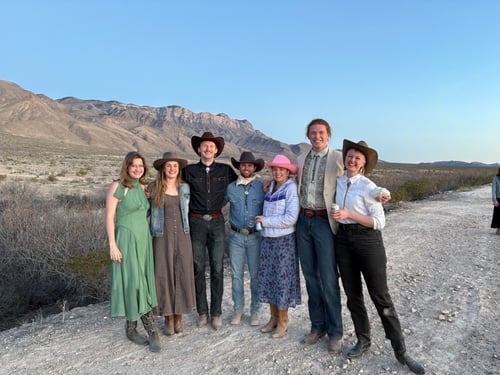
During their fourth year, Hemond and a group of med school friends rented an RV and drove to Texas for the wedding of another med school friend. "Most of these folks are people from the rural program, and it was wonderful to get to celebrate our friend together."
Splitting time
After residency, Hemond envisions a career marrying their training in childhood neurology with their love for rural medicine.
“Having done both, I think I have a unique perspective and ability to understand both sides,” Hemond says. “I'm interested in the spoke-and-hub model that a lot of hospitals are moving toward. We have so many resources here at CU and our patients come from seven states for child neurology. These kids are complex medically and neurodevelopmentally, and it can be hard for them to travel. Wouldn't it be cool if one day a month, there was a neurologist at their home hospital or hospital that's only a two-hour drive? I'm interested in splitting my time clinically and spending a day or two each month at different sites to see patients. Beyond that, I'm interested in how we can use our resources from CU — or wherever I end up for residency — to build systems that work for those rural hospitals.”
.png)