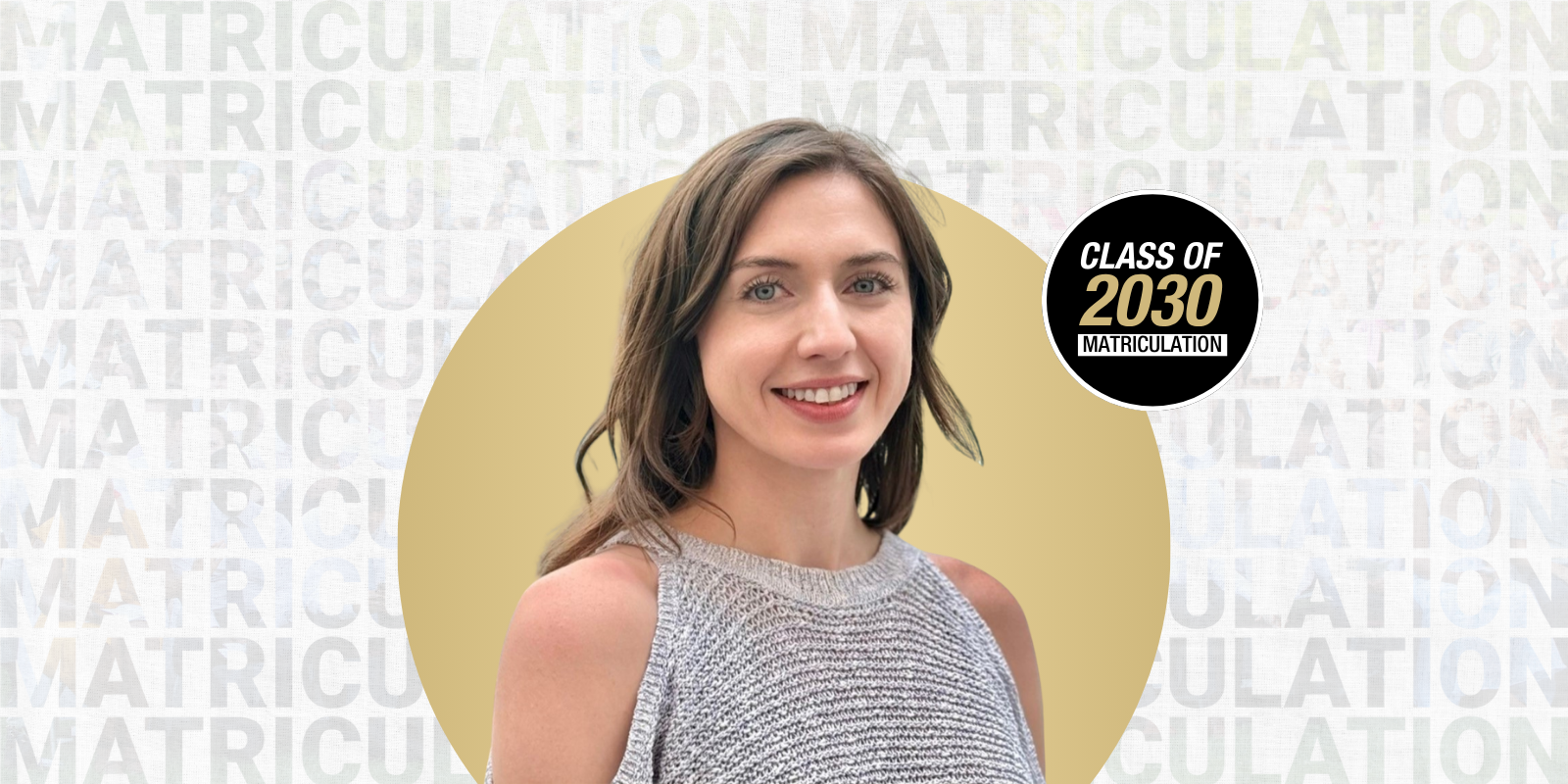
Growing up as the eldest child and taking care of her younger siblings, Desiree Starzyk always felt she was meant to become a healer. It wasn’t until she began working in the Department of Psychiatry at the University of Colorado Anschutz School of Medicine that medical school began to seem like the best way to fulfill that promise.
“I was connected with the Department of Psychiatry after I got my BS in psychology from CU Denver, and it ended up being one of the coolest jobs I've ever done,” says Starzyk, 32, who will begin her first year as a CU Anschutz medical student this month.
“The role was in perinatal research, and I ended up finding so many connections to my life that had to do with the perinatal space, as well as amazing ways and simple interventions to reduce trauma and what health looks like outside of clinical procedures or what is typically considered medicine,” she says. “Seeing the effect that it had, it was so satisfying.”
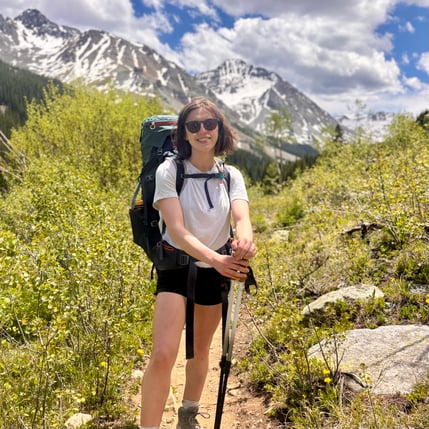 Starzyk on a hike.
C-section education
One study that Starzyk worked on, led by Cristina Wood, MD, associate professor of anesthesiology, and Allison Dempsey, PhD, professor of psychiatry, looked at whether enhanced education about cesarean births during pregnancy can reduce fear and improve outcomes in pregnant women who are likely to need cesarean births. The research led to a clinical trial that is now enrolling patients at UCHealth University of Colorado Hospital.
“Often women and their partners don't receive a lot of education on C-sections. The women that we were working with were admitted to the hospital because they had a high-risk pregnancy or their fetus was at risk, and a lot of these women had a high chance of getting a C-section,” Starzyk says. “We would provide an hourlong intervention, an immersive experience where we explain exactly what the day is going to look like, so they can go into this room feeling prepared for that day, and hopefully a little bit more present for their delivery.
“The pilot of this intervention showed that women who received this intervention had significantly reduced opiate use and reduced depression and anxiety symptoms after delivery,” she says. “It's not a procedure, or what a lot of people think of as ‘medicine,’ but it's education, and it’s another way to keep people healthy. Because if mom feels better afterward, baby's going to be healthier, dad’s going to feel better — the whole family unit. It's really cool to think about medicine more comprehensively like that.”
Journey into healing
Inspired by that experience, Starzyk began thinking about her own journey toward a career in healing.
“Previously I thought that maybe I could be a psychologist or a nurse. Those are also medical healer roles that would be very fulfilling,” she says. “But a part of me felt like I wanted to go all the way. I want to become as knowledgeable about health and medicine as I can in this life, and be in a role where I can provide comprehensive treatment that looks at many determinants of health. I
“I hope one day that I can be like Cristina. I'm really inspired by her work in the OR as not just an anesthesiologist, but as an incredible patient advocate. I hope in my medical career that I will be able to make a difference in the way that she and Allison are with the C-section study. Finding simple solutions that can make a big change. I feel like becoming a doctor can provide more leadership opportunity to hopefully implement those changes.”
Ready, set, go
Starzyk says that while she is entering medical school with a background in psychology and psychiatry, she’s keeping an open mind about what specialty she wants to go into.
“I think I will need to go through clinical rotations,” she says. “I have ideas of what I like and what I'm passionate about, but I think, realistically, you have to do your rotations and see what your day-to-day life looks like — to know, ‘I can sit in this, and I can bring my full self to this every day.’ It's hard to say without being in that day to day.”
For now, she’s looking forward to starting her classwork and meeting other of her fellow students in the Class of 2030.
“I'm so excited about being in the trenches with a bunch of other like-minded people — people who got into this for completely different reasons than I did,” she says. “We're going to be so similar, but also come from such different backgrounds, while learning some of the coolest things that we'll ever get to learn and creating camaraderie. In some ways I'm terrified, because everybody says first year is like a firehose, but I know that I'll be with a lot of other really amazing people who are passionate about this. It's going to be great.”
.png)