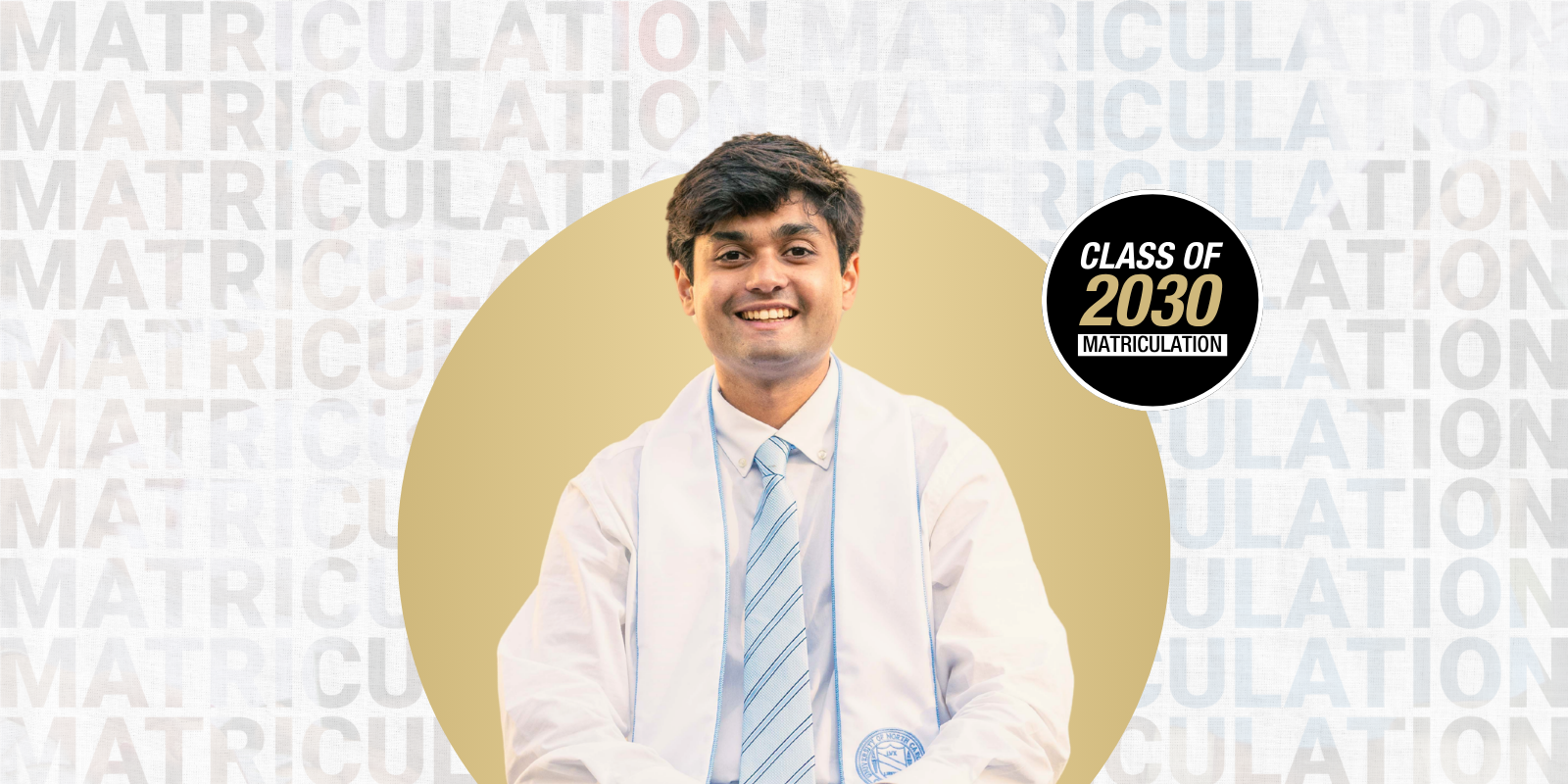
Shaurya Dave was about 2⅟₂ when doctors repaired the hole in his heart – too young for him to remember it today. Yet, Dave says its lasting impact on his family and his own childhood made it one of the most formative influences in his life.
Since birth, Dave had an atrial septal defect – an opening in the wall separating his heart’s two upper chambers. He learned later about the uncertainty and fear his parents felt when their little son needed surgery to seal the opening. “The expertise that the cardiothoracic surgeon provided to my parents about my condition allowed them to keep their hope alive during such a difficult time,” he says.
Later came regular trips to the hospital so his condition could be monitored. “The relationship I formed with my health care team really stands out for me. It’s very important to who I am as an individual,” Dave, now 24, says. He remembers the doctor talking with his mother during those visits. “He’d say, ‘His heart’s functioning normally and everything looks great.’ Even as a kid, I could sense the wave of relief that washed over my mom.”
Those experiences helped draw Dave to medicine, he says. He’s now about to begin his first year at the University of Colorado Anschutz School of Medicine.
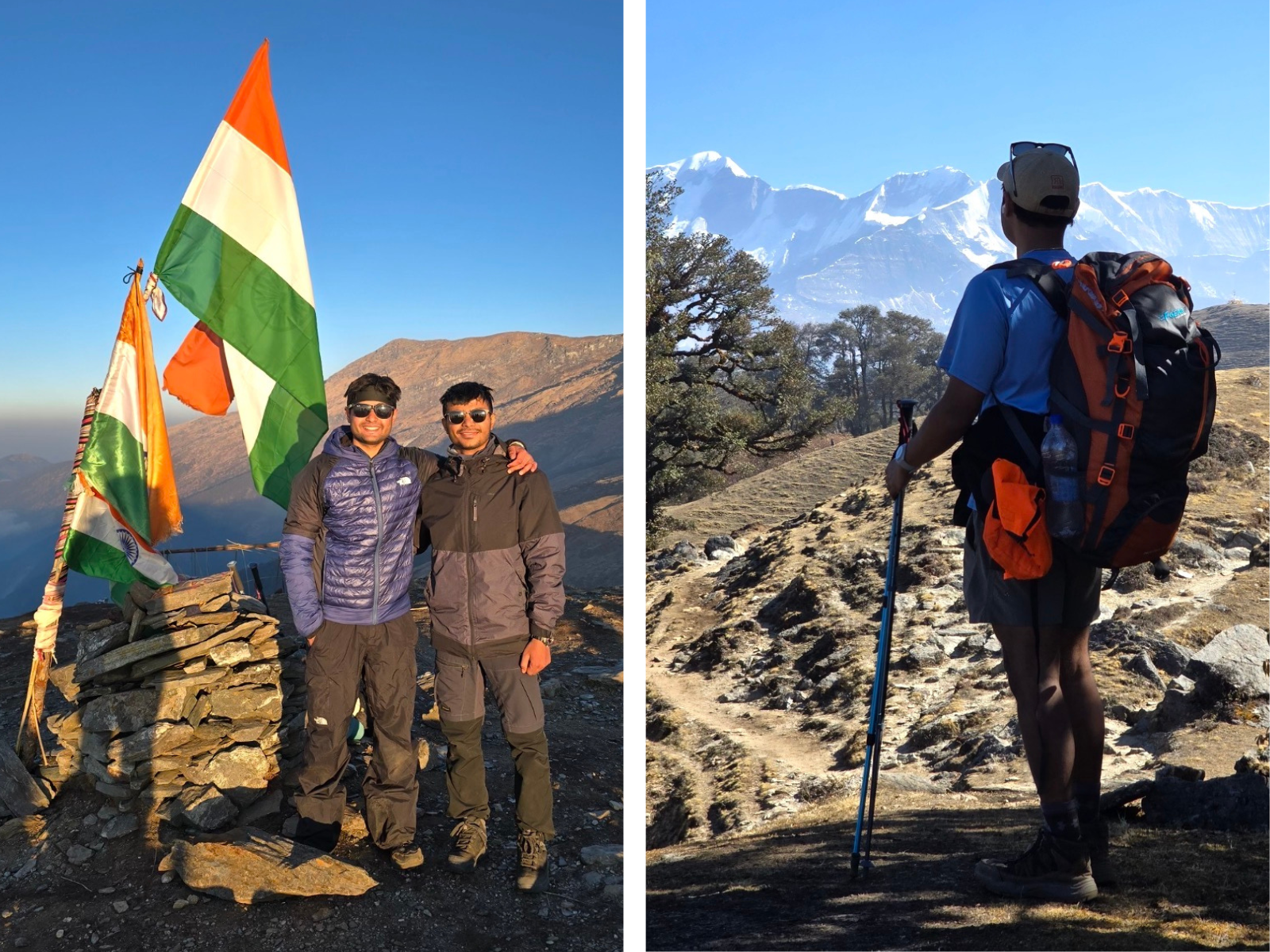
Shaurya Dave on the Brahmatal Trek in the Himalayas of India. At left, he poses with a member of the Indian Air Force he met on the trail. All photos provided by Shaurya Dave.
‘I felt so different’
Dave’s parents had recently immigrated from India to upstate New York when he was born. When he was 2, the family moved to Columbia, South Carolina, where his brother was born.
As a young boy, “I felt so different from everyone else,” he says. “I just wanted to blend in, but I was the only minority kid in my classes, no one could pronounce my name, I was a little overweight, and, on top of all that, I had this large scar across my chest from my surgery. On the first day of first grade, I was dreading the teacher calling my name in roll call, because they would always butcher my name, and then the whole class would look at me.”
When he was in sixth grade, the family moved to Charlotte, North Carolina. “Being in a more diverse city, and then going to the University of North Carolina, with students from all over the world, I was able to find confidence and take pride in my heritage and who I am instead of trying to hide from it,” Dave says.
During the COVID-19 pandemic, while Dave helped his parents by working behind the counter of their gas station, he talked with fearful customers, including a worried man whose diabetic wife had tested positive for the virus. “I was motivated to find ways to serve my community’s medical needs, especially after my grandfather died from COVID,” he says.
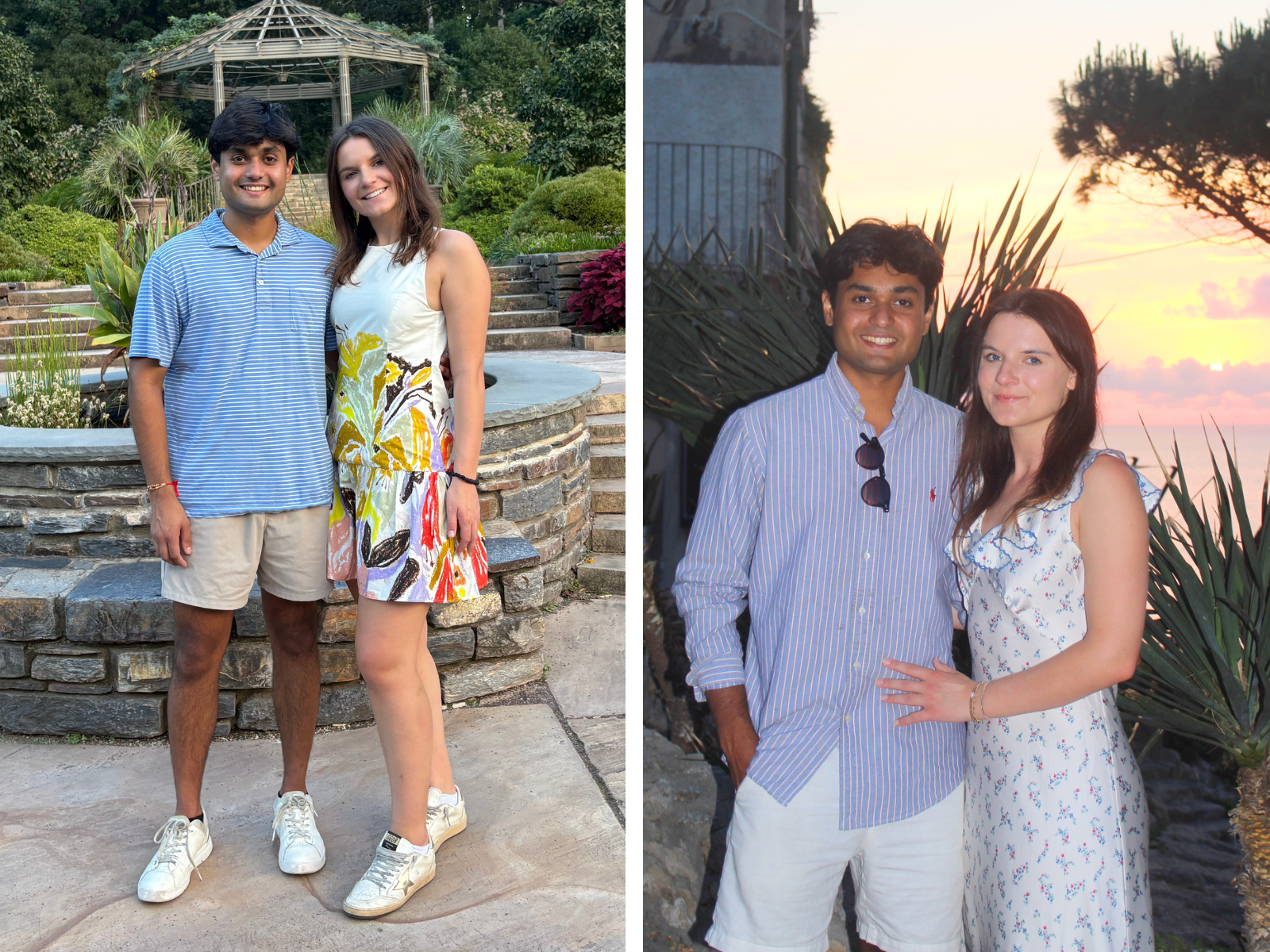
Dave with his girlfriend, Katherine. At left, they are at the Sarah P. Duke Gardens at Duke University. At right, they are in Italy.
‘Where I wanted to go’
At UNC, Dave majored in neuroscience and minored in chemistry and worked as an undergraduate research assistant at the Carolina Institute for Developmental Disorders. Along the way, he trained as an emergency medical technician, and he volunteered at a local emergency medical services agency. He says the experience strengthened his desire to become a physician.
“It was tough working overnight, 12-hour shifts while I was taking a full course load and doing research on the side,” he says. “But it was one of my most meaningful experiences.”
At the EMS agency, Dave found himself in “a tight-knit community that included pre-med students, pre-physician assistant students, and nursing students, alongside career EMTs and paramedics. We even had several Duke and UNC med students who volunteered, and I received guidance from them. They were where I wanted to go.”
While an EMT, Dave says he learned more about how people access health care – and recalls his encounters with an unhoused man who would call for help every night.
“To be honest with you, it was frustrating at first to respond to his nightly 911 calls for back pain or a headache,” he says. “I had to wake up in the middle of the night when I had to go to class the next day to respond to this person's 911 call. But as I started listening to his stories and the experiences of my team, I learned that there are so many individuals in the community who are stuck in this cycle of emergency visits. They’d get medical attention for their immediate needs, but it seemed that their deeply-entrenched chronic issues, especially psychiatric illnesses, often didn’t get addressed. I'd never seen that side of medicine before, especially being so fortunate to grow up with such a positive experience as a patient myself."
‘It was very fulfilling’
Those experiences led Dave to seek a gap-year research opportunity where he could contribute to developing novel treatment approaches for psychiatric illnesses. "I wanted to be part of care that extended beyond the limited encounters I had with patients in the back of the ambulance," he says.
After graduating from UNC in 2024, he joined the Changing Affect with Neuroscience & Technology (CHANT) Lab at nearby Duke University. There he worked on using transcranial magnetic stimulation – using magnetic field to stimulate nerve cells in the brain – as a potential treatment for various neuropsychiatric disorders, such as depression and addiction. Dave found leading the transcranial magnetic stimulation treatment sessions especially meaningful because they gave him the opportunity to educate patients about conditions they themselves often understood very little about, as well as the foreign and often daunting treatment.
Dave’s most fascinating work at the CHANT Lab, he says, involved misophonia. “I hadn’t even heard of it before I joined the lab. It’s a condition where people have aversive reactions to certain sounds, usually made by other people, like chewing, coughing, or sneezing.”
He learned that people with misophonia “were so burdened by it, and many people in their lives never acknowledged it. People would tell me they couldn’t eat meals with their loved ones or go to a restaurant because of the noise of chewing. It was very fulfilling to be part of that study, where not only could we validate their experiences, but also provide a potential treatment option for people who often felt they had nowhere else to turn.”
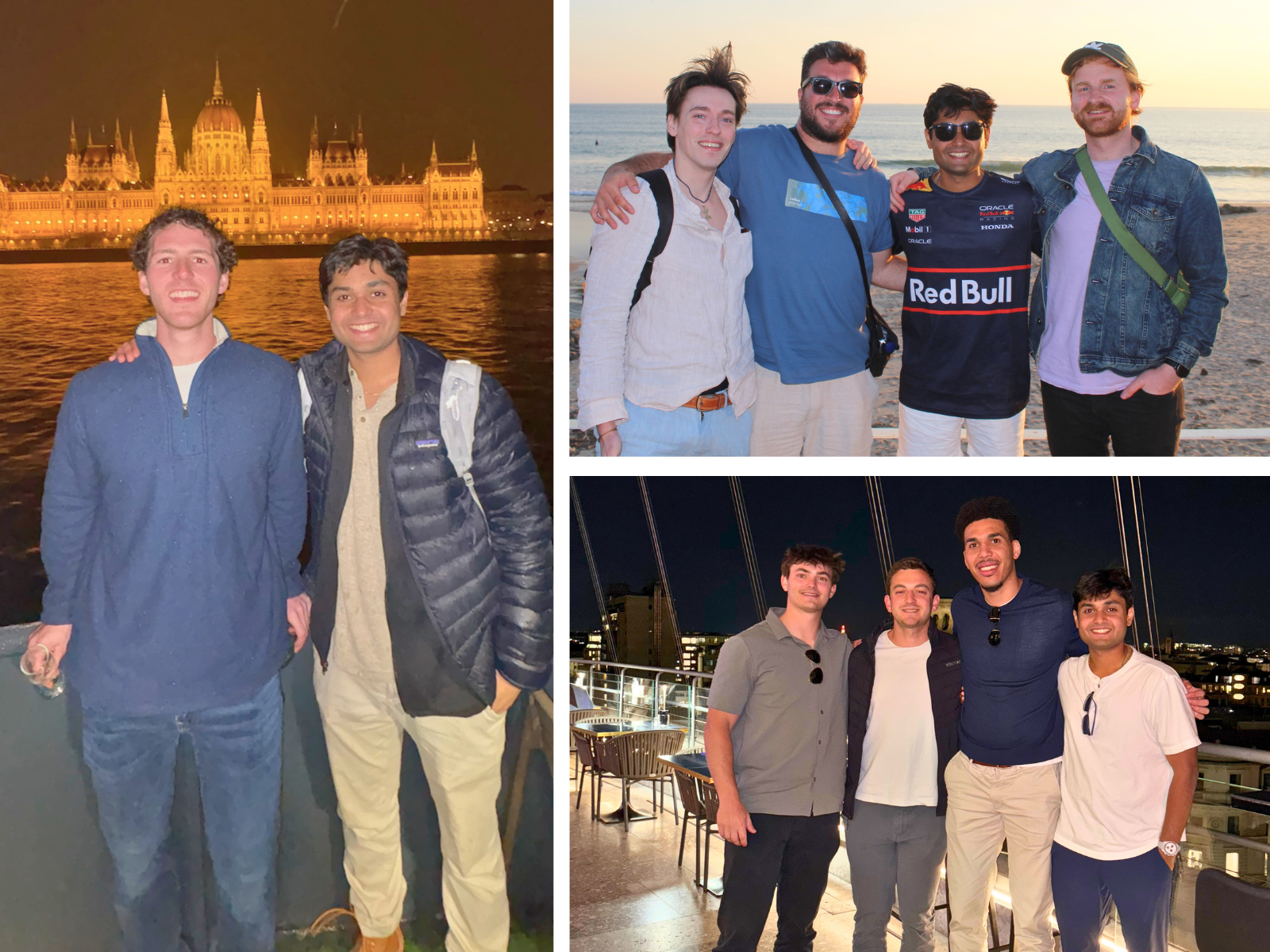
Shaurya Dave poses with friends and people he met while traveling. At left: Budapest, Hungary. Upper right: Matosinhos, Portugal. Lower right: Italy.
‘The vibe was so much better’
Dave feels that his experiences in juggling many tasks – school, work, research, volunteering – have helped prepare him for what faces him in medical school.
“I would be lying if I said there weren’t times when I felt like I had too much on my plate,” he says. “But what helps is that I’m intentional about only doing things that I really want to do and find fulfillment in. And I think I’ve gotten better at managing my time, setting priorities, setting boundaries.”
Dave also talks of the value of meditating. “Things I have to do swarm my mind, but sitting there and being aware of my thoughts, instead of letting those thoughts consume me, allows me to be significantly more at peace,” he says.
Asked why he chose CU Anschutz for medical school, Dave notes that two of his EMT colleagues came to Colorado, plus there’s his love of skiing and the outdoors. He also likes the school’s Longitudinal Integrated Clerkship (LIC) model, in which students follow a cohort of patients across various disciplines and preceptors for the entire year. And there’s the diversity of the Denver-Aurora area.
On top of that, Dave says he had by far his best medical-school interview here. “The faculty that were on the interview, they seemed much more happy. The vibe was so much better.”
As he looks forward, Dave talks of his desire to live up to the example of his father, Naynesh Dave. “His entire life has been a sacrifice to provide the best opportunities for my brother and me,” he says. “I hope that one day, I become a person who’s able to give back to my community and honor the sacrifices my father made for our family.”
.png)