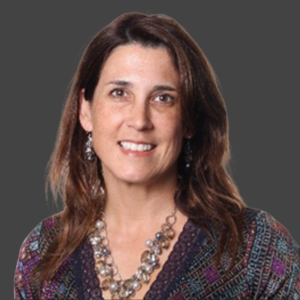
For years, endocrinologist Leigh Perreault, MD, felt there had to be a better way to help patients with weight management than sending them home with advice to change their diet and increase their exercise.
“There was a moment I put my face in my hands and thought, ‘What am I doing?’ I would write a lot of prescriptions for patients’ diabetes, their blood pressure, their lipids and all these other conditions,” says Perreault, a professor of endocrinology, metabolism and diabetes at the University of Colorado Anschutz School of Medicine who practices in Westminster alongside primary care physicians.
“None of these people want to be on these medications and I thought if I could just help them with their weight, many of these health concerns would probably go away,” she continues.
That sparked a solution that has quickly become a gamechanger in weight management.
Perreault and her colleagues developed PATHWEIGH, a way for primary care staff and patients to prioritize weight management by offering specialized clinic visits where clinicians can focus on weight management. The National Institutes of Health (NIH) funded its implementation into UCHealth’s 56 primary care clinics across Colorado to test its effectiveness. Overall, the pilot reached 274,182 patients, making it one of the largest randomized trials to ever be completed.
New research by Perreault and her team published in Nature Medicine found that PATHWEIGH mitigated population weight gain by 0.58 kg over 18 months and changed the trajectory from weight gain to weight loss — a meaningful metric for public health.
The intervention also increased the likelihood of a patient receiving weight-related care by 23%.
“With PATHWEIGH, we showed that we absolutely eliminated population weight gain across all of our primary care, which has never been done previously,” Perreault says.
Now, obesity experts are looking to PATHWEIGH as a standard of care and a handful of health systems across the country are looking to implement the intervention.
‘We built a highway’
The power of PATHWEIGH is that it puts patients and their primary care provider on the same page.
“If you think about weight loss medicine or surgery or a weight loss program, those are all vehicles to weight loss,” Perreault says. “We built a highway that we could put all the vehicles on, so there's actually a process for people to receive weight related care if they wanted it.”
It all started with signage placed in clinics that notified patients that if they wanted to make an appointment to specifically talk about weight management, all they had to do was approach the desk and ask for it.
That request automatically triggered a mechanism in the patient’s electronic health record that sent them a survey that after completion would flow into the provider’s notes. Instead of spending so much time typing and talking about the patient’s history, the scheduled visit could be centered around solutions.
“It made the whole process really efficient, and then effectively turned our note template into a menu of anything that we might do,” Perreault says. “It really made it extremely time efficient and consolidated everything we might do for a patient into one interface.”
Data collected from the clinics over 18 months showed that about a quarter of eligible patients received some discernable care for their weight at least once during the trial. Most of that was advice for lifestyle modification, but use of anti-obesity medications doubled during the intervention.
PATHWEIGH allowed weight related treatment to be tailored to the patient, unlike a lot of available weight loss programs. It also cut out a lot of the awkwardness that can accompany patient-clinician discussions about weight.
“Most people who want or need weight related care never get it. Either they don't ask for it or the providers don't bring it up, and if they do, the patient usually gets told to go home and eat less and exercise more, and then nothing happens,” Perreault says. “The person gets frustrated and they learn to not ask for help anymore, because it's kind of embarrassing and it doesn't help. This was a safe space to say, ‘Hey, if you would like medical assistance with your weight, we actually have a process for you to receive that now.’”
Meaningful results
The rise in the prevalence of obesity has been attributed to an average population weight gain of .5kg per year. Eliminating that growth and turning it into loss may be sufficient in curtailing the obesity epidemic.
“While it's not a significant difference on an individual patient level, it's a huge deal on a population and public health level,” Perreault says.
Additionally, “when patients did receive discernable weight-related care, PATHWEIGH was associated with greater weight loss and also mitigated the expected weight gain for those who did not receive discernable weight-related care,” researchers concluded.
Perreault says overall PATHWEIGH has proven to be a huge success. There are now plans to take these results beyond Colorado’s borders. The Obesity Association, which is writing its inaugural standards of care for obesity, is highlighting the intervention as a care process recommendation.
Five health systems across the seven states are eyeing PATHWEIGH, too, as creators work toward licensing the process.
“I'm really proud that PATHWEIGH was home-grown and built and tested here in Colorado,” Perreault says. “This is the blueprint that moves us forward.”