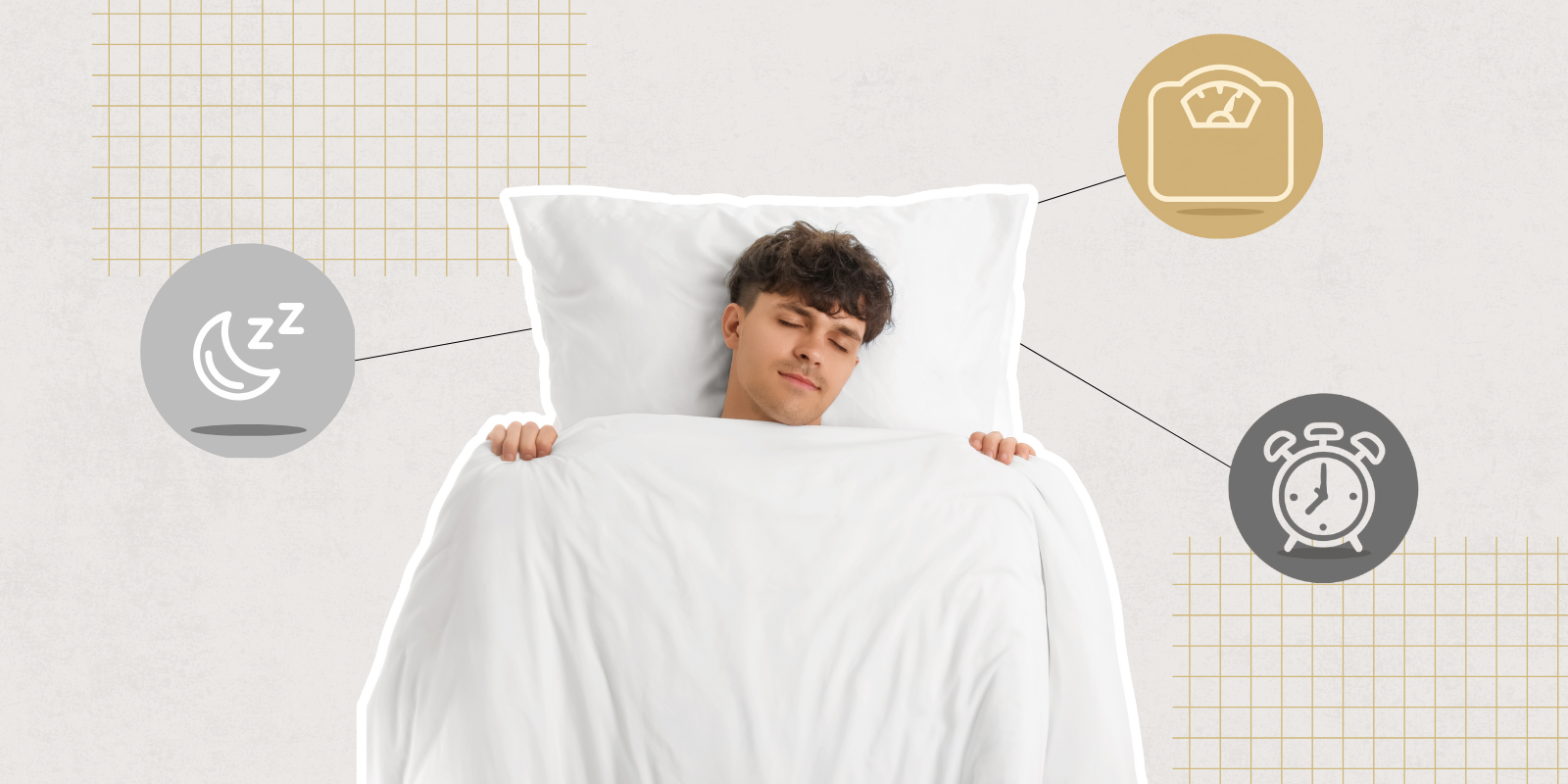
Health researchers have long known that there are links between sleep and obesity. Studies show that sleep loss can promote overeating and that people who have a higher body mass index (BMI) are more likely to report trouble sleeping.
Now, researchers at the University of Colorado Anschutz School of Medicine want to know whether incorporating healthy sleep habits into weight loss interventions could be impactful.
“What is less known about sleep and obesity is whether we can change somebody's sleep habits and that helps their diet. The challenge is that a lot of people know that they need to sleep better, but changing the actual sleep behavior is the hard part,” says Seth Creasy, PhD, associate professor of endocrinology, metabolism, and diabetes. “How do we help people who don't have diagnosed sleep disorders, but do have unhealthy sleep habits?”
Creasy is working alongside Victoria Catenacci, MD, professor of endocrinology, metabolism and diabetes, to answer these questions through clinical research to develop a weight loss intervention that incorporates a focus on sleep health. The researchers are currently recruiting patients for a study, run at the CU Anschutz Health and Wellness Center, that evaluates the impact of incorporating a focus on multiple dimensions of sleep health into a guidelines-based comprehensive behavioral weight loss intervention.
Data supporting impact
Optimizing sleep habits isn’t often part of diet and weight loss programs. The researchers say no prospective randomized trials have so far evaluated the impact of incorporating a multi-dimensional sleep health program into a guidelines-based behavioral weight loss intervention. That makes these research efforts unique.
As Catenacci and Creasy dive further into the topic of sleep and weight loss, they see the value in learning more about the intersection between the two.
The researchers are interested in six dimensions of sleep and how they relate to weight loss:
- Sleep duration: how long a person sleeps.
- Sleep efficiency: how much time in bed is spent sleeping.
- Sleep regularity: how much day-to-day variability occurs in bedtime and wake time.
- Sleep timing: when a person sleeps in the 24 hour cycle
- Sleep quality: how well a person reports they sleep at night.
- Daytime sleepiness: how sleep impacts daytime functioning.
In a different obesity-related study, Creasy and Catenacci found that about 85% of overweight or obese adults have at least two of these sleep dimensions that are suboptimal at baseline.
“It was surprising to us to see those numbers because it means that sleep health may be a relevant part of a weight loss intervention for a large number of people,” Catenacci says.
Preliminary data collected by the CU Anschutz researchers shows that several aspects of sleep health are associated with weight loss in a behavioral weight loss intervention. Greater sleep efficiency, less time it takes to fall asleep, and less time spent awake after initially falling asleep, were associated with greater weight loss.
Fine-tuning the sleep-weight loss experience
The researchers are using the Multiphase Optimization Strategy (MOST), a research framework designed to systematically test and refine different parts of an intervention. MOST helps researchers identify which components work best—alone and in combination—so the final program is effective, efficient, and based on evidence.
The study —a pilot study that will support a future randomized factorial optimization trial — layers four sleep health components on top of a group-based comprehensive behavioral weight loss intervention that was developed at the Anschutz Health and Wellness Center.
“Over the years, we have refined and enhanced the weight curriculum when appropriate,” Catenacci says, highlighting that previous participants of the weight loss intervention have sought more social connection in their weight loss programming.
For sleep health, study participants will receive several sessions focused on sleep health education from a sleep expert, meet one-on-one with a study team member to tailor the sleep health recommendations to the participant, use a wearable device to track their sleep habits, and use an app that promotes relaxation and mindfulness to help wind down at night.
“We want to provide several different strategies to improve sleep to test what is most effective and efficient, and ultimately understand if improving sleep health helps people lose weight,” Catenacci says. “Sleep is an important health behavior and it’s an exciting research topic, but it’s important to understand how adding a focus on sleep health might impact weight loss when people also have to prioritize changing diet and exercise behaviors. You can assume that something may be impactful, but investigating might reveal a different truth. If we’re changing a weight loss intervention that we know is effective, we want to know what works and what detracts from the goal.”