Fifteen years ago, when University of Colorado Anschutz School of Medicine faculty member Aaron Michels, MD, found out his daughter had the biomarkers for type 1 diabetes, there was nothing that could be done to stop the disease from progressing. As a nationally recognized endocrinologist with type 1 diabetes himself, Michels knew it was only a matter of time before the disease would advance and destroy her insulin-producing cells. She would need to monitor her glucose levels and inject insulin multiple times a day for the rest of her life.
However, there is new hope in the form of a drug called teplizumab, the first-ever disease-modifying therapy for type 1 diabetes. This therapy has been proven to delay the onset of type 1 diabetes so that patients can have an extra three years, on average, before they start needing insulin.
“Speaking from experience, when you have to think about diabetes 10 to 12 times a day, it’s a burden. If you have the chance to have a few more years without having to do that, it’s a big deal,” says Michels, a physician-scientist at the Barbara Davis Center for Diabetes and professor of medicine, pediatrics, and immunology. “With my daughter, there was nothing available at the time for us to slow down the disease. If this opportunity had been available, I would’ve liked to take it.”
Hoping to raise awareness about teplizumab and how disease-modifying therapies work, Michels recently wrote a comprehensive article that was published in the Diabetes/Metabolism Research and Reviews journal.
“We can now start to treat type 1 diabetes like other autoimmune diseases,” he says. “I want more practitioners to know that this therapy is available, and I hope more patients will be connected to places where they can get counseled on its pros and cons to decide if this therapy is right for them.”
The need for teplizumab
Type 1 diabetes is an autoimmune disorder that develops over time, classified by different stages. As it progresses, the body begins to identify insulin and insulin-producing cells as foreign and abnormal, leading the body to destroy those cells, Michels explains.
Through a blood test, doctors can tell if a person will develop type 1 diabetes before they start to feel the effects and show symptoms of the disease.
“Initially, you will have these markers, but you also have enough insulin-producing cells that are functioning to keep your blood sugars normal,” he says. “Eventually, that starts to deteriorate, and your blood sugars are not quite normal but aren’t very high. That’s considered stage 2 type 1 diabetes. Stage 3 is when you cannot make enough insulin and your blood sugars are high, so you need treatment with insulin injections.”
Traditionally, the treatment for type 1 diabetes has focused on devices like insulin pumps and continuous glucose monitors that help patients control their blood sugar. These interventions, however, are useful once a person has developed stage 3 diabetes and do not address the underlying cause of the disease, Michels explains.
Disease-modifying therapies, on the other hand, focus on targeting the cells that lead to a disease. For over 50 years, disease-modifying therapies have been used to treat the underlying causes of other autoimmune diseases, but it wasn’t until 2022 that teplizumab, the first disease-modifying therapy for type 1 diabetes, was approved.
Michels suspects that a major reason why it took so long is because the disease affects many children. According to the American Diabetes Association, 304,000 children and adolescents had type 1 diabetes as of 2021.
“These therapies affect or alter the immune system, and so you have to balance the potential risks and benefits of developing these therapies. Since insulin is a good treatment, I think there was more hesitation,” he says. “In the world of research, we've been trying for decades to find drugs that were safe, tolerable, and could modify the disease course — so having this first one, teplizumab, get approved is really remarkable.”
How it works
Teplizumab is intended for patients with stage 2 type 1 diabetes, helping delay the onset of stage 3 so that patients can avoid needing insulin injections for several more years than they otherwise would.
“It’s a tight window that we get to use this therapy,” Michels says. “The clinical trial of this therapy found that, on average, patients who took it made it three more years without insulin than those who got the placebo. Also, in that trial, half of everyone who was treated did not have stage 3 diabetes five years later.”
The therapy is given to patients through an IV infusion that is administered daily for 14 days. The drug works by targeting T cells, a type of white blood cell. Michels explains that there are specific T cells that destroy insulin-producing cells in the pancreas.
“Teplizumab binds to a molecule on T cells and essentially deactivates it. It does this for T cells involved in diabetes more so than in T cells involved in viral infections or the normal immune system function,” he says. “This helps protect those insulin-producing cells.”
In his clinical practice, Michels estimates he has given teplizumab to over 30 patients. Although it is still too early to say how effective the drug has been, he says it has been safe and well tolerated in his patients. However, some common side effects include mild flu-like symptoms that last for a few days.
Overall, the introduction of teplizumab as a treatment option has led to more patients getting screened for type 1 diabetes, he notes.
“That screening has helped immensely not just in getting patients connected to the therapy, but also in identifying people with diabetic ketoacidosis, which is a significant and life-threatening complication of diabetes,” he says. “I think it has benefitted public health.”
A foundation to build on
The introduction of teplizumab represents a “change in the paradigm” for the treatment of type 1 diabetes, Michels says, as it represents a key step in being able to more proactively treat the disease.
“Some people say, ‘Three years isn’t enough.’ To that, I say that we have to start somewhere. It’s like building a house — you need to have a foundation,” he says. “It would be great to use this as a building block and find ways to extend the time period.”
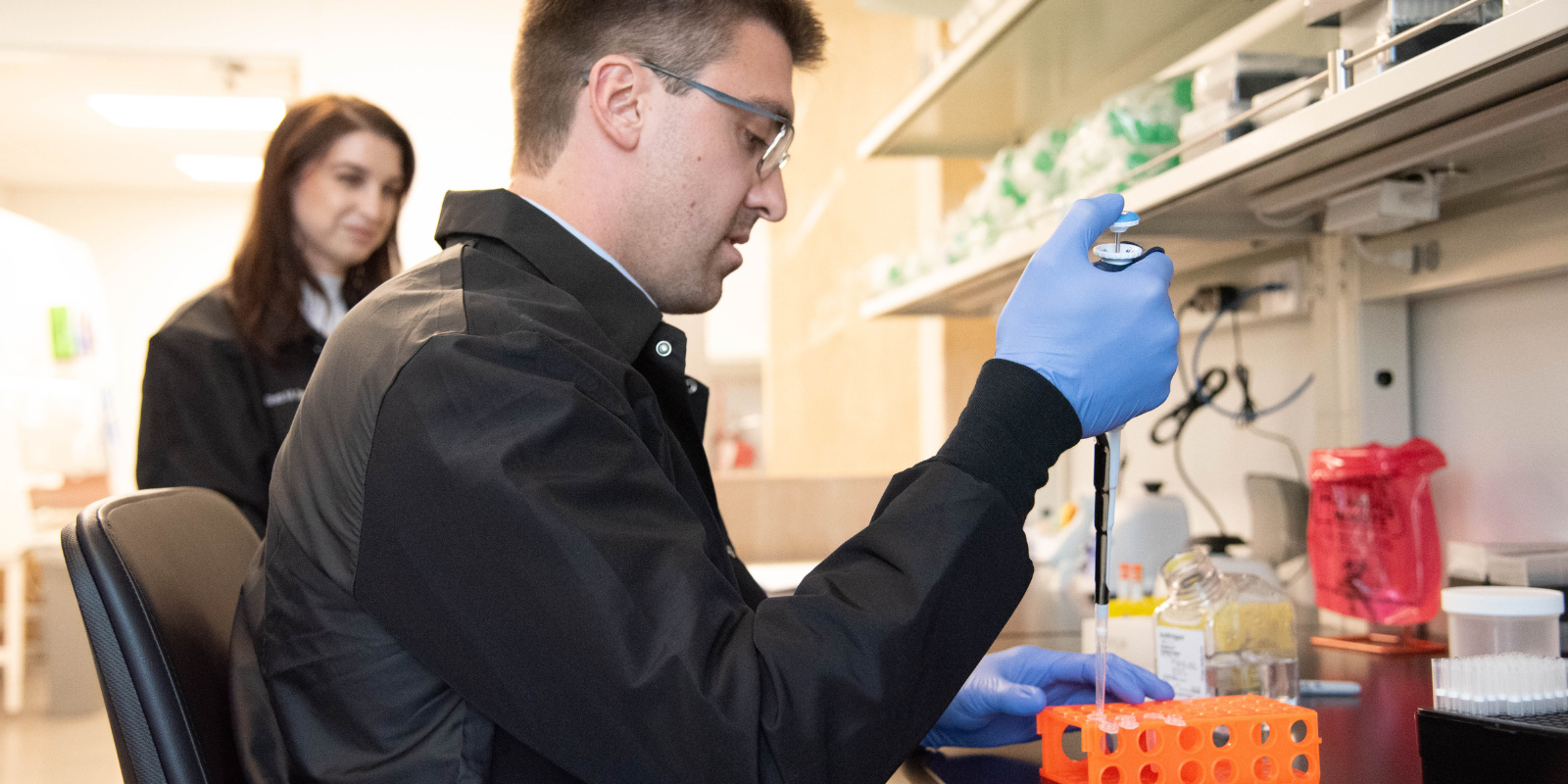
In his own lab, Michels is conducting his own research aimed at innovating ways to prevent type 1 diabetes. One of those developments include an insulin-based vaccine designed to prevent the immune system from attacking insulin-producing cells.
“My hope is that in a few years, we don't have just one disease-modifying therapy, but we will have a handful instead,” he says. “That would allow us to start comparing the therapies and identify which ones may benefit patients the most in delaying and preventing type 1 diabetes.”