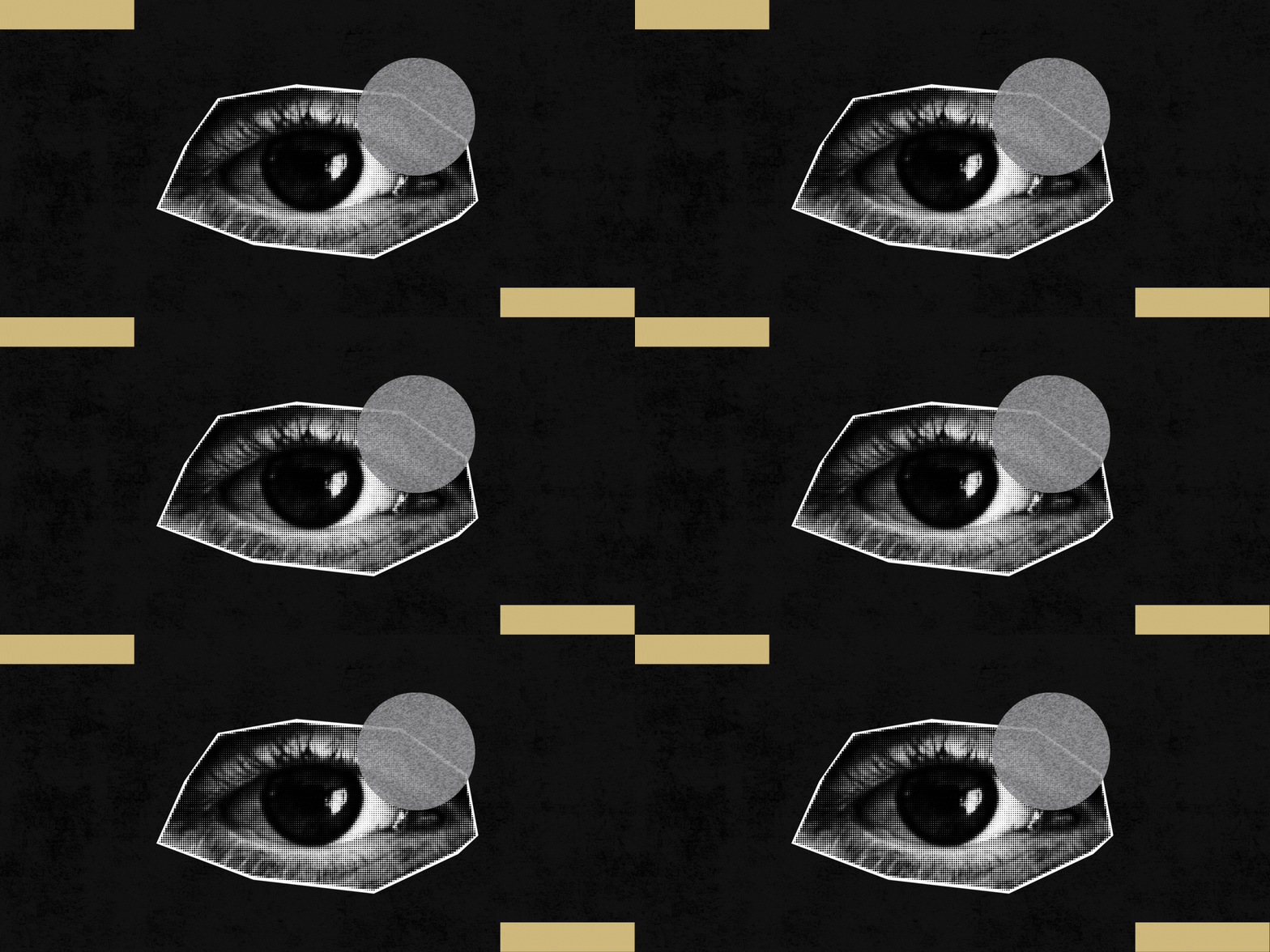
Researchers estimate that approximately 1-2% of the population sees the world through a layer of static — similar to the visual flicker of an analog television set.
Until about a decade ago, visual snow syndrome (VSS) was thought to be a symptom of migraine, but evolving research shows that it is its own neurological disorder. However, researchers aren’t yet sure what causes it or how to treat it.
In addition to visual static, people with VSS commonly experience light sensitivity, floaters in their vision, difficulty seeing at night, tinnitus, seeing afterimages, and flashes of light. A history of migraine and migraine aura is closely associated with VSS.
“It can be a very challenging condition to live with,” says neuro-ophthalmologist Victoria Pelak, MD, professor of neurology and ophthalmology at the University of Colorado Anschutz School of Medicine. “I often hear from patients that the symptoms are difficult to get used to. It’s not just a matter of psychological adjustment – this probably has to do with how the brain functions and that it’s hard tune out these symptoms and concentrate on what’s in front of you.”
Because VSS is relatively new as an official syndrome, there are plenty of big questions about what sets it apart from migraine, what’s happening in the brain that triggers VSS, and what can be done to alleviate symptoms that often interfere with everyday life.
We asked Pelak, whose work is at the forefront of VSS research and determining how to measure whether a treatment is working, about what’s next for investigating this condition and what can make it a challenging endeavor.