

The takeaway:
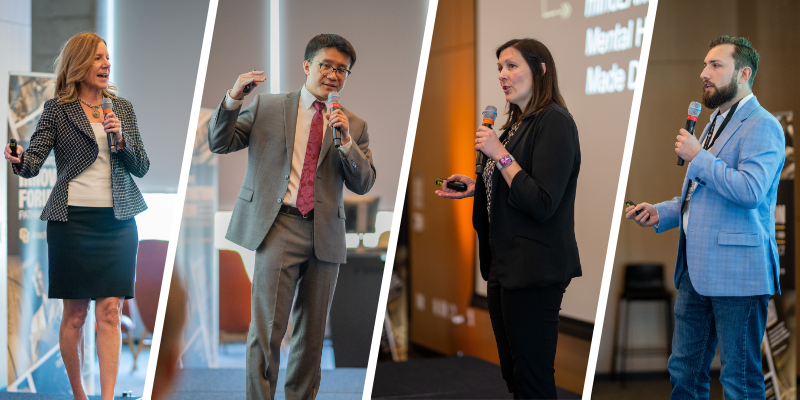
A group of four faculty presenters detail the work behind their startups at a Fast Pitch event for a $10,000 award: mindLAMP Care, Retro Nephrix, NeuroVesica, Parley Neurotech. The CU Anschutz Innovations event provides a window into how ideas move from the lab to improving health for patients.
How would you convince a room of strangers you had the next great idea in healthcare in under 10 minutes?
That highwire act was part of the 2026 CU Anschutz Innovation Forum’s Innovation Fast Pitch session, a unique event for four startup teams at CU Anschutz.
With a pitchdeck in hand, one researcher from each team participated in a rapid-fire presentation showcase, responding to live feedback from investors and industry experts and competing for an “Audience Favorite” award of $10,000.
The four contenders focused on an array of healthcare solutions, including making mental health more responsive, developing a device to more effectively deliver therapeutics to the kidneys, identifying biomarkers for mental health conditions and addressing dementia by reversing hearing loss.
Ready to step into the batter’s box? Take the pitches from each team and see who the audience chose as their winner.
Company name:
mindLAMP Care
Presenting faculty member:
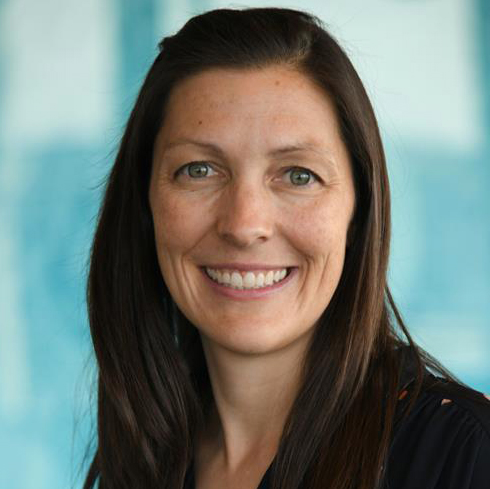
Allison Dempsey, PhD, professor, Department of Psychiatry
What’s the central idea?
Using real-time data and a built infrastructure to make mental healthcare systems more adaptable.
What was their inspiration?
Dempsey’s daughter was diagnosed with type 1 diabetes (T1D) two years ago. While receiving excellent care at Children’s Hospital Colorado and the Barbara Davis Center for Diabetes, her daughter received a useful piece of technology to help manage her disease: a continuous glucose monitor. As a psychologist, Dempsey realized the need for something similar for mental health conditions at scale.
mindLAMP was originally developed by John Torous, a collaborator, at Beth Israel Deaconess Medical Center and Harvard School of Medicine. Dempsey is also collaborating with Tiffany Love, PhD at CU Anschutz on mindLAMP Care.
What are they trying to solve?
mindLAMP Care combines sensor data, including activity – sleep and social connections – with “ecological momentary assessments” that measure how a patient is feeling in a specific moment. The idea is to give patients and providers a real-time visual layout showing risk, changes and trends. This means patients can get the exact care they need sooner and improve in weeks instead of months by needing fewer in-office visits thanks to earlier intervention, while providers can have fewer stalled cases and build more capacity for new patients – ideally unclogging our mental health system.
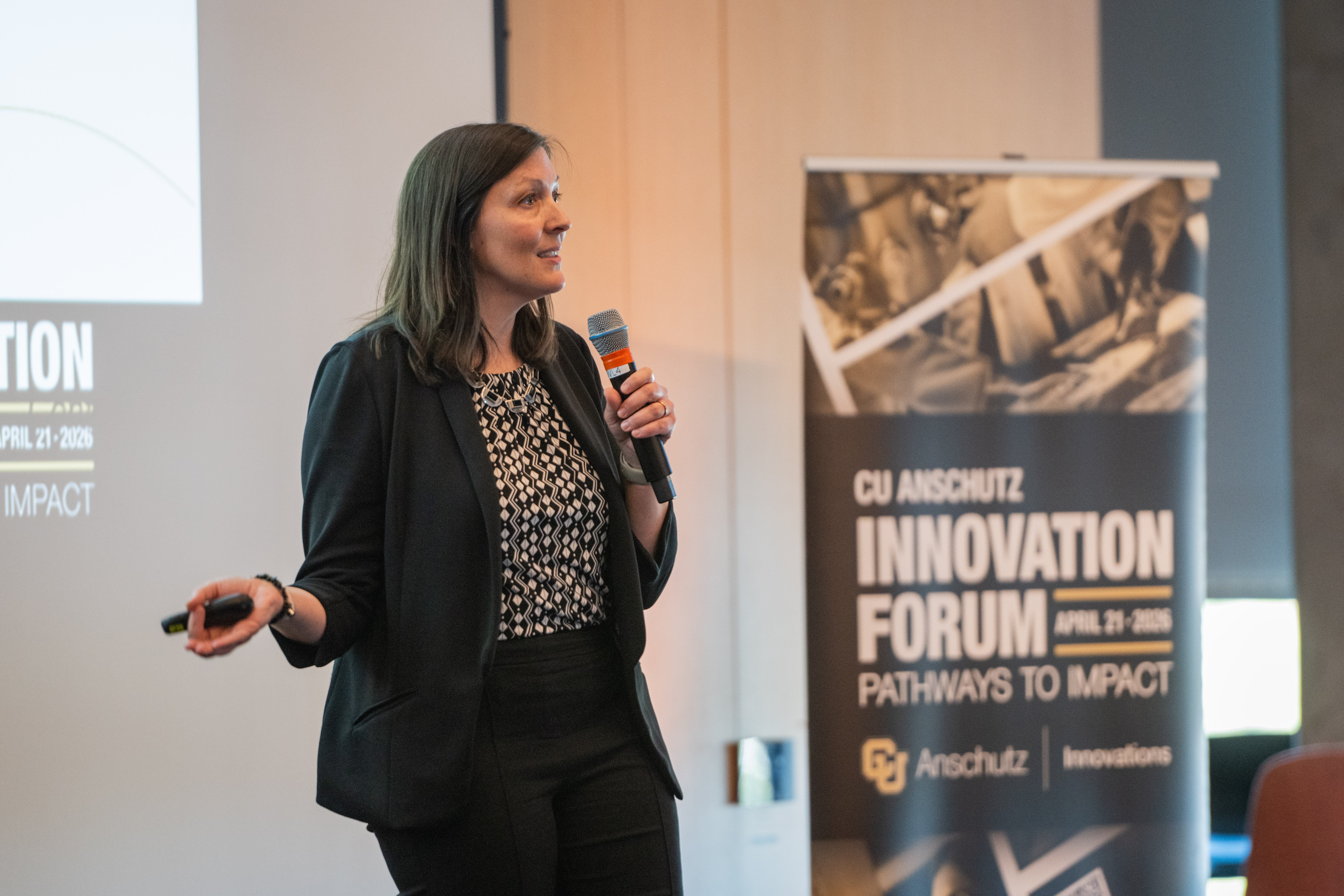
Allison Dempsey, PhD, presents at the Innovation Fast Pitch.
In their words:
Dempsey: “We get data episodically when patients come into our clinics, and we just get a single point of data. It's very hard to track trends. For example, ‘What's happening on Tuesdays that's making you so stressed?’ Without timely data in real time, clinicians can't adjust the treatment. Patients feel stuck. They disengage, and care drags on longer than it should. Longer treatment means fewer open slots.”
What would the prize help with?
Back-end support in terms of coding for data visualization and support for electronic health record and integration with different software programs.
Company name:
Retro Nephrix
Presenting faculty member:
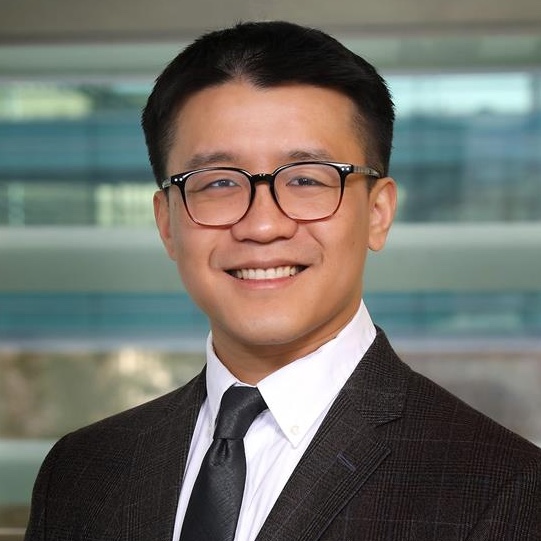
Heiko Yang, MD, PhD, assistant professor of surgery, Division of Urology
What’s the central idea?
Delivering therapies directly to the kidney through previously inaccessible filtration barriers by using a minimally invasive specialized endoscopic needle.
What was their inspiration?
As a kidney “plumber” who treats kidney stones and other kidney conditions, Yang saw this approach as a plumbing challenge to overcome.
What are they trying to solve?
One in seven adult Americans has some form of chronic kidney disease, which for many can progress to full kidney failure. Currently, despite all the progress made in modern medicine, the best option available to doctors is to slow down the progression of kidney disease. Kidney failure is caused by damage to the nephrons – a functional unit of the kidney that takes blood and turns it into waste (urine) through a number of biochemical processes. Each person is born with about 1 million nephrons, and they slowly fail as we age.
Newer treatments are under research – such as CAR T-cell therapy or stem cells – to reverse this damage and kidney disease, but the treatments cannot fit through the filtration system of the kidney.
Retro Nephrix is an endoscopic needle that fits onto the basic tool of the urologist, a ureteroscope. The needle is created for the minimally invasive delivery of these advanced therapeutics, by entering the kidney from the bladder and inserting it into a nephron area – known as the ducts of Bellini.
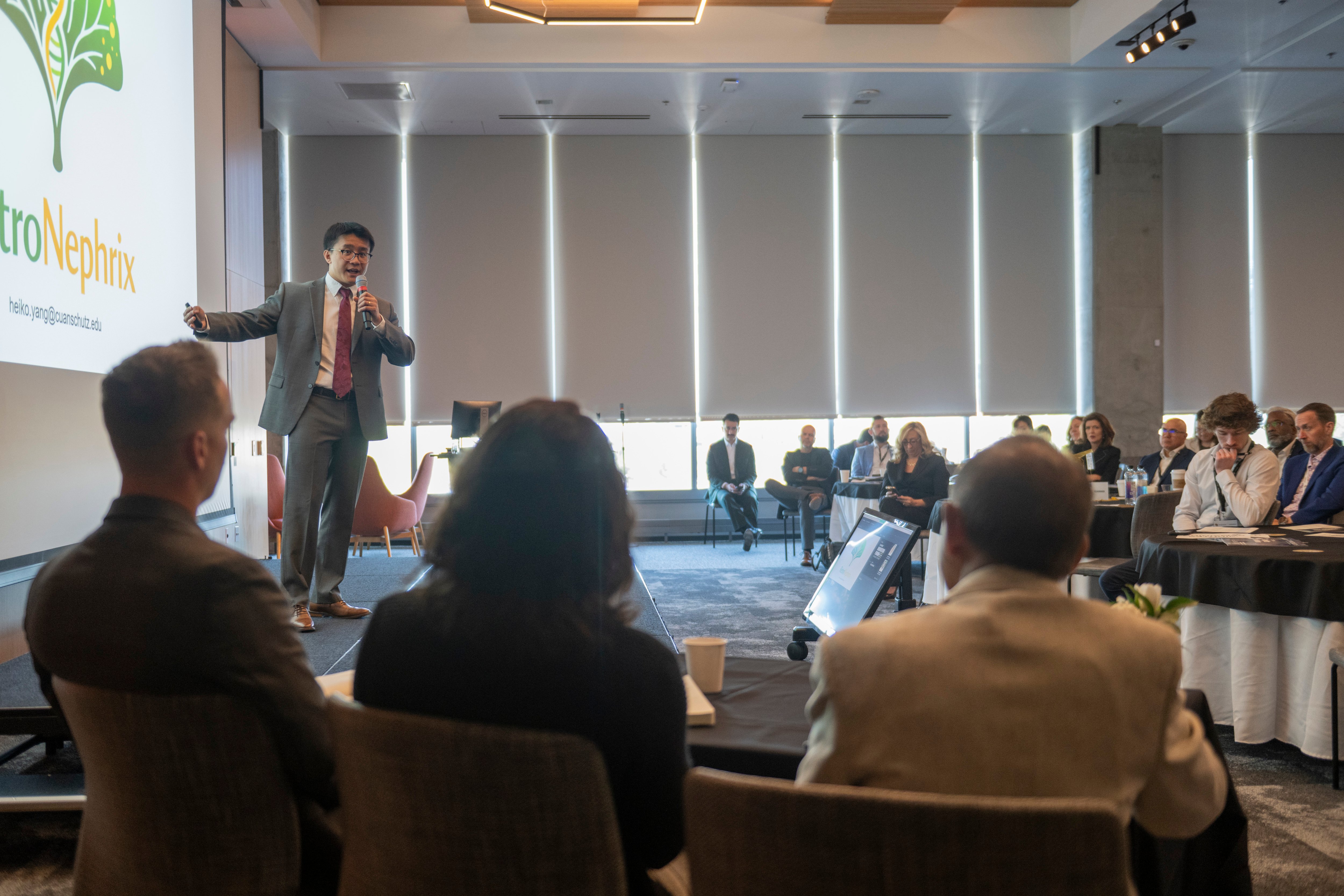
Heiko Yang, MD, PhD, presents on Retro Nephrix.
In their words:
Yang: “This is a platform technology that a lot of pharmaceutical companies and biotech companies will find very helpful because we can treat a lot of things. It's not just one disease. It can be used for any disease involving the nephron, where the therapeutic is either too large to pass through the glomerular filtration barrier, or the therapy is too toxic, such as chemotherapy or immunosuppression. For the first time, we can deliver a therapy to the kidney that only the kidney sees.”
What would the prize help with?
The U.S. Food and Drug Administration (FDA) and regulatory approval process, such as acquiring individuals to interface with the FDA and hiring a CEO.
A question from the audience:
Q: Who is your patient population and how would we go about getting this device to them?
Yang: Myriad, but one example would be polycystic kidney disease. For these patients, we are going to partner with a pharmaceutical company that already has either an adeno-associated virus therapy or lipid nanoparticle-based therapeutic. Our polycystic kidney disease patients are going to be the first patients in our clinical trial.
Company name:
NeuroVesica
Presenting faculty member:
Tracy Bale, PhD, professor and Anschutz Foundation Endowed Chair in Women's Integrated Mental and Physical Health Research, Department of Psychiatry
What’s the central idea?
Making psychiatry more precise through a biomarker platform, leading to better diagnosis and treatment.
What was their inspiration?
One in five Americans currently suffers with a diagnosable mental illness. The diagnoses for these conditions are subjective and lead to a lot of failed clinical trials and drug discovery efforts, putting effective treatment out of reach for many. These researchers are asking: What if a platform existed to make drug development cheaper, faster and better for patients with more durable results?
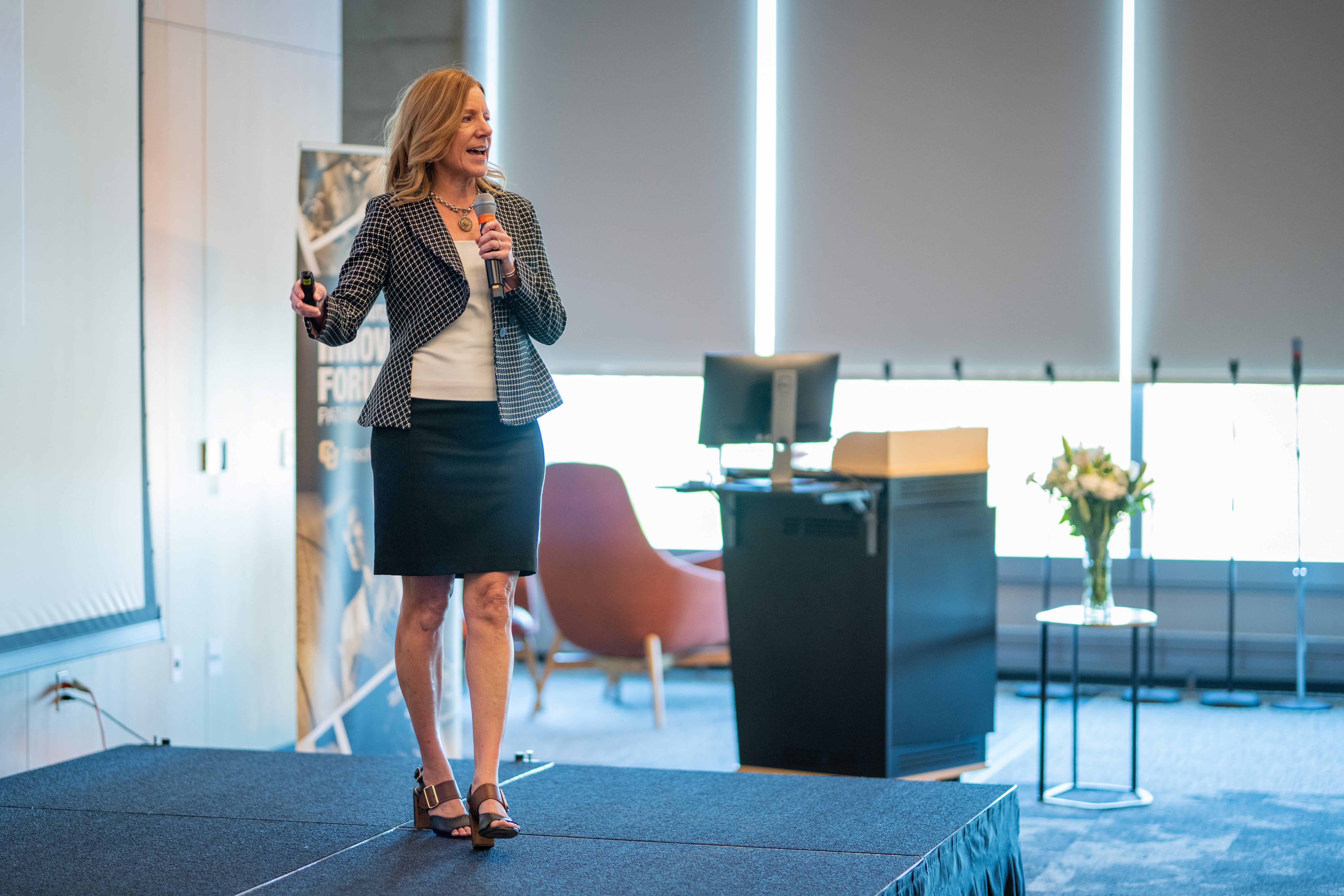
Tracy Bale, PhD, presents on NeuroVesica.
What are they trying to solve?
Over the last 25 years, 90% of clinical trials in psychiatry have failed, which has led to a similar decrease in drug companies starting new drug trials. NeuroVesica looks to go after the indicators as to why clinical trials fail: a lack of objective measures and clear biomarkers.
Without objective measures, it’s extremely challenging for researchers to distinguish between placebo effect and drug effect, and therefore clinical trials fail.
NeuroVesica aims to address this by looking at small particles that are released from all types of cells in the body called extracellular vesicles (EVs) and using them as reporters for whether a subject will likely respond to treatment. EVs are easy to access in a blood draw and are important in cell-to-cell and tissue-to-tissue communication, giving researchers a lot of information on a patient’s biology with a single blood draw.
The platform being built can assess these EV signals, giving better data on placebo response versus who is responding to treatment.
In their words:
Bale: “Let me give you an example. You have cancer. You're sitting in your doctor's office. She walks in and sits down and she says, ‘How does your tumor feel today?’ That doesn't happen in any other medical field except psychiatry. No biomarkers, no blood tests, no imaging. And psychiatry is your report of how you are feeling and your physicians' subjective interpretation of that information. We need to do better.”
What would the prize help with?
Building partnerships to test and evaluate their models with drug companies that have already done trials and have blood samples stored.
A question from the audience:
What are you doing your validation on?
Bale:
“What we've been doing for the past several years is expansive assessments across different neuropsychiatric diseases. And so building that model together as part of the training is what we've done thus far. From there, we’ve been doing partnerships with different drug companies that already have run well-designed clinical trials. So, we can utilize their blood samples to then blindly look at how our model works for those studies and the predictive outcomes.”
Company name:
Parley Neurotech
Presenting faculty member:
Samuel Budoff, PhD, postdoctoral fellow in the Klug Lab, Department of Physiology and Biophysics
What’s the central idea?
A 30 day combination therapy reverses central auditory processing disorder in order to prevent dementia.
What was their inspiration?
The single most modifiable risk factor for dementia is hearing loss. Roughly one in 12 cases of dementia is due to untreated hearing loss and currently there is no treatment, including the fact that no hearing aids have FDA reviewed clinical evidence of helping someone hear in noisy environments. What if that could be changed by focusing on the brain?
.jpg?width=317&height=211&name=260421-cu-anschutz-innovation-forum-1234_A(1).jpg)
Samuel Budoff, PhD, presents on Parley Neurotech
What are they trying to solve?
Central auditory processing disorder is a condition where a patient has trouble making out conversation in noisy environments like a crowded restaurant, because their brain circuits have changed and are not processing information as effectively anymore.
Enter localized oligodendrocyte optimization therapy, a 30-day treatment that combines an hour per day of audio therapy with an FDA-approved antihistamine – clemastine fumarate.
This combination therapy goes after a specialized insulating material in the nervous system called myelin, helping to restore this protein-rich substance lost due to aging. A patient will stream the audio therapy from a portal to a specialized set of headphones that can also monitor patient adherence and other feedback during treatment. The goal is to offer a complete solution for patients, in the comfort of their home, at the price of hearing aids.
In their words:
Budoff: “The brain craves activity. This can come from a direct input, like your sense of hearing, but the reason hearing loss is so profound is because people choose to withdraw from their social and professional lives. That deprives the brain of even more activity and ultimately kicks off a cascade that ends in that cognitive decline.”
What would the prize help with?
To help complete a phase-2 study enrollment.
Do you or someone you know experience auditory processing disorder and might be interested in volunteering for the study?
A question from the audience:
Will a patient need to refresh the treatment every five years?
Budoff: “When we look at the literature about how oligodendrocytes work in the human brain, we know that they hang out for about five years. This is in contrast to neurons, where you are generally born with the ones you’re going to die with. For that reason, we suspect what is actually causing this problem in at least older individuals, is that oligodendrocytes are not properly turning over. Our treatment is making them do just that. This implies that, yes, every five years, a patient would need to repeat that 30-day therapy.”
Parley Neurotech and NeuroVesica.
With tied voting amongst the expert panel and audience, both teams earned funding and split the pot to advance their efforts in their respective areas of reversing central auditory processing disorder and identifying biomarkers for precision psychiatry.

%20(1).png)

.jpg)