Colorado is known for its active community, with many people taking advantage of the outdoors, especially in the warmer months. With the fall sports season also underway, it’s important for kids and adults to stay safe when exercising in the hot weather.
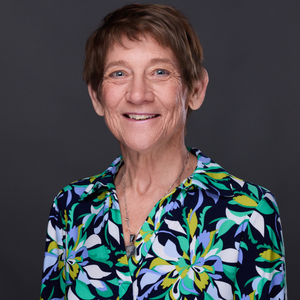
Dr. Catherine Jankowski is a professor at the University of Colorado Anschutz College of Nursing and is the Adult Health and Wellness Division Chair. She has a PhD in kinesiology and her research focuses on exercise and aging.
She gives insight into how the body functions during exercise, and provides prevention strategies for athletes of all ages.
What Happens to Our Bodies When We Exercise in High Heat?
Dr. Jankowski says when our bodies are in hot conditions, they generate heat. This environmental heat is added to the heat produced during human movement. This is called metabolic heat production.
“When we are exposed to high environmental heat, our core temperature increases. Core temperature is like a thermometer deep inside your body, and when the core temperature rises, it causes our sympathetic nervous system to stimulate cooling mechanisms,” she says.
The two main ways our bodies cool off are sweating and redirection of blood flow.
“Sweating allows us to get evaporative heat loss, and have evaporative cooling,” Jankowski says. “Our bodies also redirect blood flow from the center of our body, in regions around the internal organs. This centrally-located blood is redirected to our skin, so that we can dissipate heat better through our skin.”
The demand to dissipate heat is related to how much heat we generate. The harder our bodies work in high temperatures, the more we need to compensate for the increased metabolic heat production.
Risk and Response
Dr. Jankowski says when our bodies can’t compensate for the increased heat anymore, this is called heat stress. During heat stress the body will feel overwhelmingly hot and may not be able to cool down.
“Breathing might increase or the pulse may increase, and someone might start to feel lightheaded. When you are unable to compensate, sometimes people start to feel actually chilled, cold, and clammy, which generally we don't like to see.”
The priority is to stop exercising or reduce the intensity and cool the body.
“Place ice towels, or ice compresses on the person, particularly around the neck and the groin area. Those are areas where the cooling will be effective and will help the person's body core temperature to decline,” she says. “It's important not to go back out to the heat once someone is feeling better , because the risk of going back into that condition of heat stress is higher, and you don't want to push it to the level of heat stroke, which is a medical emergency.”
Prevention
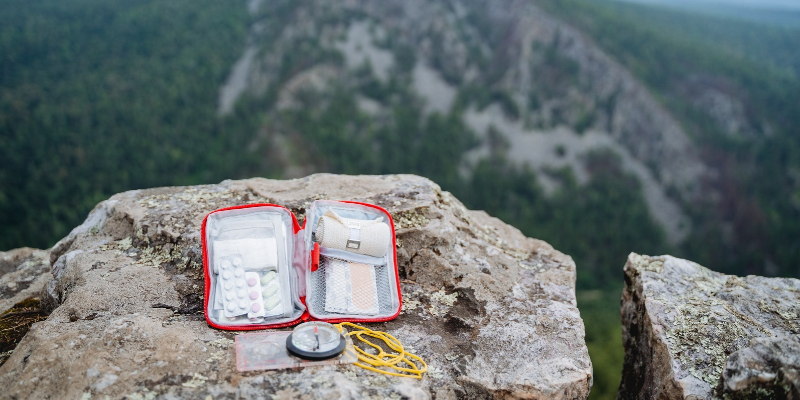
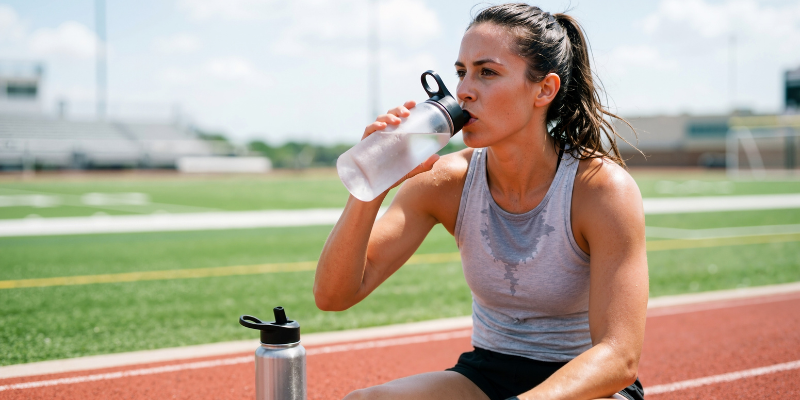
Despite fall starting soon, Colorado (and other parts of the country) will likely experience summer-like weather well into fall. Staying hydrated is critical, as well as having a few prevention methods available to you.
“It may mean moving indoors to exercise or exercising outdoors in a shadier area, or next to water,” Jankowski says. “Heat can catch up with you even if you're not going outside to exercise, even if you're doing daily chores around the house or the yard. Be aware and plan accordingly to the best of your ability.”
She says staying hydrated in Colorado, where the humidity is low, is especially important.
“You may not realize how much you're actually sweating because your skin may feel drier faster, and so it can be a little bit deceiving, and you can then be not as hydrated as you need,” she says.
Age is also an important factor in how our bodies respond to heat and exercise. For example, children sweat less and need more breaks.
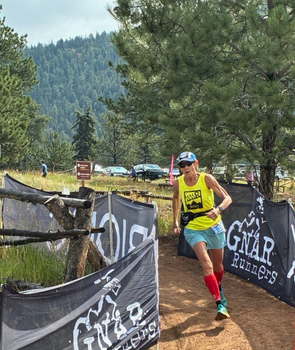
Dr. Jankowski running the Staunton Rocks Trail Half-Marathon in 2025. |
“They have smaller sweat glands that are inactive, so they're not going to sweat as much. They also have a large body surface area for their size, and so it's very important for young children to stay hydrated, and have a cool area that they can go to,” she says.
For adolescents and adults, the sweat glands are more active allowing our bodies to cool and exercise for longer periods. She says as we exercise more, our sweat glands become more effective, as well as our overall cardiovascular system. As we become more fit, our bodies are able to compensate for metabolic heat easier.
But as people age, our bodies change.
“The research shows as we go through young adulthood, middle age, and older adulthood, our sweat mechanisms and our thermal sensitivity actually declines. That's probably due to aging itself, but also because we tend to become less active as we get older, and we are less active at higher intensities,” Jankowski says.
To help prevent this decline, it’s important for older adults to stay active. The best way to become acclimated to heat is to stay active throughout the year, so that in the warmer months our bodies can adjust better.
And she adds, exercising in high heat is hard for everyone.
“If you are exercising and you're discouraged by the fact that you can't exercise because of the heat or the humidity, don't be discouraged because even highly trained athletes have this problem,” she says. “They're not acclimated to the conditions. It's no different for them than it is for us. Please don't be discouraged. Just take the right steps to feel better about it.”