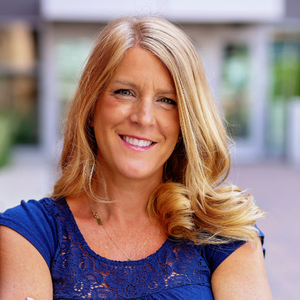
When Erik Wilkerson signed on to work at a rural urgent care clinic in Steamboat Springs, he wanted to do it all for an underserved community.
"It was really neat to take care of people in a setting where they have very limited access to medicine. We really served as a very high-level practice of doing everything," he says.
Then a child walked through the door and Wilkerson, an Adult-Gerontology Primary Care Nurse Practitioner (AGPCNP), had to turn them away. His scope of practice started at age 13.
"I just got so caught up in the excitement of being able to help people in the community and looking at limitations instead of opportunities," he says.
It could have been a moment of doubt. Instead, it became clarity about who he was actually meant to serve.
"There's a lot more good to be done with that older community who've served us in so many ways, but they get forgotten because they're no longer in the workforce and they don't know how to engage with things," he says. "It's a really interesting group of folks to work with."
Same Foundation, Different Focus
Wilkerson isn't alone in wrestling with this choice.
Kelly Henrichs, DNP, RN, GNP-BC, Associate Teaching Professor and Specialty Director of the AGPCNP program at the University of Colorado Anschutz College of Nursing, says it's one of the most common questions she hears from prospective students: AGPCNP, or Family Nurse Practitioner (FNP)?
On the surface, the two programs look a lot alike.
"We share a lot of the same clinical sites. They are both doing outpatient, they're doing primary care. They're doing a lot of the same core coursework," Henrichs says.
Both prepare students for outpatient primary care. Both open doors across a wide range of settings.
"AGPCNPs work mainly in outpatient settings, whether that's a traditional setting like internal medicine, seeing a variety of conditions, or we can specialize and work in ENT clinics, renal clinics, and more," Henrichs says. "The program is set up to prepare our students for all of those opportunities. Students learn about health conditions for anyone — adolescents through older adults."
The real difference comes down to one thing: who you'll spend your career caring for. FNPs are trained across the full lifespan, including young children. AGPCNPs focus on patients ages 13 and up, with deep, specialized training in the complexities of aging.
That focus isn't a limitation. It's the point.
Why Depth Beats Breadth
Choosing AGPCNP means choosing to go deep. Instead of stretching your expertise across every age and stage, you build real fluency in the population that needs it most: older adults navigating chronic conditions, cognitive change, and a healthcare system that too often overlooks them.
Wilkerson felt that shift the moment he started.
"My first week of class in adult gerontology absolutely sold me. This is what I came to study. I was just hooked," he says.
He didn't come to the specialty by accident. After 15 years in the Army as an engineer, Wilkerson pivoted to nursing while raising two young children, and knew almost immediately that pediatrics wasn't his path.
"The last thing I wanted to do was work in pediatrics. I didn't want anything to do with kids because my life had been changed by my children," he says.
What the AGPCNP program gave him instead was a lens he hadn't known he was missing.
"I didn't even understand the concept of aging in place when I first came to the program," he says. "There is so much more to the world that opens up to you through this program that you're not going to see it in FNP because your focus is too broad, and it's not narrow enough to see the reality of what it's like when you get older than 50, older than 60, 70, 80, 90."
That depth pays off long after graduation, too. That breadth matters at recertification, too. Henrichs has seen FNPs caught off guard when their day-to-day practice narrows to one population.
"Every five years, nurse practitioners have to recertify. I had an FNP student who was only working with older adults, and she was having a hard time re-certifying as an FNP. She technically wasn't practicing within her scope of practice because she wasn't seeing pediatric patients and wasn't keeping up with that knowledge," Henrichs says.
In other words: the specialty you choose should match the career you're actually going to build. Not just the one that sounds broadest on paper.
Choosing Your Path
Henrichs' advice to students on the fence is simple: stop weighing curricula, and start picturing your future.
"Looking forward to 10 years from now, what do you see yourself doing? Where do you see yourself working? Do you see yourself in a rural health setting? Then FNP could be the right thing for you. Do you see yourself wanting to work with a geriatric population? Then the AGNP is probably a better choice for you. If you don't see yourself working with that population at all in 10 years, then it's probably not the right path," she says.
For Wilkerson, the answer keeps getting clearer with every year he practices and every patient he gets to grow older alongside.
"I really want to learn a little bit more about what it's like to live to an older age, how to help out people ahead of me, people with me, and grow and age with my own patients in a way that I think I can improve both myself and my community as I grow in my practice," he says.