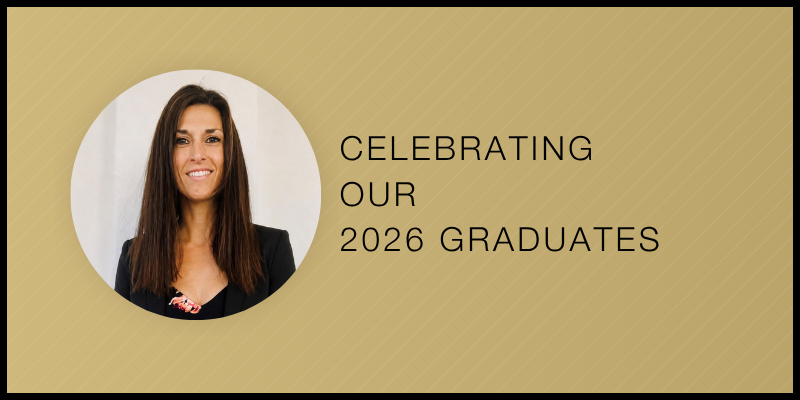
Brittni Goodwin became a nurse by accident. She was a college athlete and needed to earn another degree to maintain eligibility to play.
“I applied to an accelerated nursing program and got in. I intended to just use the program for eligibility, but I did a rotation in the NICU, and I fell in love with it,” she says.
Goodwin spent 20 years working bedside in the NICU and found nursing to be her true calling.
“What I loved about the NICU – and I think this extends to the nursing profession – is advocating for your patient,” she says. “Being an advocate for patients is something really exciting and something I find a lot of value in.”
Goodwin says she found incredible value in being one-on-one with patients during the first 10 to 15 years of her career. But she then hit a plateau and started thinking about how she could effect change on a broader scale to help more patients.
“I was looking for more of a system-wide impact, but I didn’t like some of the nursing roles available,” she says. “Becoming a nurse practitioner or provider wasn’t a pathway that called out to me, so I went looking for something else that would mobilize change on a broader scale.”
Searching for a way to make a bigger impact led her to the University of Colorado Anschutz College of Nursing, where she enrolled in the college’s BS to PhD program. She first earned an MSN with an i-LEAD (Leadership in Nursing and Health Care Systems) specialty and is about to graduate with her Doctor of Philosophy (PhD) in the biobehavioral sciences track. The uniqueness of CU’s program is that you earn two degrees on your way to the PhD.
“Transitioning away from the bedside came at the right time for me because I needed to use my brain differently,” she says. “I think there’s a lot of value in bedside: the adrenaline, the immediate feedback, and the immediate help, but I think what I’m doing now is something more long-term, and you have a bigger impact.”
“Earning a PhD opens so many doors,” she says. “I’ve gained so much knowledge, and it’s changed the way I look at things. I’ve started seeing the bigger picture and things that might contribute to the overall problem.”
She’s already making changes to healthcare systems through her roles as a sepsis and quality improvement coordinator at AdventHealth Avista in Louisville.
“I might do a deep dive and a literature review into a certain healthcare area and compare it to national standards,” she explains. “I’ll look at ways we can improve our processes and give recommendations so we can focus on best practices across the hospital.”
Being a Better Advocate
Earning a PhD has made Goodwin a “better nurse, a better advocate, and a better human,” she says.
It’s because she’s changed the way she views problems and how to solve them.
“I think, ‘What else is feeding into this problem? Where does it come from? What is the source? Fixing this one problem is like putting on a Band-Aid: if you’re not fixing the underlying issue, you’re going to end up in the same spot again,” she says. “I’m able to see layers within a problem instead of what appears on the surface, which leads to problem-solving and finding the root cause of the issue. And that’s how you get systems-wide change across the board.”
Making systems-wide change is part of Goodwin’s dissertation, which focuses on racial and ethnic disparities among babies in the NICU after surgery in the post-operative period.
“Finding a voice for the voiceless is a big part of what drew me to this topic,” she says.
Her study aligns with broader literature in both adult and pediatric settings, and through her research, she found disparities in pain management for babies.
“The research is a sensitive topic, but I think it’s really insightful because it allows us to look at creating better practices," she says. "My goal is to modify protocols to educate staff better and provide better care to the patients we’re serving.”