Blood pressure. Body temperature. Pulse rate. These are all types of physiological data collected during labor.
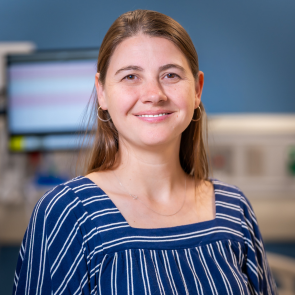
The data gives clinicians the information they need to assess a patient and strategize what type of care they need. CU Anschutz College of Nursing Assistant Professor Katherine Kissler, PhD, CNM, is working to change how clinicians interpret that data to improve patient care through machine learning. Machine learning is a type of AI that teaches computers to learn from data and make predictions.
She wants to use that data to better understand what’s happening biologically in real time and to provide clinicians with better tools to deliver the right intervention to the right patient at the right time.
“What we want to do is help the clinician if they’re having any uncertainty and give them support in their decision-making process,” she says. “Most people come into pregnancy and labor healthy, and our goal is to keep them healthy.”
Kissler was named a Boettcher Investigator by the Boettcher Foundation in June and awarded a $250,000 grant to conduct this research, focusing on labor care and the identification of infections during labor. She’ll develop and evaluate predictive models using archived clinical data from 9,000 patients at UCHealth hospitals.
More About Boettcher Investigators
What it means to Dr. Kissler: "As a nurse-midwife scientist in maternal health, receiving this award is especially meaningful because it reflects growing recognition of the importance of nursing and midwifery science in advancing maternal health. It’s an incredible honor to represent our field and the contributions we can make to improving care and outcomes.” |
“I want to study whether the data we collect during labor contain earlier signals of infection that we can detect using computational strategies and machine learning,” she says. “I hope this will help avoid unnecessary antibiotic exposure for people who don’t have an infection.”
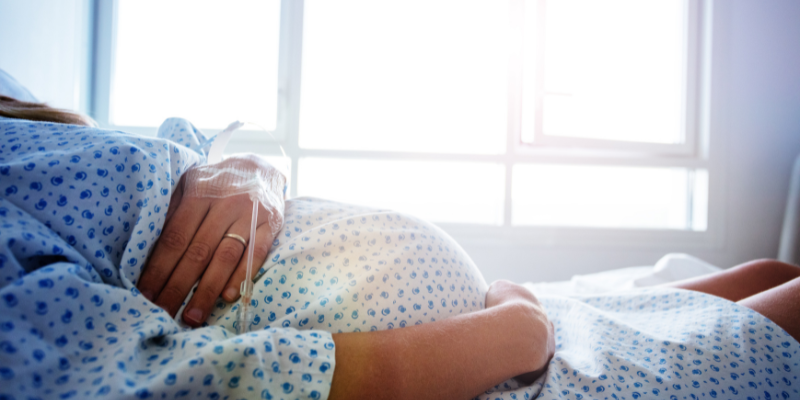
Kissler says between 6-10% of pregnant women get an infection when they’re in labor, and one of the leading causes of maternal mortality globally is sepsis and infection – “It’s happening quite a bit,” she adds.
If a mother is infected, it can also affect the newborn, including increasing the risk of early-onset sepsis.
“The interventions we have for babies who have early onset sepsis are so invasive, so treating mothers during labor and recognizing infections early is so critical,” she says.
Advancing Care for Low-Risk Women
Kissler, as a midwife-scientist, sees her research as highlighting the role nursing perspectives and midwives play in advancing healthcare.
“Midwifery is deeply rooted in this philosophical tradition of understanding the normal physiology of labor and looking for early signs that someone might be deviating from the norm, while avoiding unnecessary intervention for those who don’t need it,” she says.
“Most people enter labor healthy and at low risk for complications, but infection can emerge over the course of labor,” she adds. “That creates an important opportunity for prevention and early recognition. Nursing and midwifery science are grounded in understanding normal physiology, recognizing when someone begins to deviate from that trajectory, and intervening before a healthy process becomes a serious complication.”