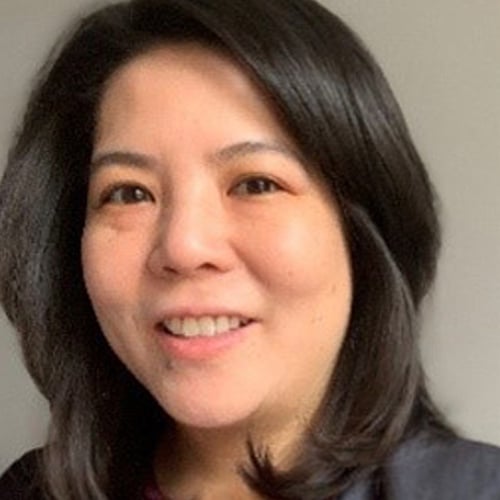
In 2023, University of Colorado Anschutz College of Nursing Associate Professor Christina Sun, PhD, was named a Fulbright Scholar, allowing her to study transgender populations in Taiwan and Botswana.
Dr. Sun sat down with CU Anschutz Nursing to talk about her research and time abroad. In part one, she talked about conducting research and how she hopes her work will improve the quality of life and reduce health disparities for transgender populations.
In part two, she gives a closer look at what life was like living in Taiwan and Botswana over the course of a year.
What was your housing situation like, and did your family come with you?
I stayed in Taipei, Taiwan, and Gaborone, Botswana [the capitals of both countries], but they’re both very different.
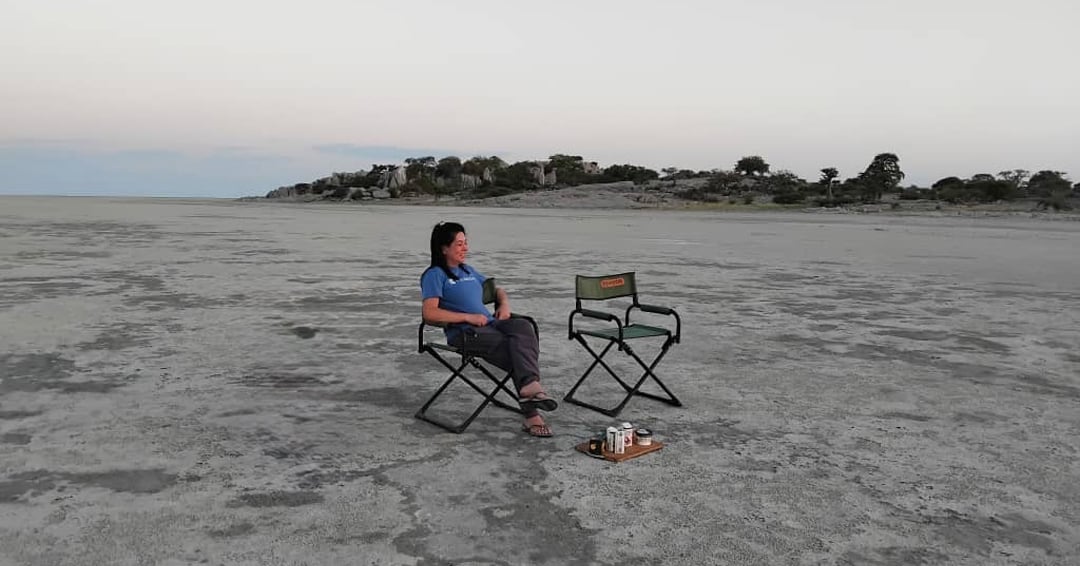
Dr. Sun camping in Makgadikgadi Pan in Botswana. |
The first time I was in Taiwan, I arrived with my husband and our son Grant, who was four at the time. Later, after my husband flew back to the US, my mom joined us. For my second visit to Taiwan, Grant and my mom were with me. In Botswana, Grant was with me the whole time, and my husband visited for a few weeks.
In Taipei, we were renting an apartment within walking distance of a bus stop and a subway station. It was easy and convenient to get around.
In Gaborone, it’s a much more rural city, so we had to drive to more places than in Taipei. Also, electricity or water wasn’t always working, and sometimes we wouldn’t have Internet, so some of the infrastructure we take for granted in the US wasn’t always there. The university where I was working set us up with housing. It was a great location where I could walk to my office on campus and also take Grant to preschool, but because of maintenance issues, we eventually rented a house instead.
Was it hard to adjust to living in two foreign countries?
I think you have to embrace living abroad and understand why things are the way they are.
I remember I had packing lists for both schools, and they were vastly different. For example, in Taiwan, we were asked to bring an extra pair of shoes for Grant, and I didn’t understand why. It’s because when they go to school, they change out of their outdoor shoes and into indoor shoes, so kids have good support when they’re running around, and it keeps the school clean.
|
Dr. Sun wearing a handmade dress while attending a wedding with faculty from the University of Botswana School of Nursing. |
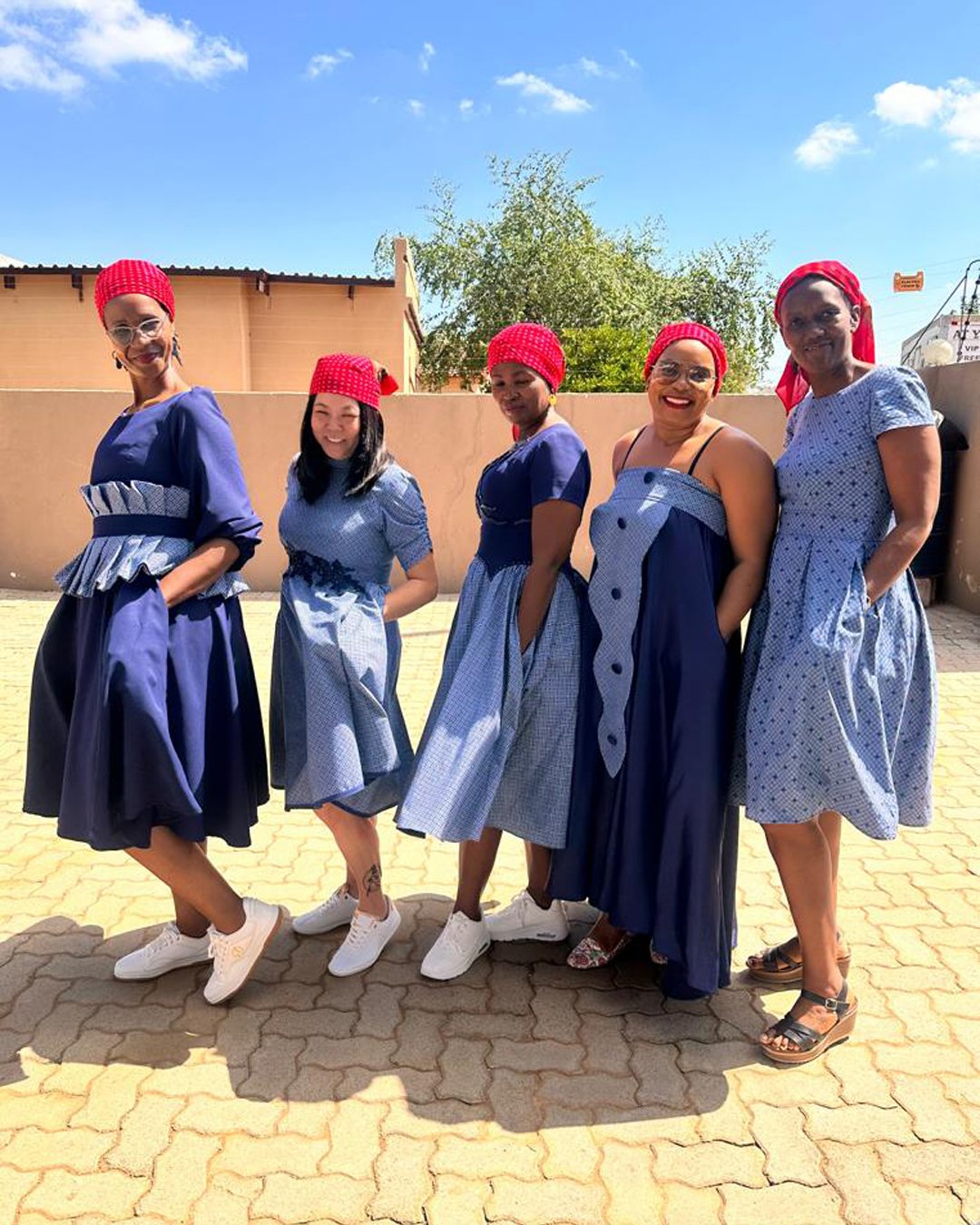
In Botswana, they asked for a specific ice cream container [empty and clean], and I had no clue why. It turns out that this particular ice cream container is very sturdy, so they use it to carry school supplies. And, after the school explained it to me, I realized that it makes so much sense!
I noticed things about the day-to-day lifestyle. For example, in Botswana, the bank line can be quite long. But if you’re pregnant, you are allowed to bypass the line and get seen first. I’ve never seen anything like that in America.
In Taiwan, you can borrow reading glasses at the post office. These are a couple of examples of how considerate and thoughtful the people are, and how they try to make things accessible for everyone.
What did you do when you had free time?
In Botswana, I was fortunate to have a connection with a faculty member there, and she was great at making sure I did more than just touristy things. One of her family members was getting married in a rural area, and she invited us to go with her. I was invited to another wedding and took part in a custom where the bride chooses a specific fabric, and the women attending the wedding have dresses made from it.
Botswana also has amazing wildlife and protected lands, so I was able to camp in certain areas and see all kinds of different animals. And Gaborone has many shopping malls with grocery stores and elaborate playgrounds, so I would take Grant there after going grocery shopping.
In Taiwan, we would see many historic landmarks and museums in Taipei, but with its great train system, we could easily and frequently visit many places all over the island. We visited a rice paddy field, went ATVing on the beach, stayed overnight at an aquarium, and visited the tidal pools the next morning. There are some amazing outdoor features I didn’t know existed.
How did your son adapt to living in and attending school in two different countries?
He was so adaptable; it really stood out to me. In Botswana, school is taught in English (sometimes teachers speak Setswana, one of the local languages), and the school follows the British educational system. He was put in a higher grade there than in the US. He was in preschool here, but in preK in Botswana, so it was a bit of a learning curve for him.
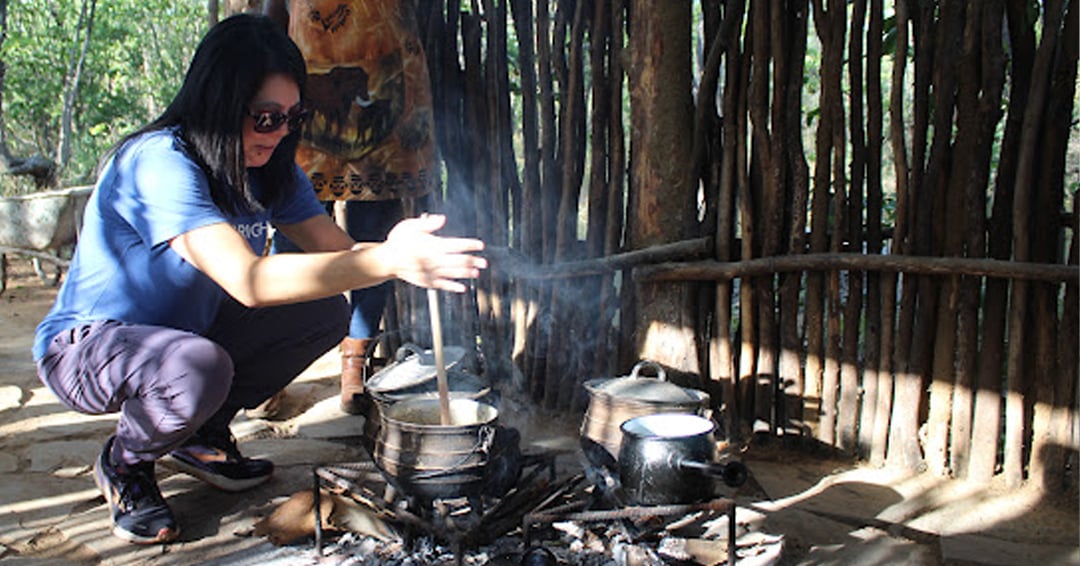
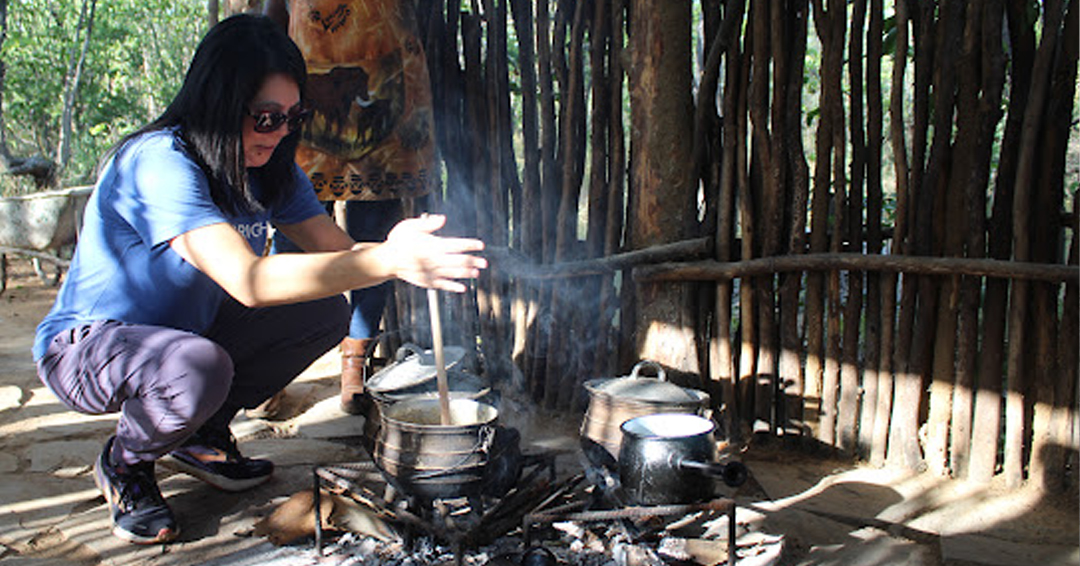
Dr. Sun learning to cook traditional foods in Botswana. |
In Taiwan, classes were in Mandarin. He doesn’t speak Mandarin, and neither do I, so that was sometimes a challenge. Grant attended a Montessori school somewhat similar to the one he attended in Denver, so there was some familiarity. His closest friend turned out to be a child who also spoke English (and Mandarin), which made the experience a little easier and more fun.
Overall, I think he had a great experience in school. He learned so much, not only through school but also in how to engage with people. It was important to me that he was in school, not only to have his own experiences, but also because I was conducting research, so he wouldn’t have been able to come to my work with me.
One legacy from our time in Taiwan is that, when we came back, Grant said he wanted to learn Mandarin, so he’s been taking lessons. When he’s tried to teach us, he would joke that our accents were terrible, so he convinced us to learn Mandarin as well. It’s been a surprising part of the process because I never thought I could learn Mandarin.