Medical cannabis can be a controversial topic. But many patients see it as a resource and treatment option.
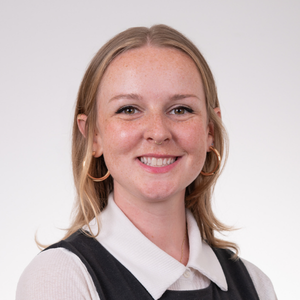
Dr. Morgan Douglass, a post-doctoral fellow at the University of Colorado Anschutz School of Medicine, has been exploring the use of cannabis for symptom management among older adults and individuals living with chronic illness. Douglass recently presented her research and proposal to nursing faculty and staff at CU Anschutz Nursing.
Her background is in clinical psychology, and her specialties are in substance use research, predictive behaviors, and cancer care.
While practicing in a clinical setting with cancer patients, she noticed that many of her patients living with chronic illness were using substances to cope.
“Whether that was for pain or the emotional and mental distress of their disease,” she says.
Some substances have clear research that shows they can be harmful to someone’s health, such as alcohol or nicotine, but cannabis has some research linking it to health benefits.
Her research questions include: Does cannabis work for symptom management? Do we have the actual evidence to support medical use? Who do new patients turn to for cannabis use direction and support? Why use cannabis?
Douglass found that there was not a lot of definitive data that points to cannabis as a strong solution for symptom management. Some negative side effects of cannabis use include abdominal pain, dizziness, fatigue, and paranoia. Cannabis was linked to alleviating some symptoms such as nausea, vomiting, and anxiety in patients
“We basically have no ground to stand on to be giving clear recommendations for patients on cannabis use,” she says.
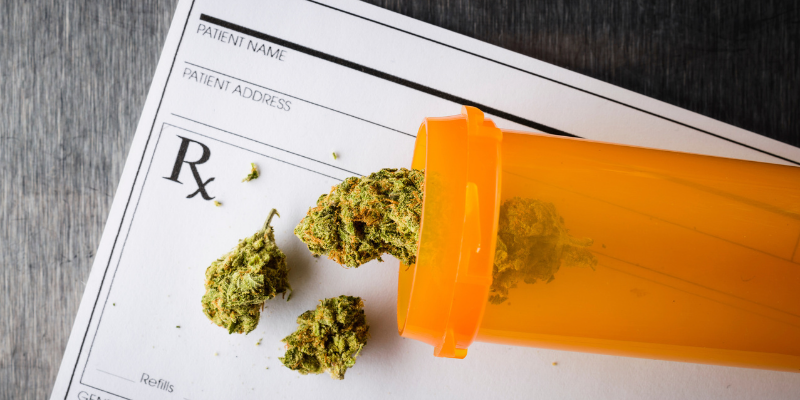
Patients can be prescribed synthetic versions of cannabis, like dronabinol or nabalone, which patients can get at a pharmacy. Often, however, patients are given a medical license to buy cannabis plants at a dispensary instead.
“Our working theory is that the whole-plant cannabis that your patients are getting from a dispensary may be different, we think, than synthetics that we have data on,” she says.
Douglass met with oncology providers and cancer patients about how they talk about cannabis use for treating symptoms. Patients said they felt comfortable talking about it with their providers, yet she found they rarely did.
“Over 85% of oncology providers felt like they really needed formal cannabis education before they could be talking about cannabis, which makes a lot of sense,” she says.
Not all cannabis is the same. Some plants have different uses or potency levels, so it’s important to be informed on what type of cannabis patients need. Douglass says patients were much more likely to ask their questions to someone who works at a dispensary (also known as a budtender) than to their provider. A budtender is not a health care professional and does not know a patient's medical history.
“Budtenders told me, ‘I'm just a middleman between the product and the consumer at the end of the day. I'm unable to legally give out medical advice. The state sees me as no more than a retail worker with extra rules,” she says. “We are putting both our patients and these retail associates in a hard spot when this is where the patients go and ask for help.”
Cannabis and Nursing
She says while there are some resources available, more cannabis research and education needs to be done to support patients looking to use it for treatment.
She highlighted cannabis nursing as one promising approach to improving patient education and communication around cannabis use.
“Cannabis nursing is an emerging specialty that I first learned about through a nurse researcher who introduced me to the American Cannabis Nurses Association. I was interested to learn about the emphasis on specialized training in therapeutic cannabis education, patient counseling, and evidence-informed care.”
One organization Douglass learned about through her work is Leaf 411, a Colorado-based, nurse-led hotline where patients can ask questions about safer cannabis use. She says understanding cannabis use is especially important for nurses working in palliative care.
“I think it’s encouraging to see healthcare professionals pursuing specialized training to better support patients as cannabis becomes an increasingly common part of their care.”
Another factor in this work is the type of patient using cannabis. Older adults are starting to use cannabis for the first time to support chronic illness and aging. This population is already at risk for falling and memory problems, and when using cannabis as treatment, these risks are enhanced.
“We have a population who's using more, but we don't have the data to support if it's actually helping, and we have some data to support that it might hurt sometimes,” Douglass says.
What’s Next
Douglass is submitting an early career grant that will focus on older adults who already use cannabis for symptom management and prompt them to provide feedback remotely on their symptoms before, during, and after using cannabis.
“They will report on things like pain, anxiety, nausea, depression, and a few other symptoms,” Douglass says.
Understanding the current conversations happening around cannabis between patients and their providers is also important to helping inform new strategies.
“Who's talking to our patients, what do those conversations look like in rooms, maybe using some of the ambient recordings to learn more,” she says.
Douglass also acknowledged that laws are always changing around the legalization and access to medical cannabis. This may impact her study’s timeline and her ability to execute specific trials.
But for now, she hopes her research will inspire others to get involved and support similar work.
“I'm hoping this will build into a much bigger program of research that hopefully will be funded,” she says.