Military veterans face a higher risk of developing a potentially blinding disease known as diabetic retinopathy, underscoring the importance of early detection and intervention to help patients. However, proactive care is difficult amid a growing national workforce shortage of ophthalmologists and limited diabetic retinopathy screening and detection capabilities.
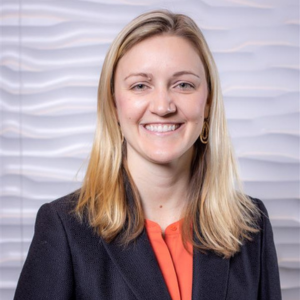
Ongoing innovative research by ophthalmologist Karen Christopher, MD, provides hope to improve care for veterans. The United States Department of Veterans Affairs awarded Christopher, an associate professor at the University of Colorado Anschutz Department of Ophthalmology and staff physician at the Rocky Mountain Regional VA Medical Center, a career development award — a prestigious five-year research grant of $2.2 million — to support her efforts to detect this disease and connect patients to services sooner.
“My goal is to predict who will develop the most serious diabetic eye diseases before it’s obvious to them and identify ways where we can intervene and monitor those patients more intelligently,” Christopher says. “For instance, I want to develop personalized screening programs or protocols that match high-risk patients with ophthalmologists or retina specialists to prevent disease progression and ultimately preserve their vision.”
The importance of early detection
Diabetic retinopathy is a leading cause of preventable vision loss in working age adults, Christopher explains. As of 2021, an estimated 9.6 million people in the country, which makes up roughly 26.4% of people with diabetes, had diabetic retinopathy.
Veterans have a higher proportion of diabetes than the general population. According to the VA, nearly 25% of veterans who receive VA care have diabetes, which is more than double the rate of the general population. This elevated risk is due, in part, to service-related chronic pain, joint damage, and exposure to herbicides such as Agent Orange.
“Diabetic retinopathy is a neurovascular disease. When blood sugar levels are too high, it starts to damage blood vessels all over the body, including in the retina of the eye,” Christopher says.
When blood vessels are damaged, it can lead to them leaking or bleeding within the eye. In the early stages, a patient usually will not experience symptoms, she explains. However, ophthalmologists can still detect the disease through eye screenings.
“That's why it's really important to have strong screening programs so that we can detect when this disease is starting and intervene before it does cause vision loss,” she says.
If diabetic retinopathy goes undetected and advances, it can lead to significant vision loss, and even blindness, that can be irreversible. Regular screening is not only important to protect vision, she explains. If an ophthalmologist notices damage to the blood vessels in the eye, it can indicate that similar damage may be happening in other parts of the body, like the kidneys, heart, and brain.
“We can use our intel to help advance those other specialties, so those physicians can target their interventions earlier to protect other organ systems,” Christopher says.
Applying AI to improve screenings, detection
One of the biggest challenges at the VA is a large number of patients with diabetes who need screening, but a limited number of eye care providers, Christopher explains. There is also a lack of precision and individualization in screening programs, which can lead to high-risk patients struggling to get connected to the care they need.
To address these issues, Christopher’s research grant aims to develop better prediction tools for diabetic retinopathy using artificial intelligence and large-scale data analysis techniques.
“AI in ophthalmology is transformative because it can help us identify patterns and develop predictions in ways that we haven’t been able to in the past,” she says. “We are a visual, data-rich field and AI is key to unlocking clearer insights and better long-term care for our patients.
Her five-year research project, which began in 2025, has three aims. The first is to develop and validate a phenotype, meaning an observable characteristic, for identifying patients with diabetic retinopathy based on data collected from the electronic health record.
“The VA’s medical record system is unique because it’s a nationwide archive spanning decades of rich clinical and administrative data cross the entire spectrum of care, allowing us to find longitudinal data patterns,” she says.
Using this information, Christopher has curated a dataset of roughly 4 million veterans with diabetes, and she has validated a way to identify who developed retinopathy, when, and whether they progressed to a vision-threatening disease.
“Algorithms can now be applied to my whole dataset, so I can use this resource for developing future analyses and prediction models,” she says. “From this data, I can try to generate more accurate predictions of who will get this disease by looking at factors like their blood sugar levels, current medications, and other characteristics that influence diabetic retinopathy.”
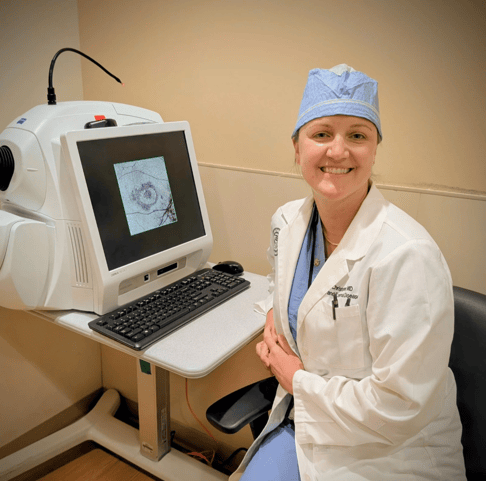
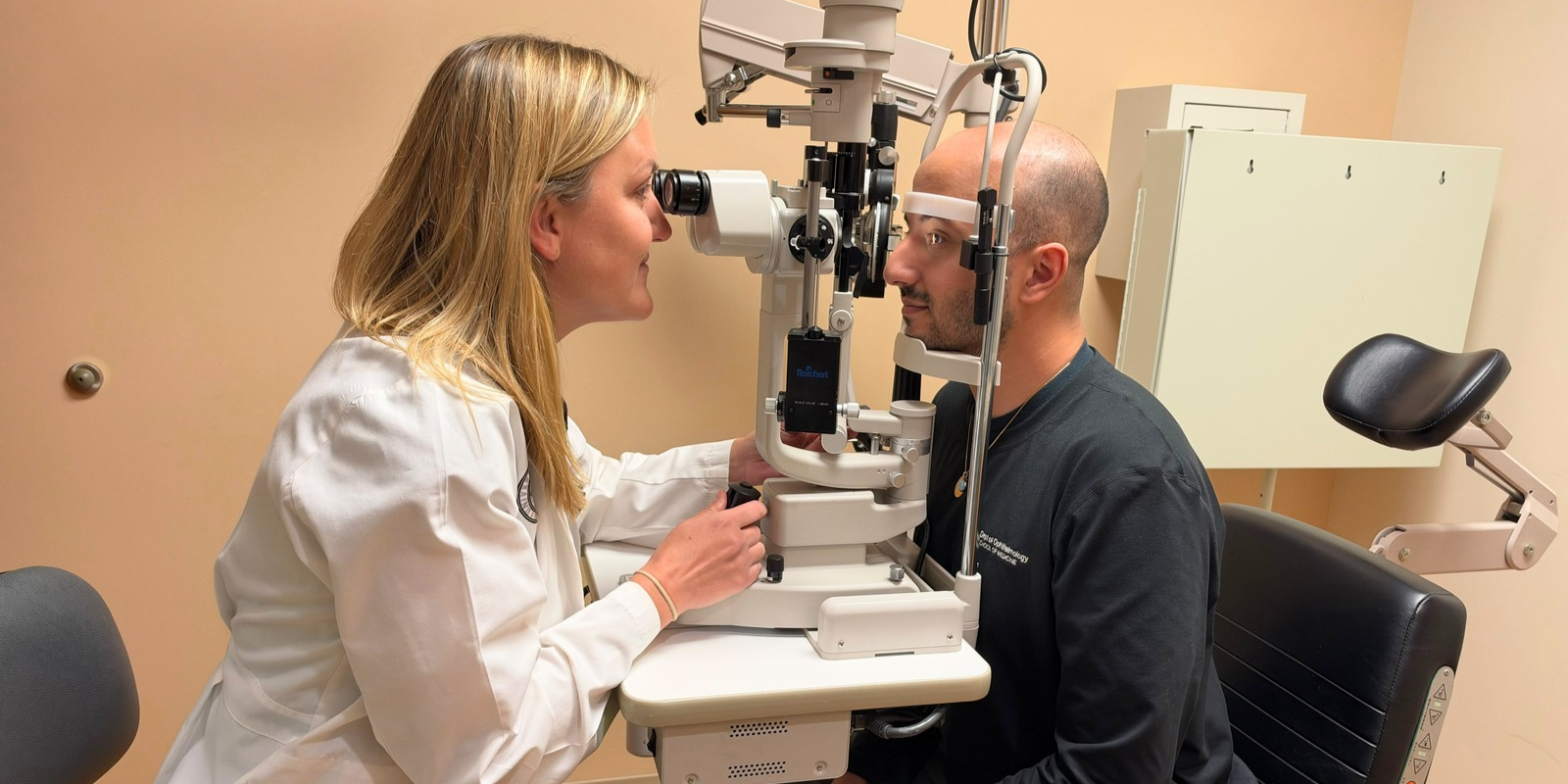
Karen Christopher, MD, in the clinic.
Eventually, she explains, this could potentially lead to developing a risk calculator that ophthalmologists and primary care physicians use to predict whether a patient with diabetes is at a higher risk of retinopathy and needs to see an ophthalmologist within the next few months, for instance, or if someone has a low risk and would be safe for extended screening intervals.
The second aim of Christopher’s project is to apply machine learning techniques, a form of AI technology, to analyze images of peoples’ retinas and generate more precise prediction tools of diabetic retinopathy. She hopes these tools will be advanced enough that they are able to predict if someone will develop diabetic retinopathy, even when they currently have negative screening results.
“My goal is that if we take a photo of a veteran’s retina today and they don’t have retinopathy, can we identify things that we, as ophthalmologists, would have missed in that photo that can predict their future risk?” Christopher says. “I can use deep learning and layered neural networks to essentially find patterns in the clinical data and retinal images, and then test it against my curated dataset to see how accurately I can predict future retinopathy.”
Investigating GLP-1s and worsening retinopathy
The third and final aim of Christopher’s grant focuses on understanding a phenomenon where rapid improvement in patients’ glycemic control, such as by using medications like glucagon-like peptide-1 (GLP-1s), is occasionally associated with worsening retinopathy.
“A hot topic right now is that with some medications like semaglutide, for example, when patients have a big improvement in their blood sugar control, we sometimes see a worsening in retinopathy, which seems counterintuitive,” she says. “A fraction of these patients will end up needing treatment in their retina to ensure they don't experience long-lasting effects or vision loss as a result.
“I want to know if we can do a better job of identifying who is at risk of that — not to prevent them from getting access to these valuable medications, but to make sure they are visiting our ophthalmology clinics so that we can monitor them closely and treat where needed to prevent long term vision damage.”
She hopes this data will also help ophthalmologists learn why this phenomenon occurs in the first place, given that many suspect it is not the medication itself that is directly causing it but potentially other factors.
Although this work is ongoing and will not be completed for several years, Christopher ultimately hopes that her research project will lead to better outcomes for current and future patients.
“The VA healthcare information system offers unmatched scale and depth as a data resource, and I’m grateful that the VA is supporting people like me in this work. Our goal is to protect vision and do a better job of caring for patients at every level,” she says. “I’m confident we’ll improve how we deliver eye care within the VA and hopefully outside of the VA as well.”