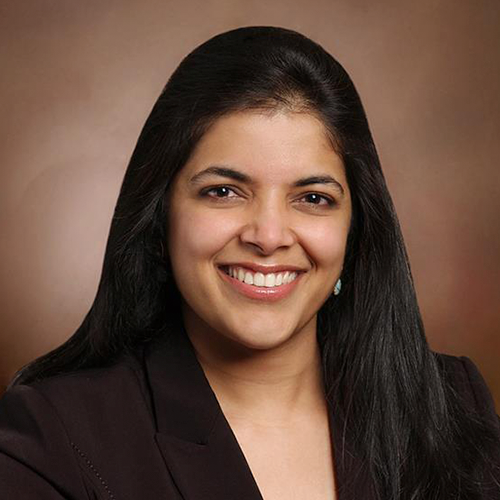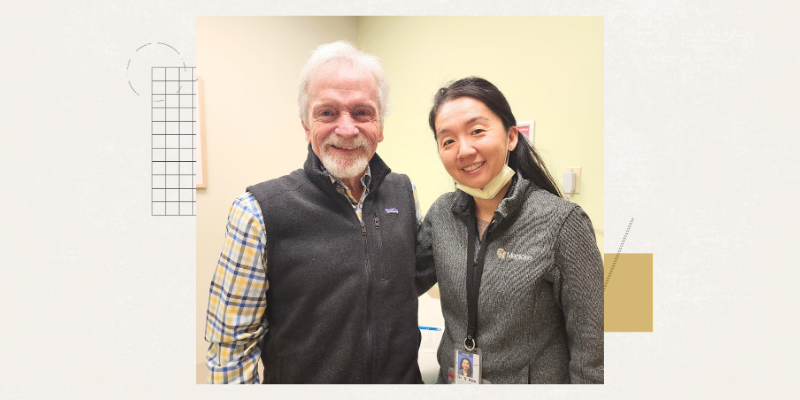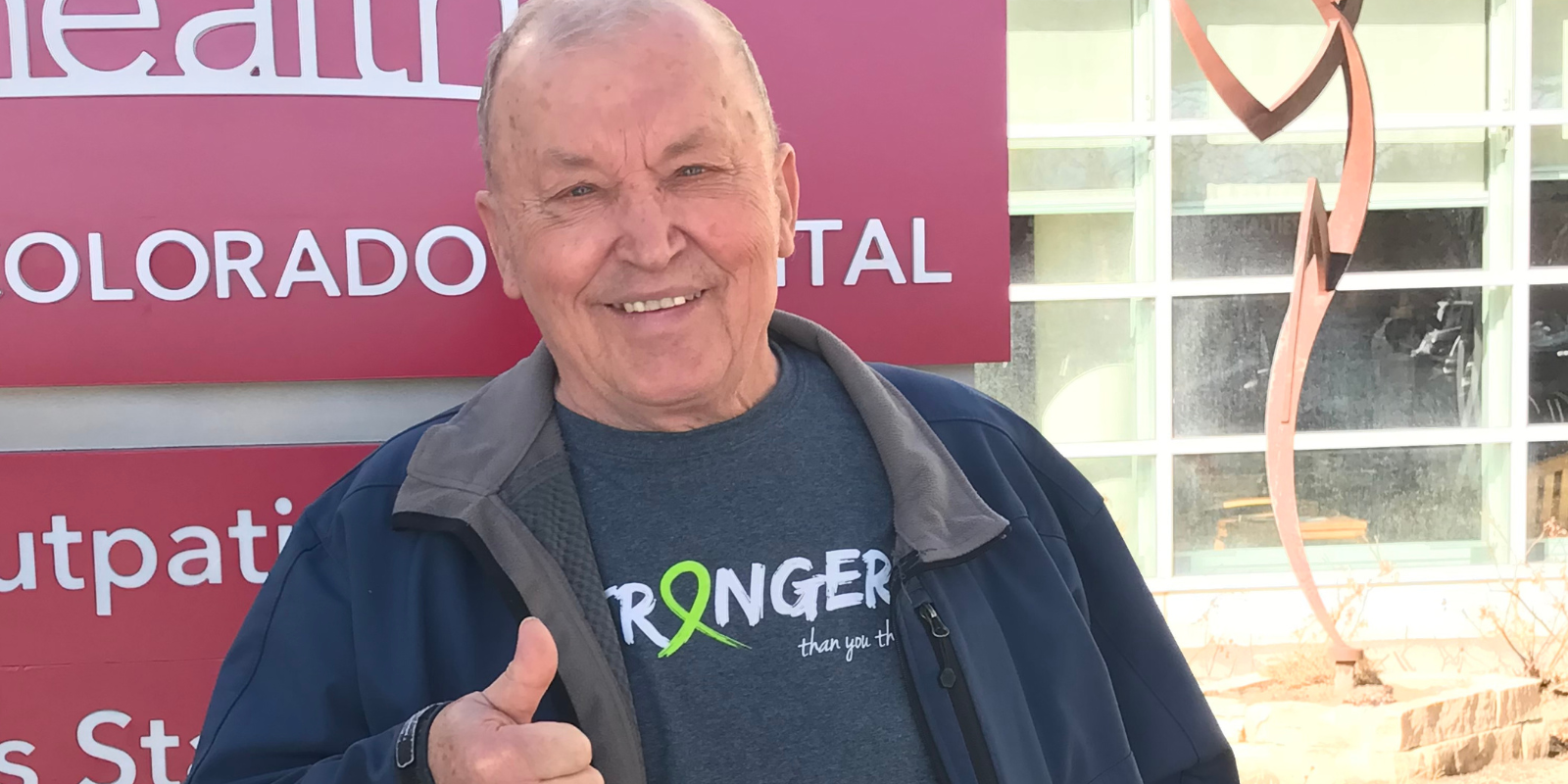
University of Colorado Cancer Center member Manali Kamdar, MD, calls Ron Uecker her rock star. Uecker calls Kamdar his miracle worker. Together, they successfully treated a blood cancer that might have otherwise been fatal.
“She’s so confident, and she makes you feel like she can walk on water,” Uecker says of Kamdar. “No matter how bad it got, she always had an answer.”
Multiple modes of attack
In Uecker’s case, Kamdar needed more than one answer. Because Uecker’s B-cell lymphoma eventually relapsed after he underwent two different treatments — stem cell transplant and CAR T-cell therapy — Kamdar, an associate professor of hematology in the CU School of Medicine, finally enrolled him in a clinical trial that thus far has kept his cancer in remission.
“The clinical study was a novel time-limited combination of a targeted chemotherapy treatment along with a bispecific antibody,” says Kamdar, who is a co-author of a paper describing the outcomes of this trial in the journal Nature. “This combination is not FDA approved yet, but it's showing such stellar response that we hope it can get approved for lymphomas like Ron’s, where there are no other options.”
Long journey
Uecker’s cancer journey spans more than 10 years, going back to 2014, when he was first diagnosed with B-cell lymphoma after being x-rayed for chest and abdominal pain.
“They found a little bit then, and they did a biopsy, and I had some chemo for it,” says Uecker, 80, who lives in Rapid City, South Dakota. “Then in 2015, it came back as a lump on the side of my neck. It was growing like crazy, so I took a chance, and I went to the Mayo Clinic. The doctors looked at it, and they put me on steroids and sent me back home. When I got home, I had chemo on it again.”
Because two of Uecker’s children were then living in Denver, his doctor in South Dakota eventually arranged a visit to Kamdar, a blood cancer expert who tried an autologous stem cell transplant — a medical procedure where a patient's own stem cells are collected, stored, and then transplanted back into their body — that was effective for about a year, until the lump in Uecker’s neck returned. Kamdar then enrolled Uecker in one of the earliest CAR T-cell clinical trials, which also had positive results for around 12 months. When the lump returned again, she knew she needed a new option.
“The stars aligned for Ron in a way that every time he relapsed, we had a clinical trial that we could get him on, which he got good benefit from,” she says. “Each relapse is tackled as a challenge. There's obviously initial disappointment, but then the question is, what’s next?”
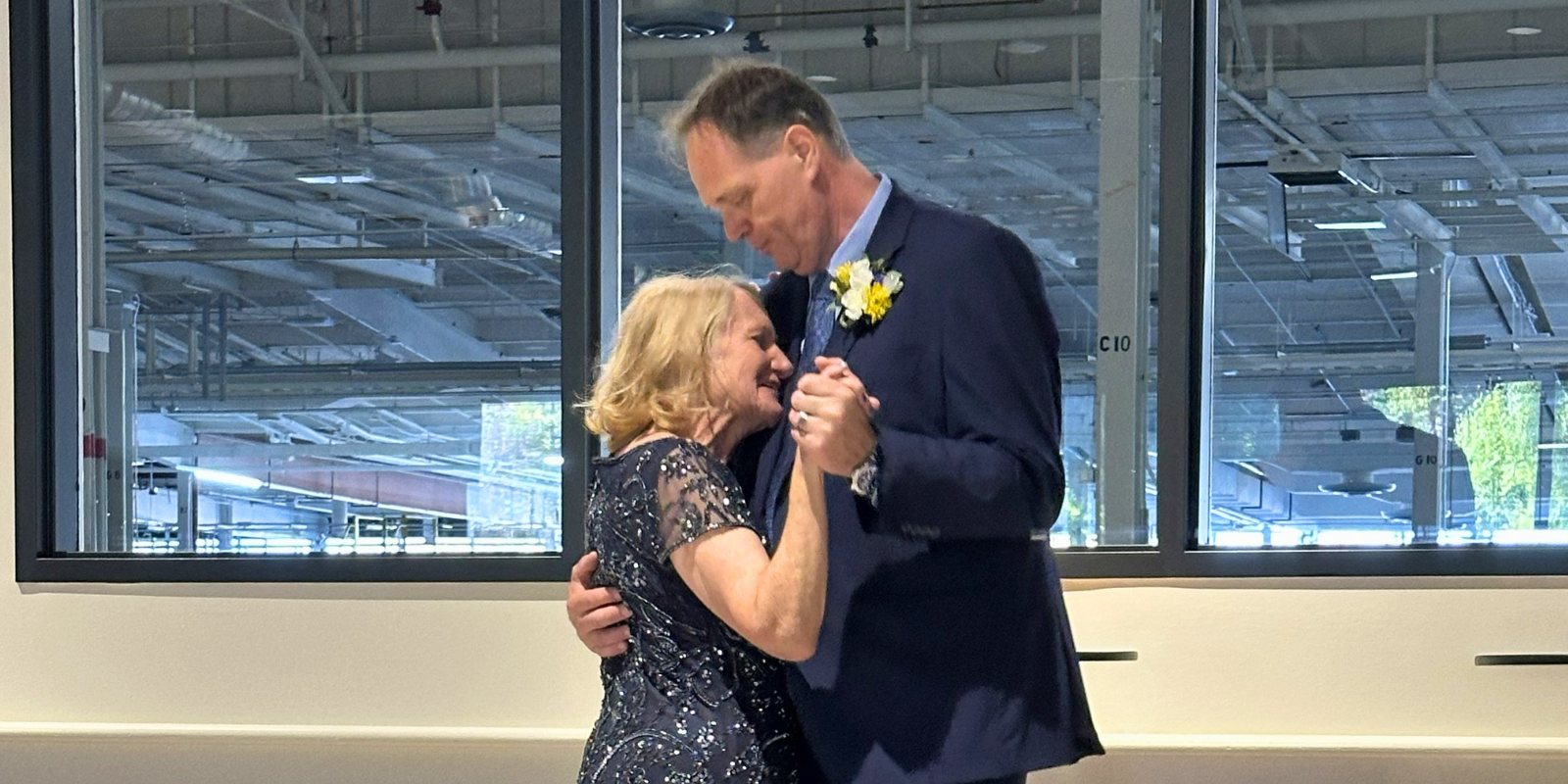
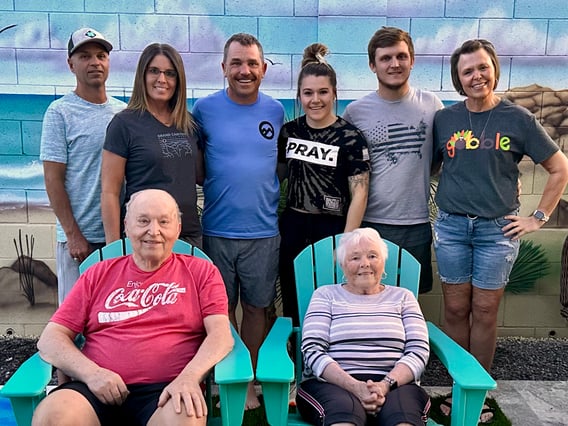 Ron Uecker with his wife and family.
‘I’ve been blessed’
Now more than a year out from participating in the clinical trial, Uecker is showing no signs of recurrence and is back to doing the things he loves — playing golf, playing cards, and going hunting. He returns to Denver every three months for a checkup, and he is grateful for all the treatments he’s received — even the ones that didn’t last.
“I've been blessed so many times, I can't believe it,” he says. “The good Lord is taking care of me, that's for sure.”
Uecker also knows that by participating in a clinical trial, he is helping to prove the efficacy of a drug combination that can help other lymphoma patients down the road.
“Cancer research has come a long way, even since I was first diagnosed,” he says. “So many things have taken place — different studies, and they're finding new drugs all the time. That's a good thing. When you get cancer, you'll do anything to get better.”