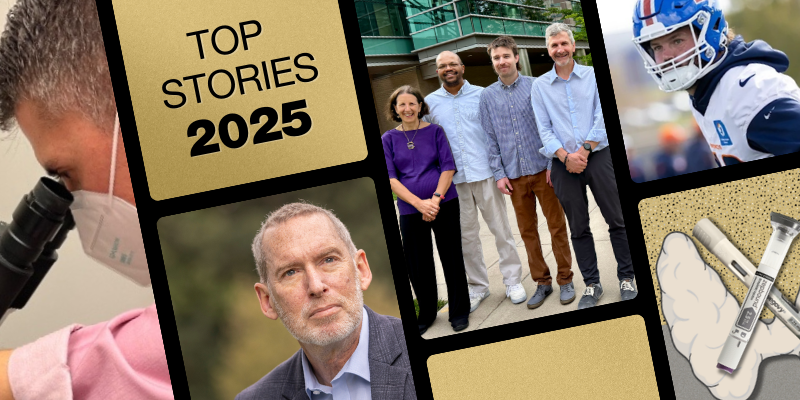
With over 120 stories published in 2025, the University of Colorado Cancer Center newsroom delivered insights, inspiration, and innovation. Our coverage spanned explaining cancer research, increasing awareness, sharing insights on celebrities' diagnoses, and much more —always with one goal in mind: prevent and conquer cancer. Together.
Here are the top stories of the year.
World Lung Cancer Expert Diagnosed with Advanced Lung Cancer
Director of the CU Cancer Center's Thoracic Oncology Program, D. Ross Camidge, MD, PhD, faced his own advanced lung cancer diagnosis—an experience that allowed him to connect to patients on a deeper level. In this candid reflection, Camidge shares insights on empathy, shifting research priorities, and strategies like the “90-day challenge” to help patients live fully between scans.
What’s Driving the Growing Number of Breast Cancer Cases in Young Women?
The latest American Cancer Society report shows a troubling increase in breast cancer among women under 50. Virginia Borges, MD, director of the Young Women’s Breast Cancer Translational Program at the CU Cancer Center, explores contributing factors—from delayed childbearing to obesity—and offers insights for early detection and patient counseling.
CU Cancer Center-led Research Shows That COVID-19 Infection Can Awaken Dormant Cancer Cells, Leading to Metastatic Disease
New research led by CU Cancer Center co-deputy director James DeGregori, PhD, suggests that COVID-19 may awaken dormant cancer cells, potentially increasing recurrence risk in certain patients. Researchers explore the underlying mechanisms, implications for cancer survivors, and what should be considered in post-COVID care and monitoring.
Does Using GLP-1 Drugs, Like Zepbound or Wegovy, Increase Your Risk of Thyroid Cancer?
As GLP-1 receptor agonists like semaglutide gain popularity for weight management and diabetes care, questions about their link to thyroid cancer persist. CU Cancer Center endocrinologist Bryan Haugen, MD, examines the evidence behind the FDA warning and offers guidance for navigating concerns.
‘Bachelorette’ Star Katie Thurston’s Breast Cancer Diagnosis Raises Questions About Fertility and Pregnancy During Treatment
When former Bachelorette star Katie Thurston shared her breast cancer diagnosis and concerns about future pregnancy, it highlighted a critical issue of counseling young patients on fertility preservation and timing for conception. CU Cancer Center member Leslie Appiah, MD, offers evidence-based recommendations on safe pregnancy after treatment and strategies for supporting patients through these decisions.
Alcohol is a Leading Cause of Cancer, But Will the Public Heed a New Warning?
Despite clear evidence linking alcohol consumption to several cancers, patient awareness remains low. CU Cancer Center members Richard Wood, MD, Rachel Kruse, MD, and Eden Bernstein, MD, discuss the Surgeon General’s call for action and share strategies for counseling patients on reducing alcohol-related cancer risk.
New CAR-T Cell Therapy Shows Promise for Hard-to-Treat Cancers
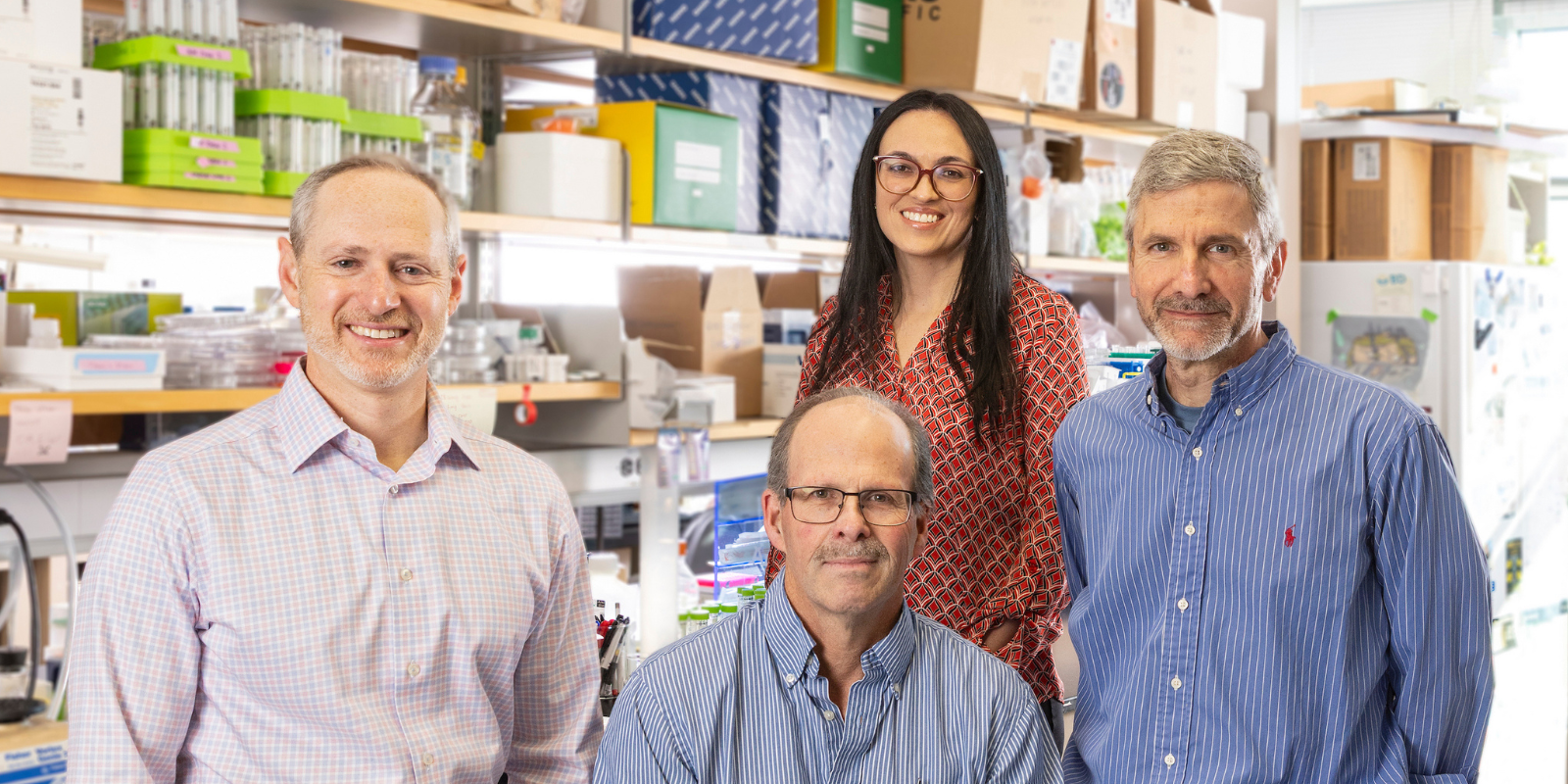
CU Cancer Center researchers Catherine Danis, PhD, and M. Eric Kohler, MD, PhD, developed ALA-CART (adjunctive LAT-activating CAR-T cells), a next-generation therapy aimed at improving outcomes for patients with lymphocytic cancers that were resistant to traditional CAR-T cells.
An Understudied Type of Breast Cancer Poses a Lurking Threat
Lobular breast cancer is the second most common type of breast cancer, yet it often goes undetected because of its unique growth patterns. CU Cancer Center researcher Matthew Sikora, PhD, explains why this subtype can be harder to diagnose and how new research is paving the way for better treatments.
What Men Can Learn From Alex Singleton’s Testicular Cancer Diagnosis
When Denver Broncos linebacker Alex Singleton faced a testicular cancer diagnosis, his journey underscored the importance of early detection and patient-centered care. CU Cancer Center urologist Nicholas Cost, MD, shares key takeaways on recognizing symptoms, fertility impacts, and what to expect for treatment and recovery.
Everything You Wanted to Know About Colonoscopy Prep (But Were Afraid to Ask)
Getting ready for a colonoscopy can feel intimidating—but it doesn’t have to be. CU Cancer Center gastroenterologist Swati Patel, MD, breaks down why prep matters, what to expect, and tips to make the process easier, so you can take this important step in preventing colorectal cancer with confidence.