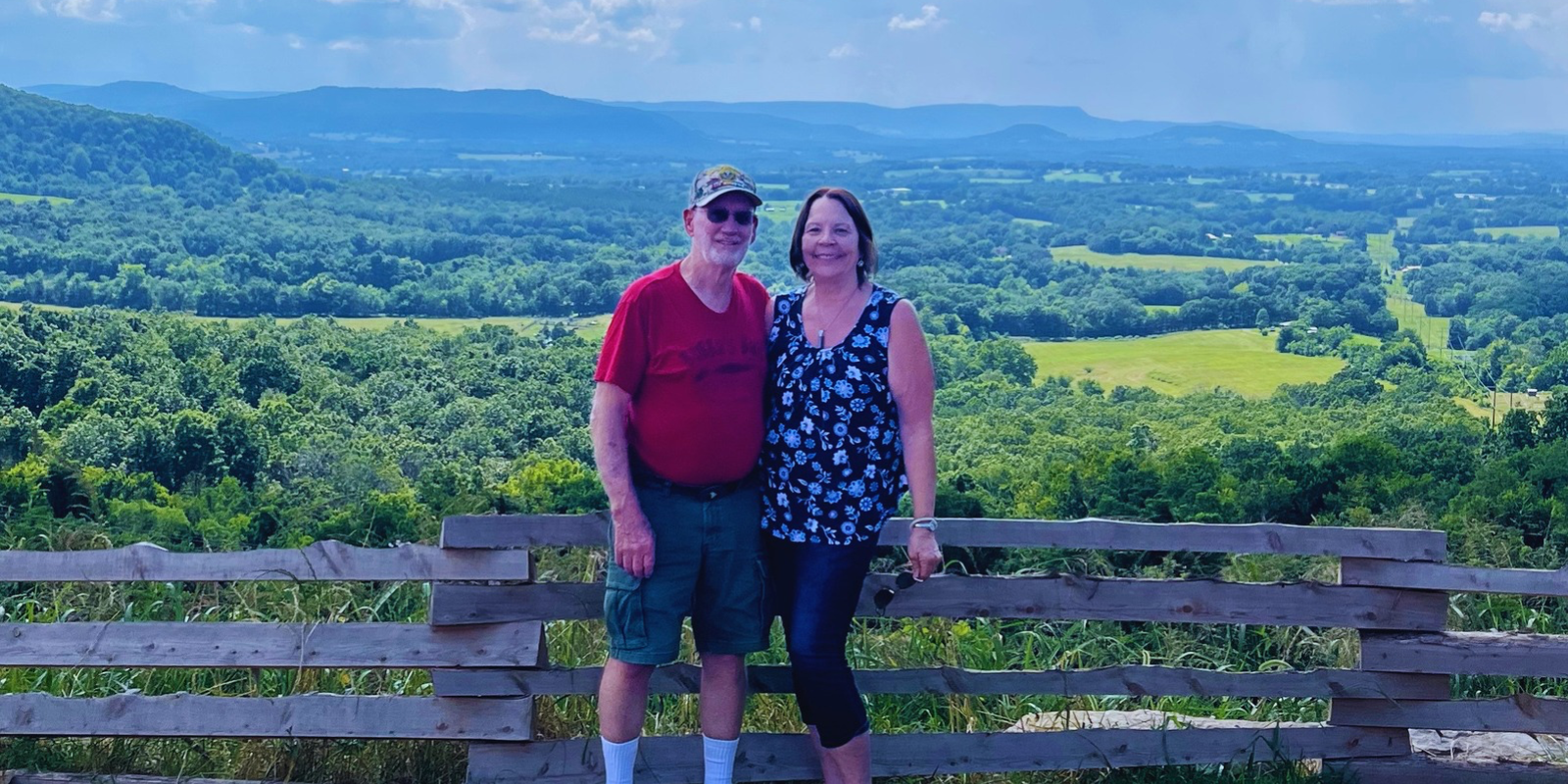
Melody Mitchell’s acid reflux may have saved her life.
Since being diagnosed with the condition several years ago, Mitchell — a fifth-generation Coloradan who lives in Wheat Ridge — has received regular endoscopies to check for the presence of Barrett’s esophagus, a precancerous condition that can result from years of excess stomach acid causing scarring in the esophagus.
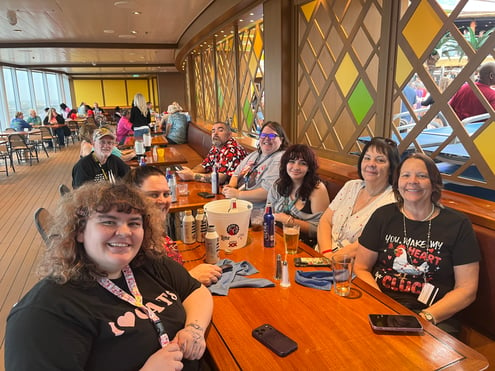 Melody Mitchell, bottom right, with her family.
When Mitchell got her latest scan in spring 2025, it didn’t show Barrett’s, but it did reveal an ulcer in her stomach that appeared to show an early stage of stomach cancer.
“They said, ‘The esophagus looks good, but you do have an ulcer in your stomach with high-grade dysplasia,’ and that it was concerning,” recalls Mitchell, 67, who worked for 45 years at CoorsTek in Golden before retiring a few years ago.
Enter the endoscope
Historically, a precancerous ulcer would be removed with an invasive open surgery, but Mitchell’s doctor knew that University of Colorado Anschutz Cancer Center member and gastroenterologist Mohammad Bilal, MD, specializes in another way to remove stomach ulcers. Called endoscopic submucosal dissection (ESD), the minimally invasive, incisionless, endoscopic procedure was developed to preserve organs in major gastric surgery.
In the outpatient procedure, gastroenterologists use an endoscope — a thin, flexible tube — to pass through instruments that first inject the tumor with a special solution to separate it from the muscle wall, then use an electrosurgical knife to cut the tumor tissue away from the GI wall.
“It’s a great option for select patients, because if they have to get surgery, it’s a pretty involved surgery,” Bilal says. “They typically get a partial gastrectomy — the removal of part of their stomach — and the recovery is much longer. In Melody’s case, I was able to remove the entire tumor through endoscopic submucosal dissection.”
Caught early, treated early
Bilal, who performs around 150 of the procedures a year in the GI tract, esophagus, stomach, colon, and small intestine, says Mitchell was a good candidate for endoscopic submucosal dissection because her stomach cancer was caught early, making her case a rare statistic.
“Most stomach or gastric cancers in the United States are detected at a late stage, when they have already spread, because there's no formal screening for gastric cancer in the United States,” he says. “To find them early opens a lot of avenues for us to try to manage them endoscopically with this procedure, which is a very low-morbidity outpatient procedure without any incision or scars.”
Mitchell says she is grateful her doctor in another health system knew of Bilal and the specialized procedure, saving her a potentially long recovery from an open or laparoscopic operation.
“It was really easy,” she says. “I was excited and grateful that I wasn't going to have to have an invasive surgery to take care of this problem. There was a little change in my diet for a few days — I had to have a liquid diet, then eat soft foods — but within a week, I was fine. And I don't feel sick.”
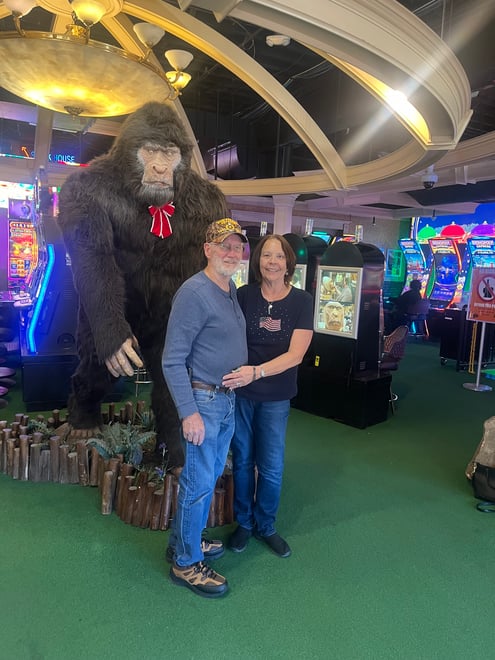 Melody and her husband.
‘I’m very lucky’
Mitchell has received follow-up PET scans to make sure all the cancer is gone and that none has spread to other parts of her body; so far they have all come back negative. As she enjoys favorite activities such as swimming, traveling with her husband, or going on cruises with her family, she knows she is fortunate her case turned out the way it did.
“I believe it would have been worse if I hadn't gone in for that routine scope,” she says. “Dr. Bilal told me people usually do not catch this early because they don't have any signs of it, and it's usually advanced stage when they catch it. I'm very lucky that they found it when they did, and hopefully they got it all.”