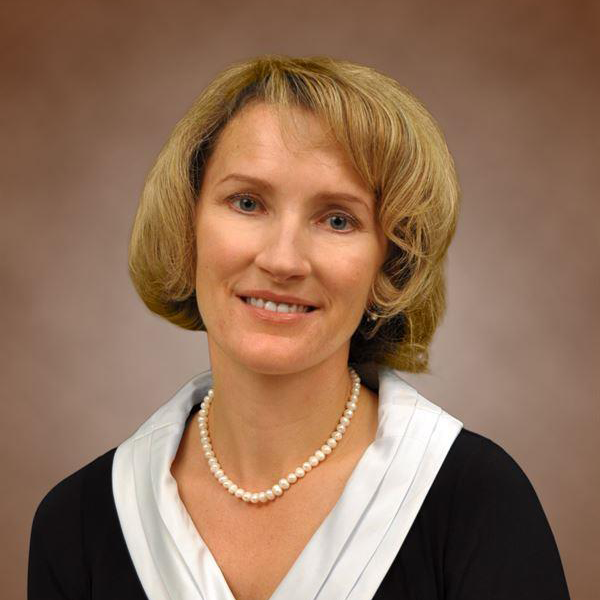
Erica Greenwood did all she could to make sure her breast cancer was gone forever.
After being diagnosed with stage 3 inflammatory breast cancer in her left breast in February 2020, she underwent chemotherapy, followed by a double mastectomy — surgical removal of both breasts — just to be safe.
Two years after that, she came down with a cough that would not go away.
“I finally went to urgent care to see what the heck was going on, just thinking it was a cold or something,” says Greenwood, who lives in Commerce City, Colorado. “And they were like, ‘We think it might be something else.’”
A new diagnosis
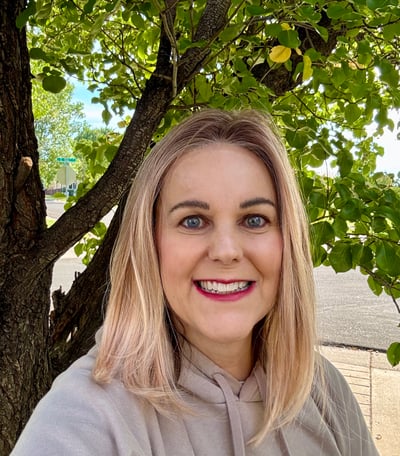 Erica Greenwood
Greenwood subsequently had a PET scan that showed that breast cancer had come back and spread to her lung, liver, spine, pelvis, and other parts of her body.
“That was a shock,” Greenwood says “The doctor called and said, ‘I'm sorry. There's nothing more we can do. You have two to five years to live, maybe seven.’ And I was like, ‘No, that's not OK. I have five kids. I have to be around.’”
Seeking a second opinion
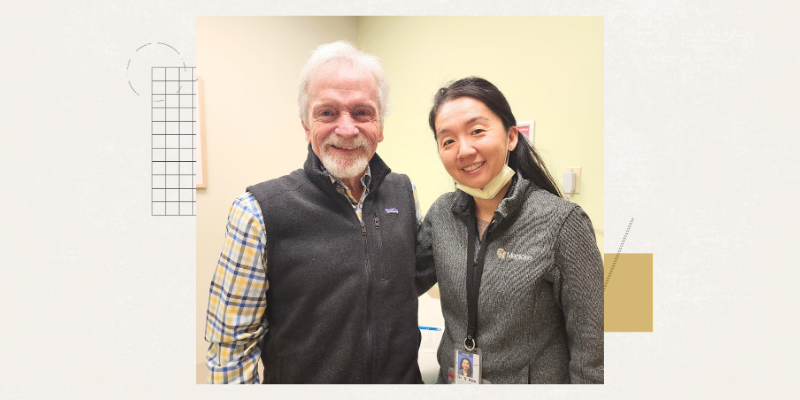
She was then seeing providers at another health care system, but Greenwood changed her health insurance the next chance she got and sought a second opinion at the University of Colorado Cancer Center, where she was connected with Elena Shagisultanova, MD, PhD, associate professor of medical oncology in the CU Anschutz School of Medicine and an expert on breast cancer treatment. She is known to her patients as “Dr. Nova.”
“When I saw Dr. Nova, she looked at all my medical records and wanted to start from scratch, which, thank God she did, because of what we discovered,” Greenwood says. “She did more tests on me, more blood work, and we were able to determine that one of my tumors was HER2-positive, and some of my tumors were HER2-negative as well. It was tricky to treat, because I needed two different types of treatment.”
Success on a clinical trial
Shagisultanova tried Greenwood on a few different treatments, but none had a meaningful effect on her cancer. So in July 2023, she offered Greenwood the chance to join a clinical trial of a combination of three drugs — tucatinib, which inhibits HER2, alpelisib, which inhibits the protein PI3K, and fulvestrant, which blocks the effects of estrogen in the body.
The combination, Shagisultanova explains, effectively shuts down the two major pathways the tumor cells use to grow and spread.
“Through my work with patients with HER2-positive breast cancer, I have come to the conclusion that the next most important molecule in these tumors, outside of the HER2, is PI3K,” says Shagisultanova, who oversaw the multi-site trial and continues to research the combination. “I'm convinced that this is absolutely the key — the interaction between these two molecules.”
‘I was worried I was the guinea pig’
At first, Greenwood was apprehensive about joining the clinical trial.
“I worried that I was the guinea pig,” she says. “But at that point, my doctors said it was worth a try. So I took the leap of faith and started that trial. I've been on it for over two years now, and I'm doing great. My last scans showed there's no cancer in my body, so knock on wood, we're on the right path.”
That improvement came as soon as two months after she started on the clinical trial, when scans showed that her tumors were shrinking.
“It gave me hope,” she says. “It was like, ‘OK, it doesn't have to be all doom and gloom. This is working.’”
She was reassured by Shagisultanova, who reminded her that all the effective cancer treatments that exist today were once in clinical trials.
“All the gold standard treatments that we have now were tested in clinical trials in the past. Somebody went on a trial and had an excellent response and hopefully lived many, many months,” Shagisultanova says. “We advocate for all stage 4 cancer patients to enroll in clinical trials. I am very glad she trusted us and went on the study.”
Living with no evidence of disease
Greenwood currently goes in for scans every three months, to make sure the cancer has not regrown. Now, when she is hiking, working, or spending time with her husband and their five children, she thinks back to her initial apprehension about the clinical trial, and feels grateful that she enrolled despite her fears.
“It was a scary decision at first, because you just don't know,” she says. “You wonder, is this going to work for me, or is this not going to work? Am I going to be a statistic where they say, ‘Sorry, this person lost their life’? You roll the dice. But I'm so thankful that it was available, that Dr. Nova was part of the research for it and found it for me. My previous doctor just threw her hands up and said, ‘There's not much else we can do.’ Dr. Nova said, ‘No, there are other things we can do.’ She took the time to do the research on my tumors, to really find the underlying cause.”
Featured image: Erica Greenwood, left, and her family on vacation.