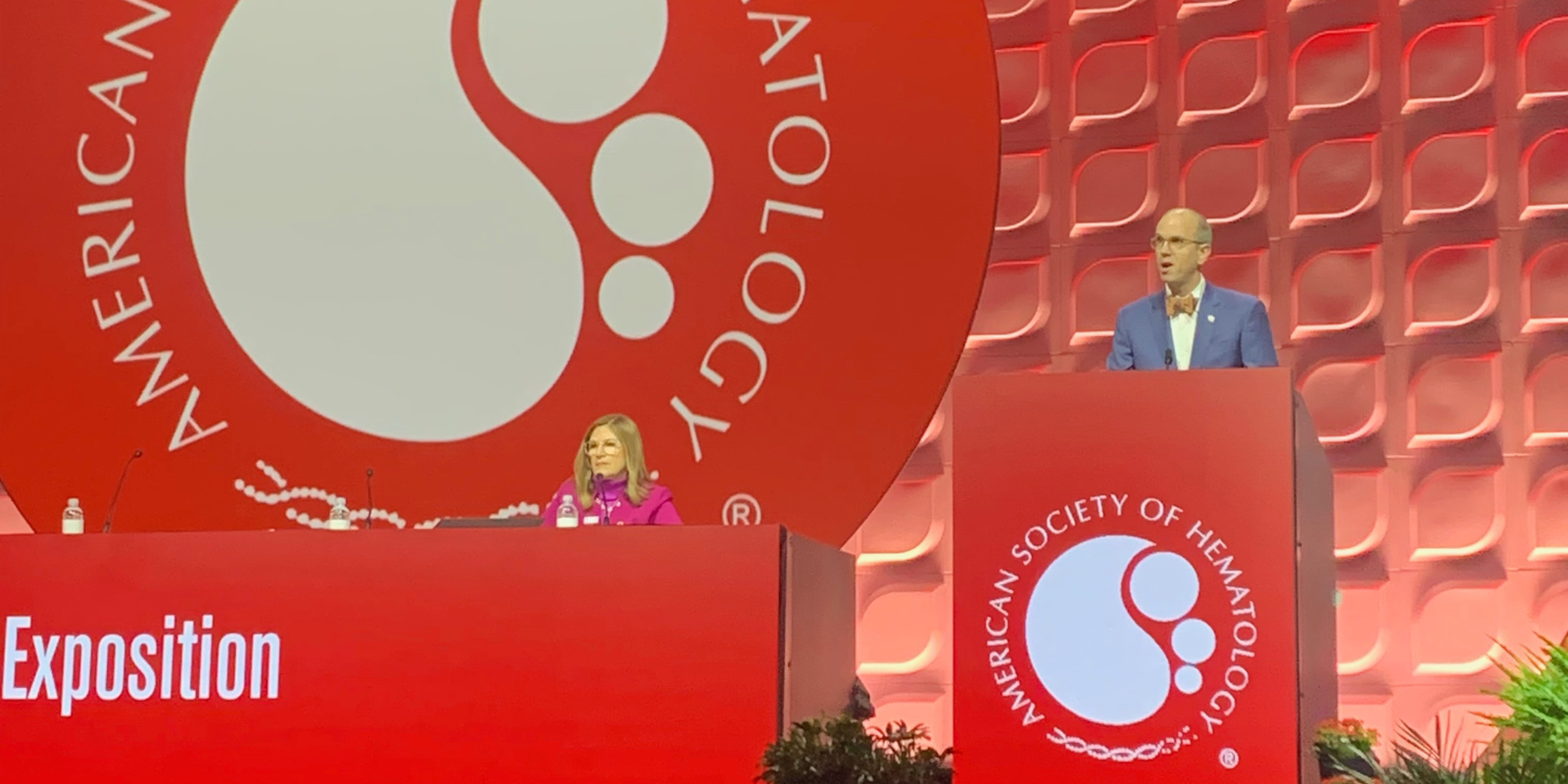
At the 2025 American Society of Hematology (ASH) Presidential Symposium this week, Eric Pietras, PhD, University of Colorado Cancer Center member and Associate Chief of Basic Research in the Division of Hematology, shared insights that could reshape how we think about aging and cancer risk.
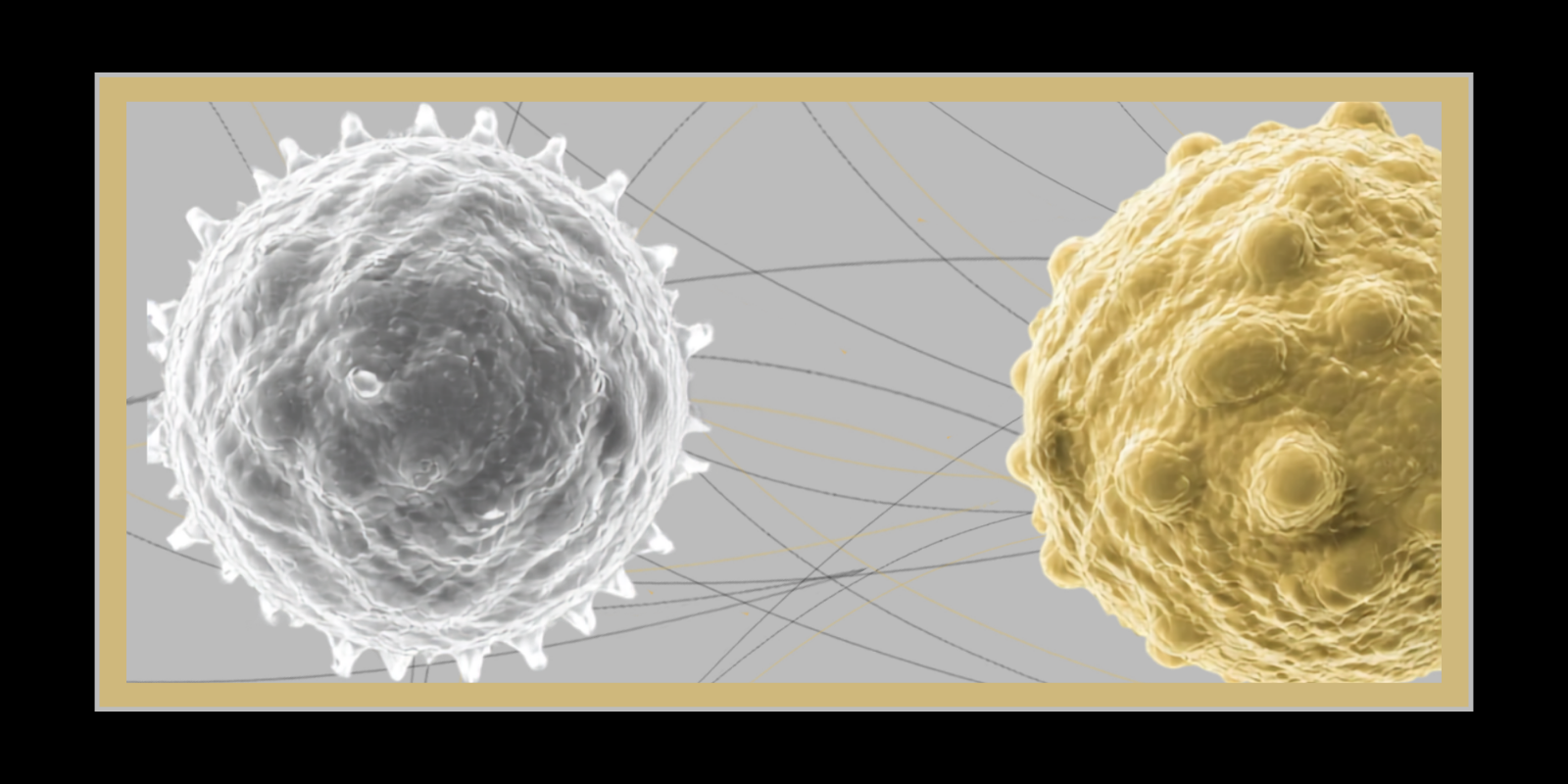
Pietras’s research focus is clonal hematopoiesis (CH), a condition that quietly affects at least 20% of adults over 60.
What Is Clonal Hematopoiesis and Why Should We Care?
“Clonal hematopoiesis is a blood phenotype that was characterized originally in the 1990s, more as a curiosity,” explains Pietras, associate professor and associate division chief for basic research in hematology at the CU Anschutz School of Medicine. “But in 2014, we learned that these clones often carry mutations associated with myeloid leukemias.”
These mutations — impacting genes that regulate cell cycle, DNA repair, and epigenetics — don’t guarantee cancer, but they raise the stakes. “Somebody can have clonal hematopoiesis and live until they’re 90 or 100,” Pietras says. “Yet others progress to acute myeloid disease within five years. We don’t know yet what makes the difference.”
Beyond blood cancers, CH is linked to cardiovascular disease and other poor outcomes, making it a broad risk factor. “This will be one of the key challenges we need to address, both in the lab and in the clinic,” Pietras says.
Inflammation and Metabolism: The Hidden Handshake
One of Pietras’s most compelling points is the role of inflammation and metabolism in driving CH. “If you provide a chronic inflammatory stimulus—as would be found in aging—what one can see is a selection emerge for these mutant cells,” he says.
Why does inflammation matter? It changes how cells use energy. “Nearly every cell fate choice, whether to proliferate, die, or self-renew, is not just the result of gene regulation, but metabolic regulation,” Pietras says. “How a cell uses energy is the most proximal link to what cell fate actually is.”
Mutant cells can exploit this by ramping up energy production without losing their stem-like properties. “It’s almost as if inflammation rewrites the rulebook inside the bone marrow,” Pietras says. “Now these metabolic phenotypes are much more favorable.”
The Leukemia Triangle: A Firefighting Analogy
To make this science accessible, Pietras uses a vivid metaphor: the fire triangle — oxygen, fuel, and heat. “In fire, you have oxygen, fuel, and heat. In CH, the fuel is genetic mutations, the heat is inflammation, and the oxygen is metabolism,” he explains. “If you remove either inflammation or metabolism, it’s like spraying water on a fire.”
This analogy guides his lab’s approach: Target the interdependent processes that sustain mutant cell expansion.
Therapeutic Horizons: Can We Turn Down the Heat?
Early studies suggest that drugs like metformin, widely used for diabetes, can suppress certain CH-related mutant clones by reducing mitochondrial activity. “What we’ve found is that these mutant cells have higher levels of mitochondrial oxidative metabolism,” Pietras says. “We also are learning that if you disrupt antioxidant mechanisms, you make those cells less favored, and they start to differentiate and lose their stem-like potential.”
Human data now back this up. “We have evidence that these same metabolic deregulations occur in mutated blood stem cells from individuals with clonal cytopenia of undetermined significance (CCUS), a hinge point between CH and more pathogenically advanced blood disorders like myelodysplastic syndromes,” Pietras notes. “This isn’t just an artifact of working with animal models. This is something we can observe in humans.”
A Multidisciplinary Future
Pietras sees CH as a multidisciplinary inflection point in medicine. “It’s not just a hematological problem,” he says. “It’s a problem for geriatrics, cardiology, pulmonology, rheumatology, and oncology. It affects nearly everybody.”
His vision? A Clonal Hematopoiesis Center at the CU Cancer Center, bringing together specialists to prevent both malignant and non-malignant outcomes. “If we know how these mutated cells use fuel differently than normal cells, that gives us a window into prevention and therapy,” Pietras says. “This represents a huge opportunity for us to do some good.”
With CH potentially affecting a sizeable fraction older adults, understanding its drivers — aging, inflammation, and metabolism — could transform preventive care. As Pietras puts it: “We’re looking at one of the most important clinical challenges."