For many physicians in training, patient care begins almost immediately after orientation. Understanding the communities where those patients live, work, and experience health challenges often takes much longer.
To address that challenge, the Community Engagement Program, a philanthropically funded initiative within the Internal Medicine Residency Program in the Department of Medicine at the University of Colorado Anschutz, was launched as a pilot in 2025. Now expanding program-wide, the initiative gives residents structured opportunities to build meaningful relationships with community organizations throughout Aurora and the Denver metro area.
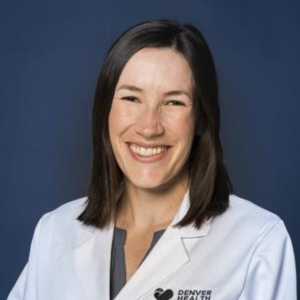
"Many of our residents move here to train and don't have a background or familiarity with Denver and Aurora," says Julie Knoeckel, MD, assistant program director for community engagement and associate professor of medicine in the Division of Hospital Medicine. "We know social and structural determinants of health play a huge role in clinical care, and we wanted to create actual space within residency training to better understand those factors."
Unlike traditional volunteer experiences or short-term electives, the program emphasizes long-term partnerships and mutual benefit. Residents are paired with stable community organizations throughout their training, allowing them to witness how community needs evolve over time. "We're really trying to be sustainable community partners," Knoeckel says.
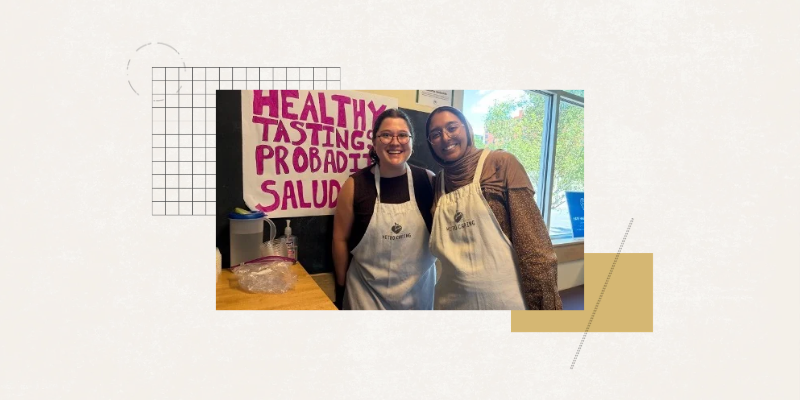
The program currently partners with four organizations addressing community-identified priorities: Metro Caring, Village Exchange Center, Advance Pathways, and Aurora Science and Technology High School. Residents support food distribution efforts, diabetes nutrition education, community gardening, homelessness services, and student mentoring activities.
Learning through community
Among the most distinctive partnerships is with Aurora Science and Technology High School (AST), located adjacent to CU Anschutz. Residents meet with students interested in health care careers, sharing insights about medical school, residency training, and life as a physician. "The students get to ask questions and really learn what a career in health care looks like," Knoeckel says. "At the same time, our residents have the opportunity to connect with them on a personal level. It's beneficial for everyone involved."
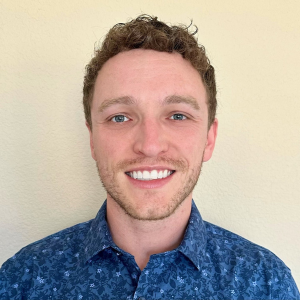
Zachary Lubline, MD, an internal medicine resident, believes visiting the high school has provided a deeper understanding of the experiences students bring to the classroom and, ultimately, the health care system. Lubline says each experience has built on the last, allowing him to become more familiar with the students, educators, and learning environment. "Being familiar with the community means I can engage more quickly each time," he says. "Interacting with the same students and staff has helped build trust and stronger relationships."
The experience also challenged his assumptions about the health care knowledge students already possess. Many were familiar with navigating the health care system because they had helped family members manage appointments, communicate with providers, or interpret medical information. "Sometimes, when underserved communities interact with medical providers, the role of interpreter, scribe, or confidant falls onto children and teenagers," Lubline says. "This is both an incredible asset to have for our patients and very demanding for young adults."
Lubline says working alongside students and educators demonstrated the importance of making health information accessible and adapting communication to the people receiving it. "Community engagement offers the opportunity to watch members of a community engage with each other and begin to build unique cultural competency," he says. "While engaging with students at AST, I learned how they like to communicate and began to build the skills needed to serve them, in and out of the doctor's office."
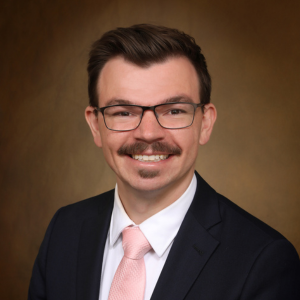
Nikolai Harroun, MD, chief resident in the Internal Medicine Residency Program, says community engagement has reinforced the importance of building trust through consistency, particularly when working with people experiencing homelessness. Harroun's interest in community-based medicine began during medical school, when he participated in home visits with recent immigrants through a Denver-area organization. During the pilot phase of the program, he was paired with a social worker named Kyle at the VA, who provides outreach to veterans experiencing homelessness.
One lesson stayed with him: Trust cannot be expected. It must be earned. "One of the things that I really took from it was Kyle's consistent ability to show that he is trustworthy, but without expecting people to immediately trust him," Harroun says. "He does what he can do to show, 'I will be there when I say I will, with the resources that I say I will have.’”
Harroun says the approach has influenced how he interacts with patients, reminding him that being a trustworthy physician does not mean assuming patients will immediately trust him. "I really try to bring that into multiple areas of my life, but in particular with how I show up with patients," he says. "I can be trustworthy, but I shouldn't go in expecting that they are going to trust me immediately."
Building a new model for medical education
The program is built around continuity. Residents are paired with a community organization and work with that partner during each clinic block, often throughout all three years of residency, creating lasting relationships and consistent support for community partners.
The pilot program generated strong enthusiasm among residents. Forty-two upper-level residents participated, contributing more than 300 cumulative hours in community settings through 39 half-day experiences. During the current academic year, nearly all eligible residents chose to participate in the expanded program. Early evaluation data suggest the program is having an impact beyond community service. Residents who participated in the pilot demonstrated greater growth in understanding social and structural determinants of health, increased consideration of community resources in clinical decision-making, enhanced perspective-taking, and greater curiosity about patients' lives outside the health care setting compared with peers who did not participate.
Harroun says getting residents outside the hospital and into the communities where their patients live is an essential part of becoming a better physician. "We can often get a little bogged down in the clinic or the hospital side of things," he says. "Getting residents the chance to be out of the hospital, seeing how their patients live and how they interact in the world, is really important. I think it helps us develop as physicians so that we can show up for our patients in a better way."
For Knoeckel, those outcomes align with a broader vision for medical education. "We're trying to cultivate a generation of physicians who see the value of being involved in their communities and who understand what community partnership can bring to patient care," she says. "This type of work helps keep us humanistic in clinical spaces. Every time I go out into the community, I come back with a little more patience, a little more curiosity, and a stronger connection to the people we serve."