Chemotherapy can be a life-saving treatment for blood cancer patients, but it can also cause a severe side effect known as oral mucositis, where cuts, tears, sores, and ulcers can form in the mouth and throat. This can cause excruciating pain, leaving patients unable to swallow properly. In severe cases, patients can become malnourished and need a feeding tube or IV nutrition therapy, and they also face a higher risk of bacterial infections that can be life threatening.
As a hematology nurse practitioner at the University of Colorado Anschutz, Vicky Reiser, DNP, has seen firsthand how devastating mucositis can be, leading her on a mission to help patients by using a type of red light therapy known as photobiomodulation therapy — an intervention that has been shown to reduce the incidence and severity of mucositis.
“I saw the prevalence of mucositis among our patients, and I felt a huge need to make photobiomodulation therapy available to them because I knew what a big impact we could make,” says Reiser, a senior instructor of hematology in the CU Anschutz Department of Medicine.
Through a close collaboration with other advanced practice providers, faculty, staff, and mentors at CU Anschutz — including support from the CU Anschutz Department of Medicine’s Leadership, Informatics, Quality, and Systems (LInQS) Fellowship Program and Shark Tank Competition — Reiser has successfully led a project that will bring a new photobiomodulation therapy machine to campus this year.
“When people think of chemotherapy, they often think of side effects like nausea and vomiting. But when cancer patients learn about mucositis, they become so fearful of it,” Reiser says. “I believe this therapy will not only help reduce health care costs and improve patient outcomes, but it will also enhance patients’ quality of life by preventing this fear from ever being an issue for them.”
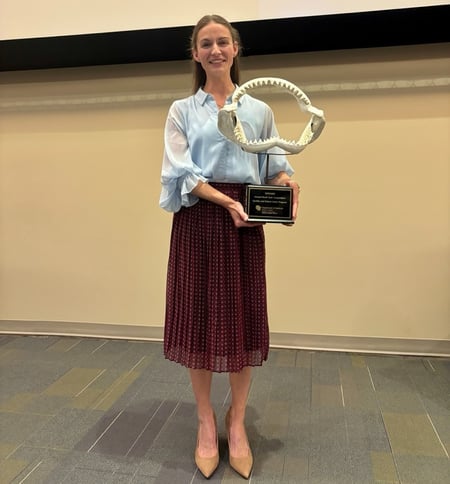
Vicky Reiser, DNP, won the 10th annual CU Anschutz Department of Medicine Shark Tank Competition. Image by Jesica Whittaker.
The dangers of mucositis
Reiser works on the inpatient bone marrow transplant and cell therapy services at the UCHealth University of Colorado Hospital (UCH), providing comprehensive care to patients with blood cancers such as lymphomas, myelomas, and leukemias. She helps manage cellular therapies like allogeneic stem cell transplant, in which a patient’s damaged blood-forming stem cells in their bone marrow are replaced with healthy cells from a donor.
“Patients going through allogeneic stem cell transplants face a very high risk of oral mucositis because of their high doses of chemotherapy. Chemotherapy goes after rapidly dividing cells, and that includes the oral mucosa and gastrointestinal tract, resulting in ulcerations of the mouth and throat,” she says.
Previous research has found that roughly 70% to 86% of patients undergoing hematopoietic stem cell transplantation (also referred to as a bone marrow transplant) experience oral mucositis. In her review of allogeneic stem cell transplant patients at UCH from fiscal year 2024-25, Reiser found that 82 out of 83 patients had some degree of mucositis, which can vary in severity.
In severe cases where patients are unable to eat and drink on their own, clinicians may use a nasogastric feeding tube — which is inserted through the nose, down the throat, and into the stomach — to prevent malnourishment. For cases where a feeding tube is not feasible, patients may get an IV nutrition therapy known as total parenteral nutrition (TPN), where nutrients are delivered to the body by infusing them through a patient’s vein.
“We don’t prefer TPN because it results in the patient’s gut not needing to function, which can cause the gut to shut down and may lead to other complications,” Reiser says.
Patients who experience high levels of pain from the ulcers in their mouth and throat may be given an IV patient-controlled analgesia (PCA) pump, in which patients can press a button so that pain medication is delivered to them through the IV.
Mucositis also poses a higher risk of bacterial infections, Reiser explains. If the mucosal barrier is damaged, then bacteria can more easily cross the barrier and cause infections. In some severe cases, mucositis has contributed to patients getting central line-associated bloodstream infections and sepsis, which can be life threatening.
“Historically, there have been a lot of supportive care interventions for mucositis, but there was a lack of therapies to prevent it,” Reiser says. “Photobiomodulation therapy is an exception to that.”
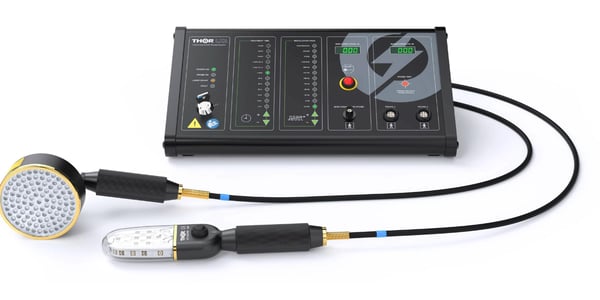
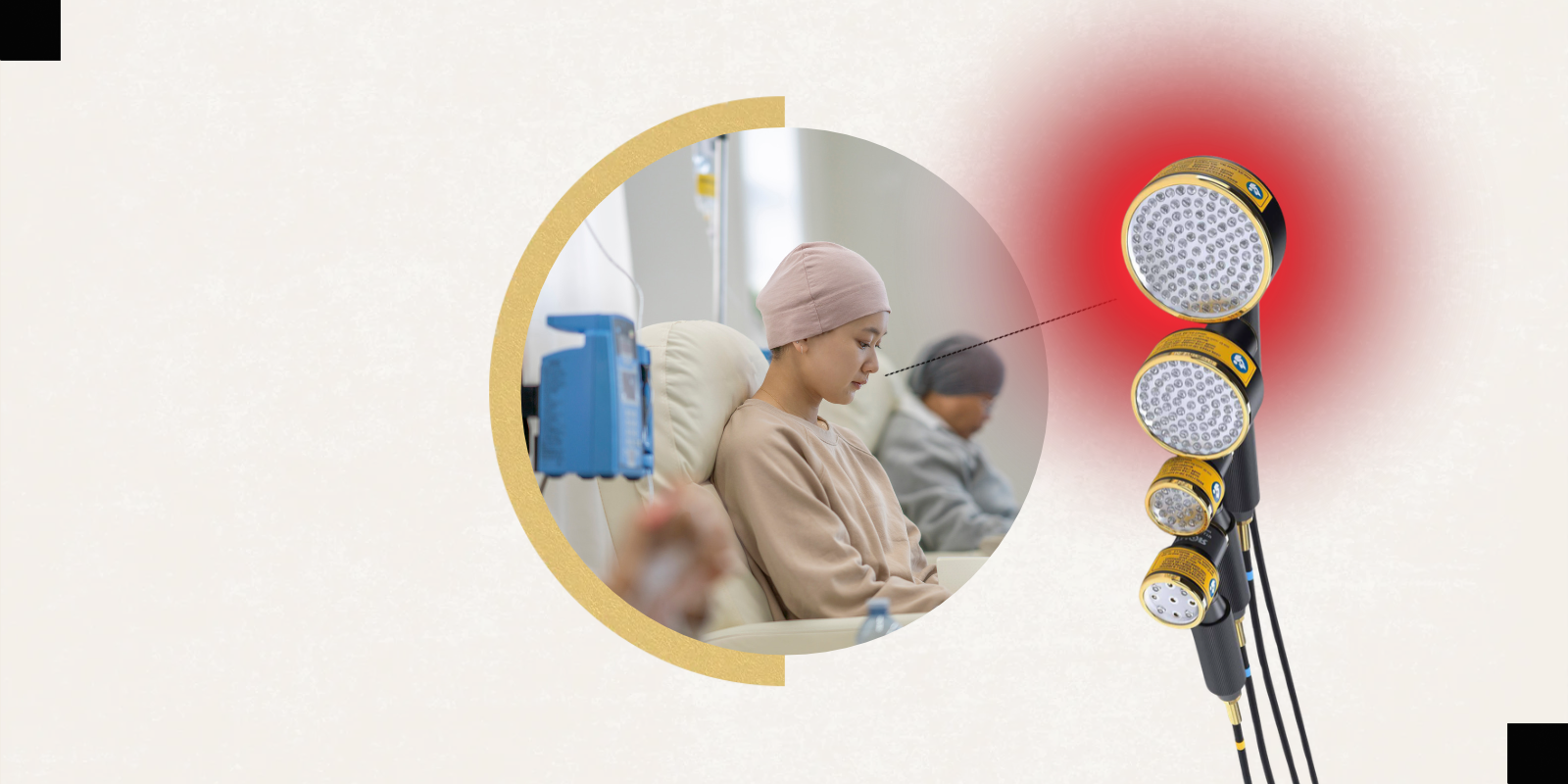
Reiser is working with the company THOR Photomedicine to bring a new photobiomodulation therapy machine to CU Anschutz. The image above depicts one of the machines the company offers, equipped with an "LED Lollipop" that emits light in multiple directions at once and a "cluster" tool that disperses light. Image courtesy of THOR Photomedicine.
A light of hope
Reiser saw the benefits of photobiomodulation therapy years ago when working as a bedside nurse at a medical institution in Pennsylvania.
“This special wave of non-ionizing red light penetrates the tissues, reduces inflammation, and promotes healing in the mucosal tissue,” she says. “We shine a light on the patients’ exterior cheeks and within their mouth. It is painless. The light therapy only takes about five minutes, and patients should receive it at least three times a week.”
Research has shown its effectiveness. For example, one meta-analysis of this therapy found a 15% reduction in incidence and 60% reduction in mucositis severity, Reiser explains. There was also a reduction in morbidity and mortality among patients receiving this therapy, as well as fewer TPN prescriptions and PCA pumps needed.
In Reiser’s experience, many patients have reported feeling pain relief after only a few minutes of having the light therapy.
“The best practice is to start this therapy as soon as possible when a patient starts their chemotherapy treatment,” she says.
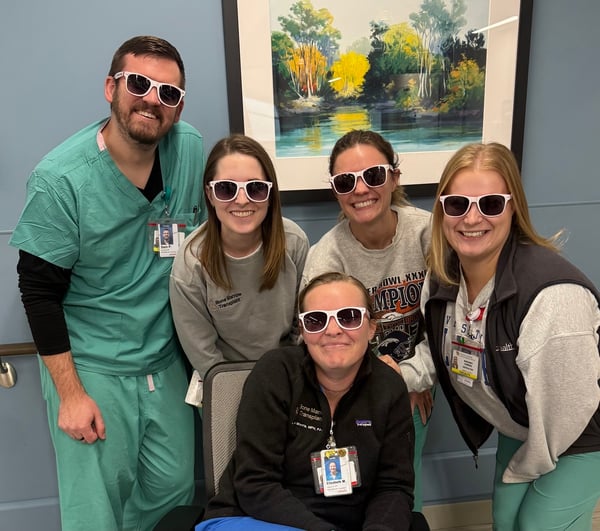
Reiser's colleagues, Samuel Pehling, NP, Kaitlin Olson, PA, Grace Schander, NP, Maggie Downing, PA, and Lizzie Morris, PA, wear sunglasses in promotion of the photobiomodulation therapy project at CU Anschutz. Image courtesy of Vicky Reiser, DNP.
Bringing photobiomodulation therapy to stem cell transplant patients
Knowing the value of this red light therapy, when Reiser joined CU Anschutz in 2024 and saw the prevalence of mucositis among her patients, she searched to see if photobiomodulation therapy was an option. She found that the therapy was offered nearby at Children’s Hospital Colorado to pediatric hematology patients. Reiser connected with clinicians at the institution to learn how they implemented the therapy, hearing positive feedback about how successful it had been at preventing mucositis.
“I’m lucky enough to be in the LInQS Fellowship Program, a two-year program to support quality improvement projects and informatics changes. Throughout the year, I began the legwork of finding out how we could get the funding and support to implement this therapy,” she says.
She helped secure funding to purchase a photobiomodulation therapy machine, which will be available starting this year to allogeneic stem cell transplant patients at UCH. Clinicians plan to give transplant patients the therapy four days a week as they receive their chemotherapy treatment.
Reiser and colleagues plan to track several data points to assess the effectiveness of the therapy at improving outcomes for patients. This includes monitoring whether patients develop mucositis and how severe it becomes, as well as downstream effects such as if they ever experience an infection or have to get TPN or PCA prescriptions.
To support the data analysis and quality improvement science focus of this project, Reiser was awarded a 2026 Clinical Effectiveness and Patient Safety Grant by the CU Anschutz Institute for Healthcare Quality, Safety and Efficiency.
Overall, she expects that this therapy intervention will help lower health care costs and improve the quality of life of patients.
“Reducing TPN use for patients will make it easier for them to recover and get discharged safely from the hospital. Fewer PCAs would indicate patients are experiencing less pain,” she says. “Reducing bloodstream infections is extremely meaningful because these infections can cause people to become very sick and septic in some cases. Being able to prevent that from happening is a huge driver for me.”
This year, Reiser presented this new project and won the 10th annual CU Anschutz Department of Medicine Shark Tank Competition. The competition supports quality improvement projects that promote high-value care and evidence-based practices that improve outcomes and reduce costs. With her winnings, Reiser aims to help raise awareness and generate support for this project, including attending conferences “to show people the process we’ve gone through to get this started and the impact we’re making,” she says.
“In the future, my big hope is that we will demonstrate success and can purchase another machine to expand this therapy to other patients,” she says. “For instance, patients receiving intensive induction chemotherapy, such as our leukemia patients, face a high risk of developing mucositis and would benefit from this.”
The image at the top of the story includes products from THOR Photomedicine.