Nerves and excitement filled the air on April 3 as Bobby Click, despite being in great health, prepared for surgery at the UCHealth University of Colorado Hospital (UCH). After months of preparation and numerous appointments and evaluations, the moment had finally arrived: He would donate a piece of his liver to a stranger, a young child, in need.
The decision to undergo this procedure did not come lightly. For roughly a year, Click worked with the Living Donor Liver Transplantation Program at UCH to become a non-directed donor, meaning he would not know the recipient of his donated piece of liver. Instead, the transplant team at CU Anschutz carefully selected a pediatric patient at Children’s Hospital Colorado who would be the best match.
The recovery, clinicians warned him, would not be easy given the intensity of the surgery. But Click, a father of two young boys, never wavered in his decision to donate, because he knew the time, effort, and challenges would be worth it in the end if it meant he could help a child.
The proof came months later, following a successful surgery and donation, when Click received a message from the family of the young patient who received part of Click’s liver. The family explained how life-changing the donation had been, writing, “We’re so happy there are people like you in the world.”
“They included pictures from before and after the donation, and it really confirmed what a big difference this made,” Click says. “It was great to see, because that’s the impact I was hoping to have.”
Transplant hepatologist Whitney Jackson, MD, a faculty member in the CU Anschutz Department of Medicine who leads the Living Donor Liver Transplantation Program, describes donors like Click as “a gift.” She explains that non-directed donors, also known as altruistic or anonymous donors, are vital because they can help people who traditionally struggle to find a donor match, such as adult petite women, adults with autoimmune disease, and young children.
“He’s made such a difference in somebody’s life — it’s almost surreal to think about. These donors are helping patients have a second chance at life,” Jackson says. “Bobby is a gift, and not just for his liver donation. He’s a gift because he and his family have embraced this experience and want to share it with others.”
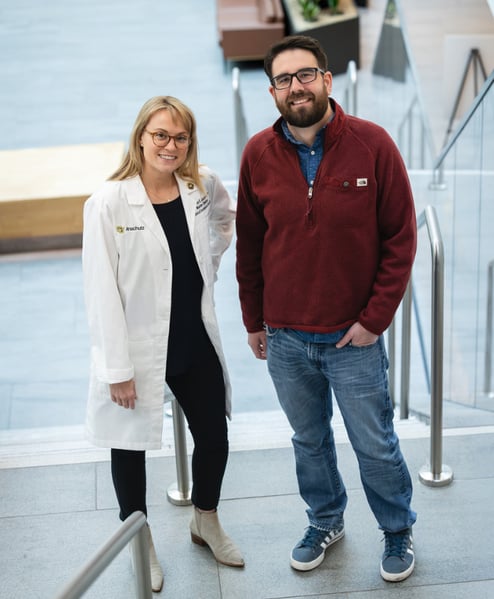
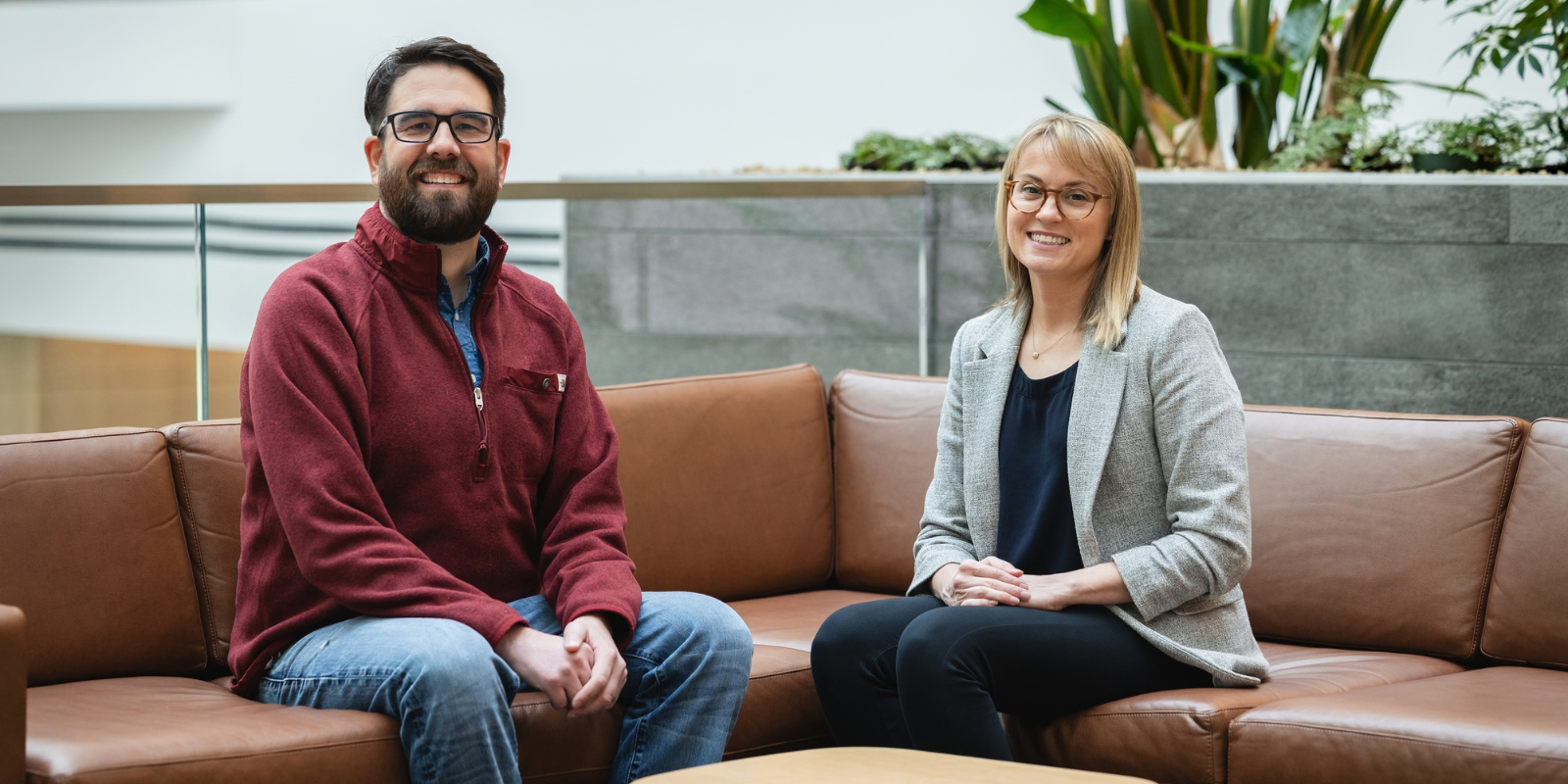
Whitney Jackson, MD, and Bobby Click smile together at the CU Anschutz campus. Image by Christina Patsiokas of Green Lion Images.
‘An obligation to help others’
The idea to become a non-directed liver donor stemmed from Click’s wife, Kristie Click, a staff member in the CU Anschutz Division of Gastroenterology and Hepatology.
“I remember mentioning to him how amazing it was that we have a robust living donor program. I said, ‘Who knew you could donate a piece of your liver?’” Kristie Click recalls. “I didn’t realize he would feel a personal calling to start researching it.”
He spent several months learning about the non-directed liver donor process, struck by the high demand for donors. Thousands of people across the country are waiting for a liver transplant, Jackson explains, noting that there is still a large gap between the need for donations and the number of organs available.
“Bobby has always felt a calling to give back to people, and he knew he wanted to do a non-directed pediatric donation. He wondered, ‘What if we had a child who needed a donation and none of us were a match?’ We would want someone to step up for us,” Kristie Click says.
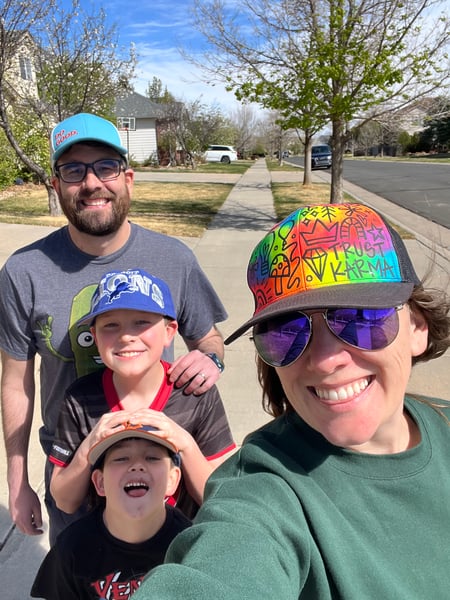
Bobby and Kristie Click smile with their two sons. Image courtesy of Kristie Click.
Although the idea of him undergoing major surgery was scary, she says she “couldn’t stand in the way of him trying to save someone else’s life.” With her support, he connected with the transplantation program in the spring of 2025 to start the process of getting approved to become a donor.
The program has a thorough and diligent vetting process to assess people’s physical and mental health to ensure they are a good fit for donation. As part of that process, there are some scenarios where a liver biopsy is needed, which was the case for Click.
The biopsy results luckily did not raise any red flags, and the donor selection committee — a multidisciplinary team made up of surgeons, hepatologists, nurses, social workers, psychologists, dietitians, and an independent living donor advocate — approved Click to become a donor.
Once approved, the transplant team worked to find the best possible recipient based on three factors: blood type, liver size, and degree of illness. By December, Click received the news that the team found a match. In January, the surgery was scheduled for April 3.
“We waited to tell our sons about everything until I had been approved,” Click says. “When we had a conversation, they were a bit nervous, but I think this is a good opportunity for them to see that, even when it’s not convenient, I feel strongly that we have an obligation to help others if we can.”
‘The place to be’
Widely recognized as having the longest running liver transplant program in the world, CU Anschutz is “the best place” to get a liver transplant, Jackson says.
“Nationally, it is estimated that roughly 56% of people on the waitlist are receiving a liver transplant within their first year on the list. At our center, the rate is 71%. This is just the place to be,” Jackson says. “We are aggressively looking for deceased donor options for patients, and we are also encouraging living donors to come forward. We’ve completed more than 60 non-directed living liver donations.”
Young pediatric patients are among the most in need, Jackson says. People under the age of 2 are so small that they cannot receive most livers that are available from deceased donors because the liver is too large, and it is difficult for surgeons to cut the liver down to the correct size. With living liver donors, however, surgeons can plan and remove the ideal amount to help these children.
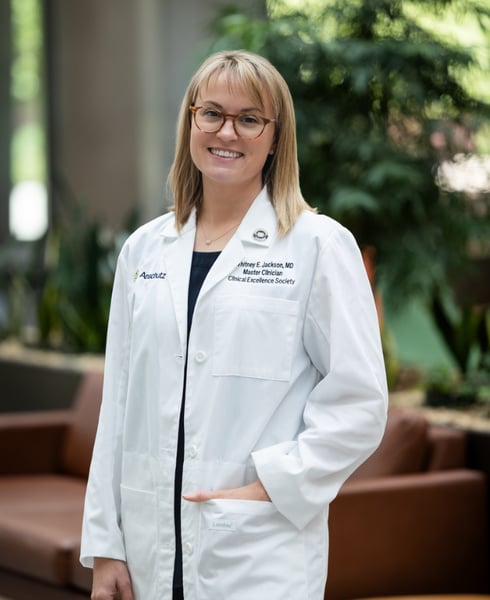
Whitney Jackson, MD, leads the Living Donor Liver Transplantation Program and is an associate professor in the recently formed CU Anschutz Division of Transplant Medicine. Image by Christina Patsiokas of Green Lion Images.
“We have a cohesive team where transplant surgeons at UCH and Children’s Colorado directly communicate and collaborate. That partnership allows us to stay on top of things, particularly if a non-directed donor comes forward and may be able to help a pediatric patient,” Jackson says.
CU Anschutz is among only a handful of programs across the nation that offer a robotic donor hepatectomy, which is a less-invasive robotic surgery for donors compared to traditional open surgery. This approach helps reduce the recovery time for donors.
“Since 2023, we’ve been offering this robotically, but this is still a major abdominal surgery where we are dividing the liver. We take it extremely seriously,” she says. “This surgery is not for everybody, but we are getting to the point where the robotic approach allows for minimal recovery time in the hospital.”
An ‘ideal’ surgical process
Eleven days before undergoing surgery, Click reflected on the yearlong process, saying it felt somewhat surreal to think of how close the operation was following months of anticipation.
“The transplant team and staff have been great. They regularly spoke with me to walk me through the process, and they’ve been as helpful and honest as possible. They’re upfront with understanding what the potential risks are,” he says. “When I weighed those risks compared to the benefits, especially to someone else, it was worth those risks.”
On surgery day, Kristie Click felt a sense of peace, saying, “The team at CU Anschutz does a really good job of preparing you for what it's going to look like.”
Click underwent the robotic procedure, and the surgeons removed roughly 27% of the left lateral segment of his liver, one of the smallest portions he could donate. Once the piece of liver was removed, it was placed on ice and transported to Children’s Colorado, where surgeons awaited its arrival to transplant the liver into the pediatric patient.
“The standard for patients who get open surgery is to spend four to seven days in the hospital. With my robotic surgery, I only spent one night and was able to go home the next day, which was my son’s birthday,” Click says.
Jackson saw Click the day after his surgery, “and he looked like a million bucks,” she recalls. She also heard that the recipient of his liver donation had been “recovering beautifully.”
“This is really the dream — the ideal,” Jackson says.
‘A full recovery’
On April 5, two days post-surgery, Click awoke with a fever. Out of precaution, he went back to the hospital and was diagnosed with post-operative atelectasis, which is a common complication from surgery that affects the lungs.
“The transplant team took it very seriously and re-admitted me for a few hours to take X-rays of my lungs, but we were soon cleared and were able to go back home,” he says.
The hardest part of the recovery process was the first five days, where Click says he experienced discomfort, grogginess, and brain fog. Kristie Click was by his side, helping monitor his incisions, diet, and following the team’s post-operation orders.
“We have such a good village,” Kristie Click says. “My parents came in from Alabama to help care for our sons, which was a lifesaver. We have a tight-knit friend group of people who would drop things off for us. My son Lawson, his whole class made get-well-soon cards for Bobby.”
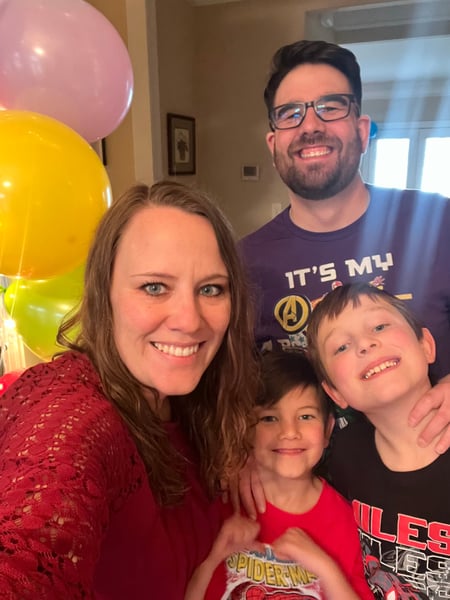
Kristie and Bobby Click smile with their sons during a celebration of Bobby’s 41st birthday in February. Image courtesy of Kristie Click.
Two weeks after surgery, Click had mostly recovered, experiencing only some soreness, and was cleared by the medical team to perform tasks like driving.
“Within a month, I felt completely back to normal and was able to do what I wanted to. I consider it a full recovery,” he says. “The recovery was easier than I expected, because the transplant team really tries to set realistic expectations for what recovery may look like.
“My surgery was robotic and focused on a small portion of the liver, so my recovery is very different from someone who has an open surgery or donates a larger portion,” he adds.
Although his donation was anonymous, there was an opportunity for Click to send a letter to the transplant center that can be given to the recipient’s family if they want to receive it. There was no expectation to hear back, but Click says he felt “closure” when he received a message back from the family, sharing that the pediatric recipient was doing well.
“I am so proud of him, and our boys are proud of him,” Kristie Click says. “It’s an amazing example to set — that you can think about other people you don’t know and make a big impact for them. It’s nice to put goodness out in the world.”
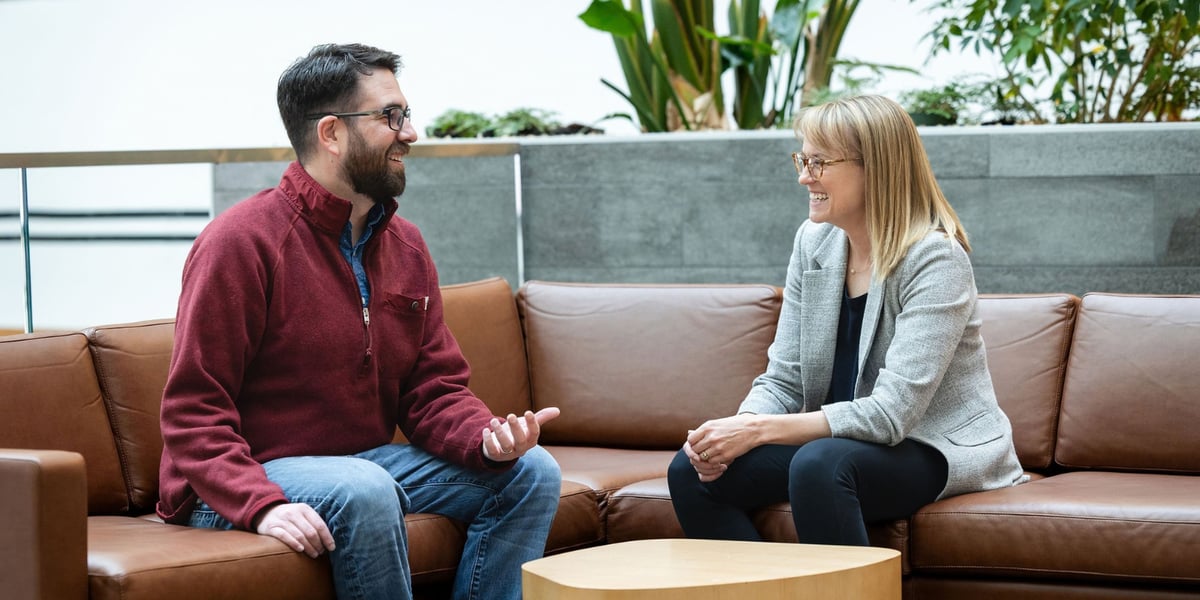
Bobby Click speaks with Whitney Jackson, MD, who helped him navigate the journey of becoming a liver donor at CU Anschutz. Image by Christina Patsiokas of Green Lion Images.
Getting the word out
Throughout the process of becoming a donor, Click has worked to spread awareness about the value of living donors in several ways.
He began volunteering with the Transplant Games of America, an event held every two years in host cities across the nation that offers sporting competitions for recipients, patients on the waitlist, clinicians, donor families, and living donors. This year, it was held in Denver, attracting a crowd of over 10,000 attendees. Through his involvement, Click has met recipients — some of whom experienced a transplant over 20 years ago — and saw firsthand how life-changing donations like his can be.
With the encouragement and guidance of his wife, Click documented much of his surgical journey on social media. He also appeared on 9News to talk about his donation experience.
“This has been an experience that I think is worth telling people about,” he says. “I have felt supported, the medical team was fantastic, and I’ve seen the impact these donations have on individuals. Although my donation is done, I want to raise awareness in hopes that it may drive more donations in the future.”
Spreading awareness about living liver donors is critical, Jackson explains.
“Liver disease is a major chronic medical condition that affects a large amount of the population. Transplants save lives, but it’s not widely known that people can be living liver donors,” Jackson says. “It’s amazing to see how proactive Bobby and Kristie Click have been in getting the word out.”
There are ample resources available for people to learn about becoming a living donor, Click says, encouraging those interested to conduct their own research.
“There are many people who don’t have a loved one who is compatible to donate to them. The need is a lot bigger than you may think, and this process is a lot less scary than it may seem,” he says. “You don’t have to know the recipient to have a lifelong impact.”