How is it possible for people to donate part of their liver?
It’s possible because the liver has eight functionally independent segments. Each of these segments has its own bile duct, artery, and vein. That means that you can cut out some segments, and the rest of the liver will still work.
With a living donor surgery, you do not grow back the segments that we cut out. Instead, after the surgery, the remaining tissue in the liver will grow larger in size to be all that your body needs. Although it is a major surgery with risks, donating part of your liver will not cause any increased risk to your life expectancy or any increased risk of liver disease throughout your life.
Some people donate larger portions of their liver than others. Why is that?
The amount of liver we remove is a balance between what the donor needs to be left with and what the recipient needs. The larger the recipient, and the sicker they are from liver disease, the more liver they will need at the time of transplant. The donor has to be left with 30% of their liver volume for them to recover well.
For example, the left lateral segment of an adult liver makes up about 20% of the total liver volume. That amount can be donated to an infant. The left lobe of the liver makes up about 40% of the total liver volume, and that can potentially go to someone more petite than the donor. For example, a large man could donate that portion to a petite woman or an adolescent.
The right lobe is the largest part of the liver, which is 60% to 70% of the total liver volume. That’s usually the amount we need for an adult to donate to another adult of approximately similar size.
In general, how does the Living Donor Liver Transplantation Program at UCH find a match between a non-directed donor and a recipient?
The way we determine a match is based on blood type compatibility, the size of the liver, and the size and degree of illness of the recipient — so the larger the recipient is and the sicker they are, the bigger the piece of liver they need. Donations go to recipients waiting on the pediatric or adult waiting list at Children’s Hospital Colorado or UCH.
It’s not yet possible for us to make donor matches across the country, because a piece of a liver is very sensitive to ischemic time, meaning the amount of time an organ has been removed from the body’s blood supply. This makes it difficult for a piece of a liver to travel a long distance and still be viable for donation.
Because of our expertise in living donations, some people travel to our center for living donor liver transplantation.
What is a liver donation chain?
Let’s say that you're waiting for a liver transplant, and your sibling volunteers to donate. But we find that your sibling’s blood type is not compatible with you. Now what? In our program, we will look for other incompatible pairs to create a paired exchange.
A chain takes that idea a step farther. A non-directed donor can start a chain by donating to you on the waitlist. Then, your incompatible sibling can donate to another incompatible pair, and ultimately, the chain ends usually with a piece of liver going to an infant or child.
This has been performed in living donor kidney transplants for years. In liver transplants, this is more challenging because the risk of death on the waitlist is higher. You need a lot of willing people to create matching exchanges and chains. Non-directed donors are making this happen. It’s a beautiful way to help multiple people at once.
Bobby Click hopes to donate his liver to a child in need. Can you explain how this is possible through the partnership with Children’s Colorado, a pediatric hospital located at the CU Anschutz campus?
We have a very close relationship with the liver transplant program at Children’s Colorado. Part of what facilitates this cohesive culture is that our surgeons work in both locations. Based on our review, from 2021 to 2025, there were 19 non-directed living liver donors that helped a child get a transplant at the pediatric hospital — more than any other center in the country.
We know that small children are at a size disadvantage for getting a liver transplant; being smaller, they cannot accept a larger donor liver from a deceased adult. So, these healthy and smaller partial grafts from living donors are ideal to help children who are underserved on the waitlist due to their size.
What are the prerequisites to get robotic surgery versus traditional surgery? Is this robotic surgery just for the donor, or does it also apply for the recipient?
Only a handful of programs across the nation offer robotic donor hepatectomy. The robot is a tool that allows for highly magnified visualization and excellent dexterity to divide the donor's liver in a minimally invasive approach.
All of our living liver donors since 2023 have undergone donor hepatectomy robotically, but we still carefully consider and plan the approach to make sure it’s the right tool in the right anatomical situation.
At this point, the robot is being used only for donors. Recipients still undergo open surgery. One day, we hope to be able to offer recipients a robotic transplant as well.
How does robotic liver donor surgery typically work?
The donor hepatectomy is a technically challenging surgery. It requires dividing this solitary organ. Prior to the operation, CT and MRI scans allow a 3D reconstruction of the liver to be generated, allowing us to visualize the location of the bile ducts, veins, and arteries to ensure it is technically possible to offer the hepatectomy.
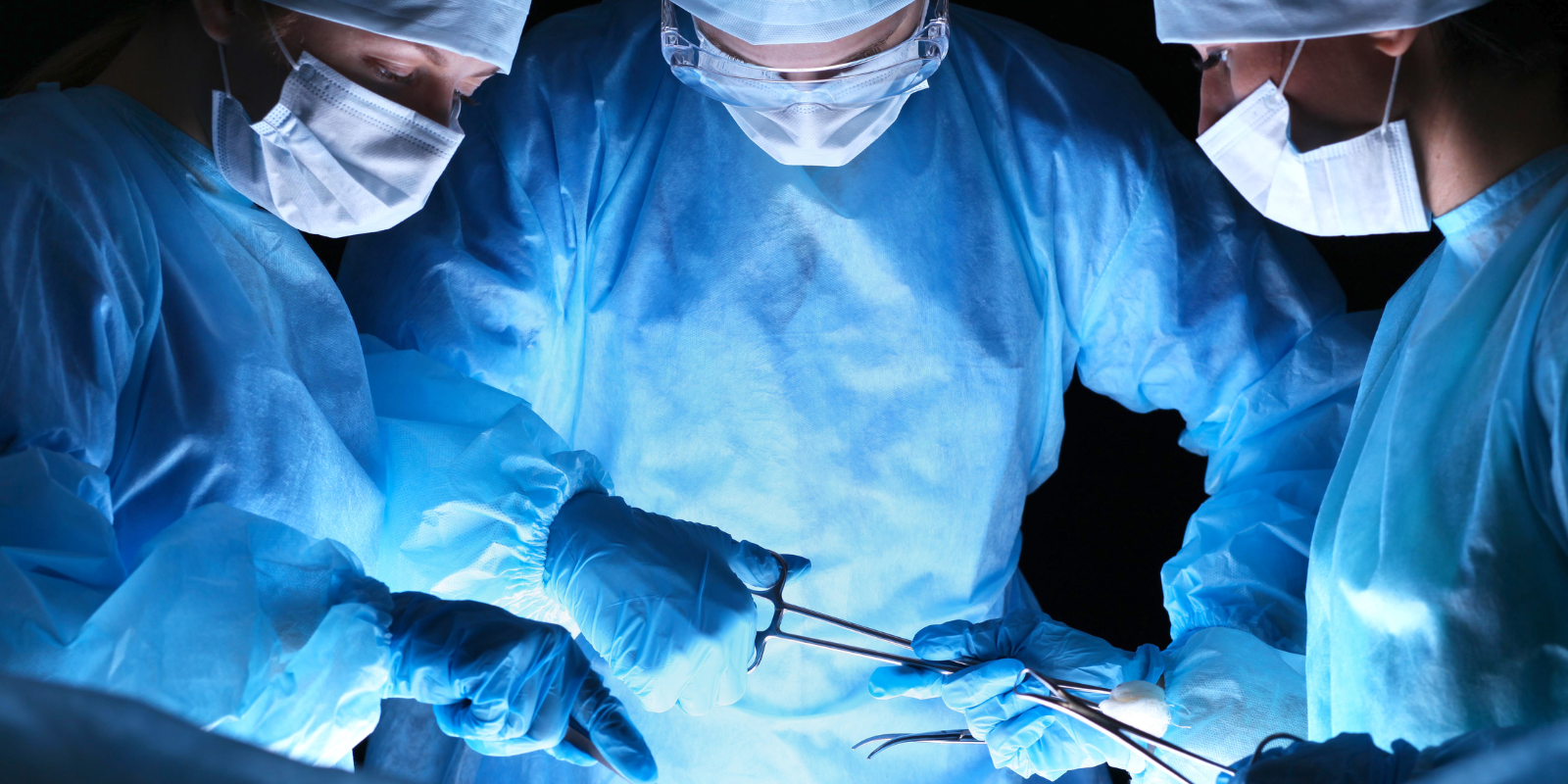
In the operating room, using a robotic approach, several small incisions are made in the abdomen for robotic instruments and a high-definition camera. The surgeon controls the robotic arms from a console, getting magnified vision and enhanced dexterity for delicate tissue handling. The liver is divided with extreme care taken at key parts of the resection to preserve crucial structures — at the branching points of larger blood vessels and bile ducts. As the liver is precisely divided, bleeding is controlled. Once the donated portion of liver is detached, it is removed through a small horizontal incision low on the abdomen. The remainder of the donor’s liver remains intact to start to regenerate.
The donor hepatectomy takes approximately four to six hours, but it can vary depending on the complexity of the anatomy.
How does the piece of liver from a donor get transported to the recipient?
The liver graft is transported on ice to the recipient's operating room, where the recipient is getting prepared. That might be the operating room next door if the recipient is an adult, or it might be across the street at Children’s Colorado if the recipient is a child.
What is the process of putting the new liver into the recipient?
The living donor graft needs to be prepared for implantation on a back table. The bile duct, hepatic artery, portal vein, and hepatic veins are identified. Depending on the graft’s anatomy, sometimes vessels need to be reconstructed prior to implantation into the recipient. As the graft is being prepared, the recipient has their dysfunctional liver removed. Then, the graft is sewn into the recipient.
What is the recovery process like? Typically, how long does it take for the liver to regenerate?
For donors who get open surgery, they typically stay in the hospital after the operation for four to seven days. With the robotic approach, we are seeing many patients doing well enough to go home in two to three days.
With an open approach, donors typically return to a desk job in six to eight weeks or a physically demanding job in 10 to 12 weeks. Donors usually feel like themselves again after three months. The robotic approach is accelerating this recovery by about half the time.
The donor’s liver begins to regenerate immediately, with the majority of regeneration taking place in the first three months but continuing through the full year after donation. We ask all donors to give their liver the best chance of recovery by not consuming alcohol during that time.
Recipients typically have a longer recovery, because they came into the hospital sick and in need of a transplant. Recovery can vary, but it averages to a hospital stay of about two weeks. Their liver also immediately starts to regenerate and grow after the surgery.