What does this impressive transplant total say about the Division of Transplant Surgery?
We were one of the early leaders in transplant — CU surgeons performed the world’s first human liver transplant, Colorado's first kidney transplant, and the first adult-to-adult live-donor liver transplant. More recently, we have used robotic surgery to perform kidney transplants on high-BMI patients who were previously ineligible for transplant. We're going to continue to innovate and build on this very strong foundation.
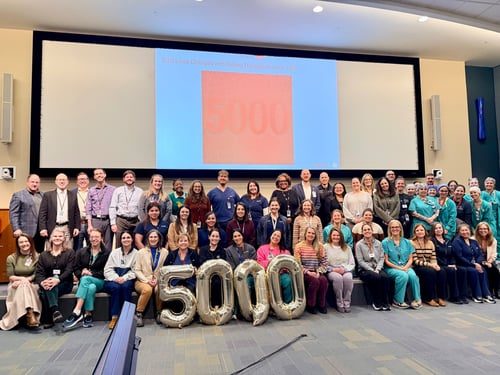
Celebrating 5,000 kidney transplants.
The numbers have come because of the consistent care that we provide. We're trying to do more and more, but we want to do it in a way where we have good outcomes. We don't want to just do a bunch of transplants that don't have good outcomes. We want to do a high volume of transplants with good outcomes, so people get back to normal life and have a higher quality of life afterwards. We want the transplants to help people, and that's what we're doing. We have a good track record of that.
What has changed in transplant procedures over the years that's made it possible to do more procedures than were being done previously?
We are now a leader in robotics and machine perfusion, which is a way to keep donor organs alive longer after death. That's allowed us to maintain our volumes and offer transplant to many patients who otherwise wouldn't have access. We're always doing things to maintain our volume and improve the care of transplant patients. Making that a priority has allowed us to remain on the forefront of transplantation in the United States, and these numbers come from having that mentality and culture.
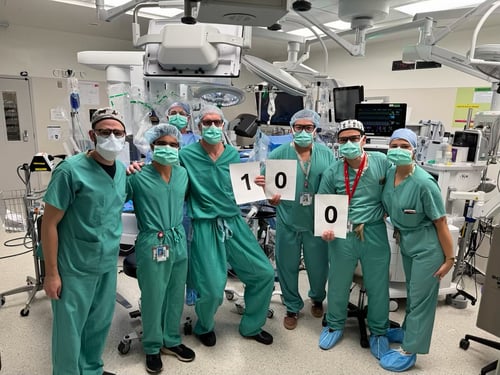
The surgery department recently performed its 100th robotic kidney transplant.
Have you seen an increase in nondirected donors — people who come in to donate organs to whoever needs them?
We have one of the highest rates of nondirected liver donors and kidney donors in the nation, largely because of our ability to recover the organs with lower morbidity, shorter stays in the hospital, faster returns to their normal life and normal functional status. I have a lot more patients coming back to me and saying, ‘Hey, that was easy. I'm happy to tell other people about it.’
We're talking about numbers and specific organs, but at the heart of all this, each time you do a transplant, you're basically saving somebody's life. What does that feel like for our surgeons?
Our program has done a lot to change morbidity and mortality in our region with organ transplantation. It's a huge accomplishment to be able to say we've done more than 10,000 transplants, and when you know what each one of those transplants means to somebody and how it changes their life, it's a big number. It blows you away to think about what we've been able to do.
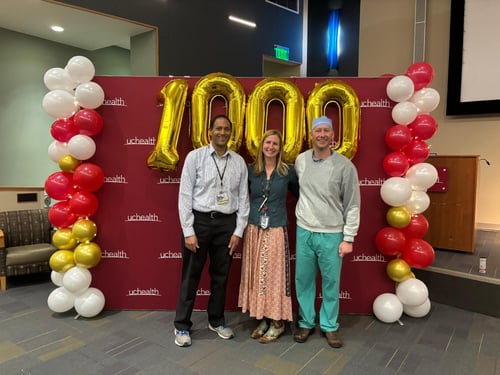
Celebrating 1,000 heart transplants.
What can you say about our surgeons and our teams, the people behind the numbers?
We have the best medical transplant doctors and surgeons in the country, and we have great support from UCHealth hospital and the CU Anschutz School of Medicine. It's fun to be part of this program. We're going to continue to innovate and try to push the boundaries and be a leader in research. We also want to be a leader in minimally invasive transplant with robotic assistance and be a part of developing the future of transplant.