While cancer research is advancing rapidly, a deadly type of pediatric brain cancer has long stumped oncologists and medical researchers. It mainly affects children ages 5 to 10, and there are no specific, targeted chemotherapy drugs or immunotherapies to treat it.
Diffuse intrinsic pontine glioma (DIPG), a subtype of diffuse midline glioma (DMG), is rare, occurring in only about 300 children in the U.S. every year. It’s even rarer in adults. But its impacts are devastating: After the cancer emerges in glial cells within the pons, a part of the brain stem that controls actions like breathing and swallowing, it is aggressive, fast-growing, and nearly universally fatal.
Patients usually die within a year of diagnosis. Steroids and radiation therapy can reduce inflammation and potentially slow the growth of the cancer, but they can’t stop it. And while researchers haven’t given up on finding chemotherapy drugs for DIPG, existing drugs have not been effective, in part because many drugs can’t get through the protective blood-brain barrier that surrounds the brain and central nervous system. DIPG tumors are also embedded deep in the brain stem, where it’s physically difficult for drugs to permeate.
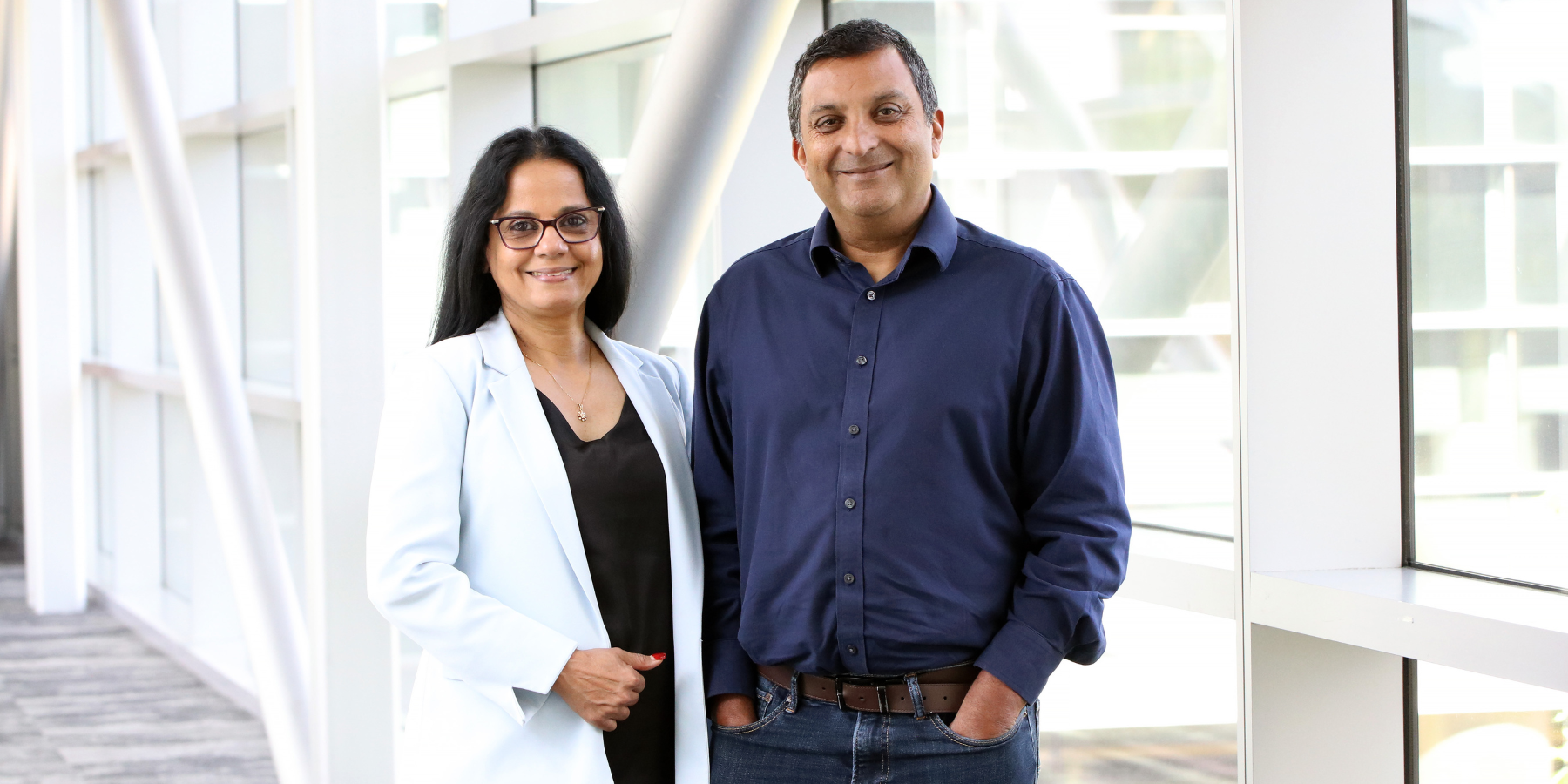
Faculty members in the University of Colorado Anschutz Department of Pediatrics are striving to find better solutions for children with DIPG. Through years of research, Rajeev Vibhakar, MD, PhD, MPH/MSPH, and Sujatha Venkataraman, PhD, both professors specializing in pediatric hematology, oncology, and bone marrow transplantation, have identified a gene implicated in DIPG and developed a lab-created antibody that can deactivate it. Their discovery could be a major step in finally developing an effective treatment for this cancer and offering a ray of hope to children with DIPG and their families.
Vibhakar and Venkataraman are two of hundreds of researchers across the CU Anschutz campus who collaborate at every stage to transform a scientific discovery at the lab bench into a viable treatment option that clinicians can offer for patients.
|
“When we can take our discoveries and move them forward within our clinical trials ecosystem, that's a very special opportunity to be able to advance our faculty, our ideas, and to be able to get promising treatments and products to our patients years before commercial availability.” Adit Ginde, MD, MPH |
This “bench-to-bedside” process is long, complex, and can be fraught with uncertainty. Lab researchers must try out hundreds, if not thousands, of ideas that may not work just to find a few promising ones. They sometimes make new discoveries that are unrelated to what they set out to find. These discoveries then need to catch the eye of industry partners who can translate them into drugs and sponsor clinical trials. The clinical trials themselves are the ultimate test of whether a treatment will succeed or fail.
Such is the nature of medical discovery. Out of the innumerable initial ideas explored in a lab, only a fraction will make it all the way through the research, development, and trial process, which can take years and involve many steps. For any one idea, the likelihood of success can be quite small. However, new treatments that do make it through the clinical trials stage to the bedside can radically improve patients’ lives.
Basic science research: The quest to discover ‘why’
The journey toward making any new scientific discovery and developing it into a fully-fledged medical treatment for patients almost always begins with basic science research in a laboratory.
“If you don't understand why something happens, you won't know how to fix it. And if you don't do the basic science, you'll never know the why,” Vibhakar says. “It's like a car. If you don't understand why your car is not working, it doesn't matter what you're trying to do. You're not going to be able to fix it.”
That quest to understand the “why” is at the heart of basic science research. Scientists need to understand the logic underpinning the treatments and ideas they are exploring. For their part, Vibhakar and Venkataraman have sought to better understand why some children develop DIPG and what causes it.
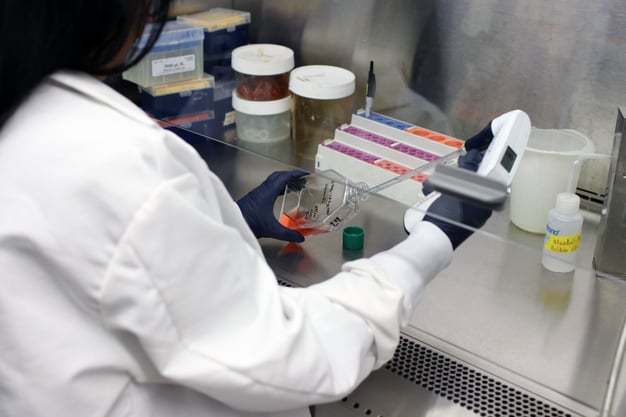
Sujatha Venkataraman, PhD, works in the lab at CU Anschutz.
Scientists have long known that a specific gene mutation called H3K27M drives DIPG. The mutation involves the substitution of a specific amino acid in a specific position within an abundant protein that coats a cell's DNA strands. In 2017, Venkataraman set out to explore why this mutation happens and what it does to cells in the body.
Venkataraman tried adding the mutation to some cells and deleting it from others using CRISPR technology. She and Vibhakar used RNA sequencing to study how the cells changed when they added or deleted the mutation. Across these studies, one gene in particular — a protein on the cell surface of DIPG cells — began to catch the researchers’ attention.
Every time the researchers modified the H3K27M mutation, this gene, called CD99, consistently showed the most change. And after more experiments and gene manipulations, the researchers found that when they simply turned off the CD99 gene in tumor cells, the cells stopped growing and eventually transitioned into normal, mature cells.
Now, Venkataraman and Vibhakar had found a gene that could be targeted with a treatment. So, they started searching for an antibody — a specialized protein found in blood and lymph that binds to foreign substances like viruses, bacteria, and even abnormal cells (such as cancer cells) made within the body. Antibodies essentially serve as markers for the immune system, telling it what to destroy.
In cancer immunotherapy, antibodies can be used to seek out and mark cancer cells for destruction. And after plenty of searching and testing various options, Venkataraman and Vibhakar finally found a lab-created antibody that would bind to CD99. Its effects surprised even the researchers.
“The first time we put that antibody into cells, it was like the antibody blocked the signaling, and the tumor cells all stopped growing. It was amazing,” Vibhakar says. “I didn’t believe it at first, but sure enough, every time we tried it, that's what happened.”
The researchers continue to test the antibody and explore its potential as a DIPG treatment. Last summer, they and other researchers published a paper showing that the antibody stops tumor growth in animal models. They also showed the antibody can cross the blood-brain barrier, and that it can work in combination with radiation therapy, a standard treatment for many types of cancer (including DIPG).
“The antibody clearly is stopping tumors from growing in animal models. We've rarely seen anything for DIPG that works. So, this was a really cool thing,” says Vibhakar.
Lab research: A marathon, not a sprint
This DIPG-targeting antibody took years of dedicated lab research to uncover. Vibhakar and Venkataraman’s journey illustrates what can happen when researchers are given the tools and resources they need to explore the “whys” of the world. But this work usually takes tremendous amounts of time, energy, stamina, persistence, and funding.
Leslie Berg, PhD, senior associate dean for biomedical research with the CU Anschutz School of Medicine and professor and chair of the CU Anschutz Department of Immunology and Microbiology, has spent many years in the lab as an immunologist. She says there’s usually “a lot of hard work and a lot of failure” involved before major breakthroughs can happen.
“It takes years to do this. It takes lots of money, and lots of belief,” Berg says. “90% of ideas don’t lead to anything. The ones that end up successful are either people who got really lucky and something worked right away, or the ones where the belief in the project and the concept is so strong that they don't let the failures derail their progress.”
Most of the time, it takes many repeated attempts, many trials and failures, to yield a success. And instead of giving up after an experiment doesn’t work, scientists have to keep thinking about where they’re going next. They might think about what pieces of the experiment design they could tweak that might give different results next time.
Berg compares this trial-and-error process to doing a jigsaw puzzle. A researcher might pick up the piece of the puzzle and think they see where it goes, but then later realize it doesn’t fit with the other pieces around it. In this process, the researcher can take the puzzle piece and shave a little off the end to see if that makes a difference, but it can take many attempts to get a piece that truly fits.
The difficulty lies in how unpredictable basic science research can be. Berg says it’s important to have many researchers testing out many different ideas to “spread a wide net” and seek answers to many questions at once.
Sometimes, crucial discoveries also happen completely by accident. GLP-1 drugs exist because of a group of scientists from the U.S. Department of Veterans Affairs who were studying the eating patterns of Gila monsters, a type of venomous lizard. Gila monsters are known to go months at a time without eating. The researchers, who were not affiliated with CU Anschutz, found the lizards produce a hormone similar to GLP-1, also known as glucagon-like peptide-1, a gut hormone that regulates blood sugar in humans. Later, a pharmaceutical company drew inspiration from Gila monster DNA in creating the synthetic GLP-1 drugs that many use today for treating diabetes and losing weight.
Berg says this is just one of many examples illustrating why scientists need the funding and leeway to explore a wide range of topics and questions — both commitments the CU Anschutz School of Medicine has made to its six basic science departments.
“If you try to direct research too much, you’re going to miss all the unknowns,” Berg says. “The more you narrow the scope of research that can go on, the less likely you are to learn something totally new. You have to go out of the box, and you’ll never find it if you color only in the lines.”
This philosophy has served CU Anschutz researchers well. The Nature Index 2026 Research Leaders, which tracks contributions to research articles published in high-quality natural-science and health-science journals, identified CU Anschutz as No. 11 in the U.S. among health care institutions and No. 13 in the world. This year, the School of Medicine was also named a top tier research institution by U.S. News and World Report, a boost from tier 2 in 2024.
The middle step: Funding and commercialization
Unknowns don’t exist only in the lab. There are lots of them on the journey to the bedside. Clinical trials ultimately lead to new treatments for patients. But they require regulatory approval, funding, and industry partners to become a reality.
Moving a discovery to the drug development and clinical trial phase isn’t always a guarantee, but resources across CU Anschutz aim to take those scientific achievements all the way.
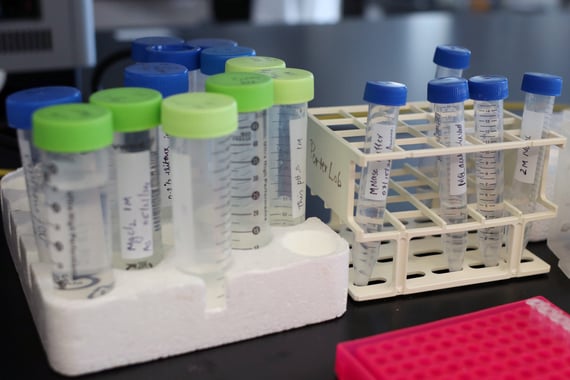
A work station in the lab where Vibhakar and Venkataraman perform research that they hope will lead to effective treatments for DIPG.
Vibhakar and Venkataraman say CU Anschutz Innovations, a team of experts that help researchers commercialize their discoveries and protect their intellectual property, was instrumental in taking their discovery to the next stage of drug development. Innovations helped them file patents to protect their intellectual property and set up a biotech startup so the two could start working on drug development and manufacturing.
The two researchers have applied for a business development grant from the National Institutes of Health (NIH) for small companies that advance therapies from the lab to patients. They’ve also received generous amounts of philanthropic funding to pursue this work, as well as funding from the SPARK Accelerator Program.One effort has resulted in Venkataraman co-founding Vināśa Oncology for the research.
“We've connected them with regulatory pathway recommendations, experts, advisors, and SPARK program mentors to support company formation and business model development,” says Gali Baler, PhD, managing director of ventures and investments for Innovations. “Most recently, we’ve worked with one of our entrepreneurs-in-residence to help them consider a pediatric voucher through the FDA, which could unlock a fast-track review or larger funding opportunities.”
At CU Anschutz Innovations, finding the right pathway to success looks different with each project, says Baler. So far, Innovations manages a portfolio of 3,300 patents and has helped secure over a half billion dollars in startup financing.
“Both scientific research and the business of science are like solving a puzzle,” Baler says. “We may uncover compelling science, but without guiding it toward product development, some discoveries may never become solutions that benefit patients.”
That work creates an entire ecosystem. According to 2023 economic impact data, Innovations’ work generated $423 million for Colorado’s economy, supported 691 jobs and more than 1,000 indirect or induced jobs, and altogether sustained 962 Colorado households.
|
“You have to have the data from the clinical trials to go back, do the basic science, and understand what happened. Then, you can take that knowledge back to the patients.” Rajeev Vibhakar, MD, PhD |
While the middle parts of the bench-to-bedside journey can sometimes be messy, Baler adds, they’re also ripe with creative spirit. That’s what makes the work so rewarding.
“One common trait among successful startups is the ability to pivot. A company may start with a roadmap, test it in the market, gather customer discovery and other data, and realize the market is different than expected. Then it adjusts,” he says. “Many of the most successful companies in our portfolio pivoted five or six times before finding the right product-market fit.
“Investigators bring breakthrough science and discoveries. At Innovations, we help build the framework around that science; protecting intellectual property, assessing commercialization opportunities, establishing company structures, and identifying the milestones needed to navigate the market. That process continues to evolve and iterate over time.”
Other resources on campus include the CU Anschutz Gates Institute, which supports translational research and offers biomanufacturing capabilities. Executive Director Terry Fry, MD, says it can be a challenge to move beyond the proof-of-concept stage of scientific development — but it’s entirely possible with the right team of experts.
“Transitioning an idea from something that looks promising in animal models and turning that into a new drug that we help treat humans with is a fairly heavy lift,” says Fry, who is also a professor of pediatrics at the CU Anschutz School of Medicine. “It involves regulatory agencies, biomanufacturing and more. I view our role on campus as being able to fill that gap.”
Clinical trials: Testing potential ‘game changer’ treatments for patients
Clinical trials are often the culmination of years of tireless effort — and the last, crucial step before new medical treatments can finally go to market. These trials turn scientific discoveries into treatments for patients that can make a tangible, real-world impact.
After a decade of studying DIPG, Vibhakar and Venkataraman are nearly ready to run a clinical trial for a new treatment. Their goal is to begin the trial by 2027, and if it yields a viable treatment, the impact on patients and their families could be immeasurable.
Getting to this place has been quite a journey, but the future looks bright. Says Vibhakar: “We went from finding this random gene and asking what it does to finding a therapy that we think will be a gamechanger for patients with DIPG.”
However, clinical trials aren’t the end of the research process. They often spark new questions and ideas for future study and innovation. They provide valuable food for thought and real-world data that informs all levels of research.
“You have to have the data from the clinical trials to go back, do the basic science, and understand what happened,” says Vibhakar. “Then, you can take that knowledge back to the patients.”
These kinds of trials are unfolding across campus at CU Anschutz. In April, the Gates Institute received Investigational New Drug clearance from the U.S. Food and Drug Administration, marking the first chimeric antigen receptor (CAR) T-cell therapy authorized for clinical testing that was developed entirely on the CU Anschutz campus. The therapy offers a novel approach for patients with relapsed or refractory acute myeloid leukemia.
The first-in-human Phase 1 clinical trial for the CAR T-cell therapy developed on campus started over the summer, marking years of work by researchers and the Gates Institute.
Reaching the point of a viable clinical trial is “where you really start to see the fruits of your labor,” Fry says. Even then, uncertainty often lies ahead.
“You have to be adaptable. Clinical trials often reveal things that make us rethink our approach,” he says. “Sometimes it’s as simple as modifying the eligibility criteria. Other times, it can be as drastic as going back to the drawing board on manufacturing.”
This means bench to bedside isn’t often a linear journey. “It's bench to bedside and then back to the bench depending on what the bedside tells you,” Fry says.
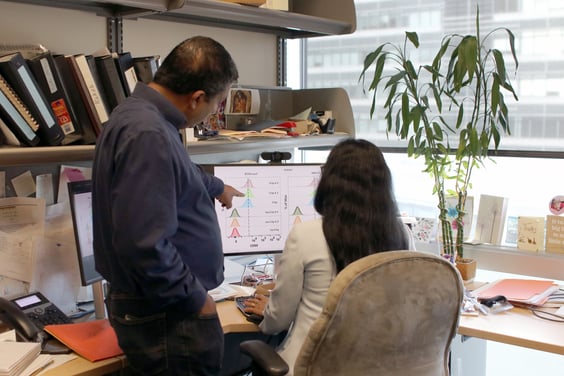
Getting a lab discovery to the patient that needs it can take years of work. However, researchers at CU Anschutz aren't without resources to get there. CU Anschutz Innovations and the CU Anschutz Gates Institute find ways to bridge bench research and the bedside.
Adit Ginde, MD, MPH, senior associate dean for clinical research with the CU Anschutz School of Medicine, professor of emergency medicine, and assistant vice chancellor for clinical trials, says a campus where world-class clinical trials and basic science research can happen under the same roof creates a wealth of possibilities.
“On our campus, clinical trials and basic science research are clearly synergistic,” he says. “When we can take our discoveries and move them forward within our clinical trials ecosystem, that's a very special opportunity to be able to advance our faculty, our ideas, and to be able to get promising treatments and products to our patients years before commercial availability.”
Ginde believes having a robust infrastructure on campus for clinical trials helps carry innovations from the discovery phase to the finish line and bring new treatments to patients as quickly as possible. CU Anschutz is actively expanding its focus on clinical trials, which he says is a step toward delivering innovative, cutting-edge medical care and treatment.
“We have an opportunity as a campus to make a major impact here. We have our relationships with our health system partners, our geography, and our footprint across the Mountain West. Patients are referred to us from a nine-state region for complex care, and our unique patient population and clinical setup really allow us to fill a gap in care,” says Ginde.
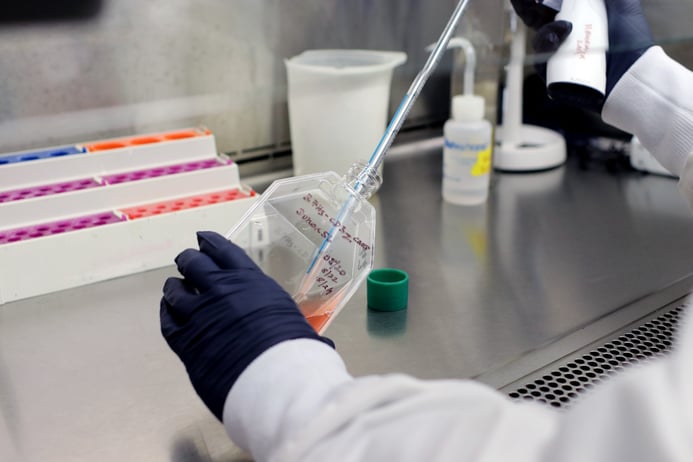 DIPG is a subtype of diffuse midline glioma (DMG), a rare cancer occurring in only about 300 children in the U.S. every year. Treatment options are limited, but research is pushing more possibilities forward.
Campus researchers are focusing their efforts on health conditions that are prevalent in the community so they can tailor their scientific approach to what their patients are experiencing, he says.
Ginde also emphasizes the importance of approaching basic science research with the whole patient and their clinical context in mind so the transition from bench to bedside can be as seamless as possible.
The road from bench to bedside is often long and arduous and navigating that journey takes dedicated collaboration from countless people. Venkataraman says it “requires a village” — a wide range of people from lab scientists, clinicians, research fellows, and students to regulatory experts and industry partners — to move an idea from its inception all the way to a finished treatment that can go out to patients. But they all share the same ultimate goal: developing new treatments and bringing hope to patients and families.
“Everybody has to work together for the successful clinical translation of any product,” she says. “So much is involved in taking science from the lab bench to the bedside. But when we design an experiment in a laboratory, we always think that there is a patient out there waiting for a better option, and so we try to move it forward as fast as we can.”
Kara Mason contributed to this report.
Photos by Melissa Santorelli.