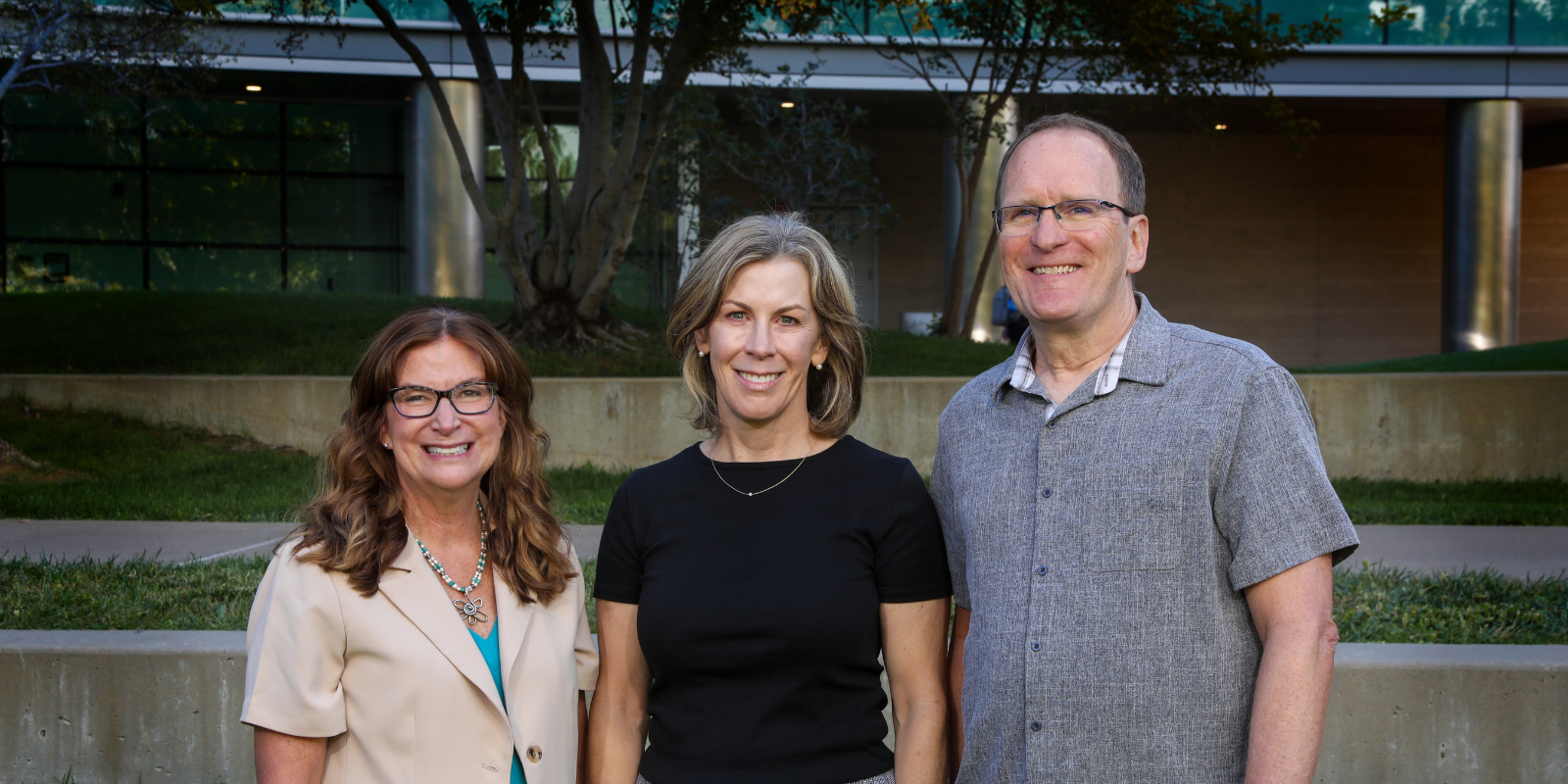
University of Colorado Anschutz gynecologist Christine Conageski, MD, MSc, is on a crusade to eliminate cervical cancer in Colorado.
“Over the last three or four months I’ve talked to anybody who will listen,” says the associate professor of obstetrics and gynecology at the CU Anschutz School of Medicine.
Conageski, current president of the American Society for Colposcopy and Cervical Pathology, was principal investigator of the SELF-CERV trial, which sought to validate use of the first at home cervical cancer screening device, called the Teal Wand. It was approved by the U.S. Food and Drug Administration in 2025.
“Cervical cancer is a disease that is almost certainly 100% preventable,” she says. “Frankly, we should even be working to a mindset that cervical cancer can be eliminated, which in 2018 the World Health Organization said was possible from a public health perspective.”
Some states across the country, including Alabama, Louisiana, and Texas, have committed to cervical cancer elimination action plans that increase human papillomavirus (HPV) vaccination rates and cervical screening rates. Conageski, who is a member of the CU Anschutz Cancer Center, envisions a similar strategy taking place in Colorado where rural counties can have up to three times the rate of cervical cancer as urban counties.
“No one in this country should die from cervical cancer,” she says.
‘We know that screening works’
Despite cervical cancer being highly preventable, screening rates have steadily decreased over the years and deaths persist, annually about 40 in Colorado and 4,000 across the U.S.
New research published in the Journal of Women’s Health shows that annual cervical cancer screening among women between the ages of 20 and 64 decreased from 38% to 23% from 2008 to 2023.
Another recent study reveals that from 2005 to 2023, the proportion of women never screened for cervical cancer between ages 21 and 29 years increased from 12.5%, about 3.5 million women, to 31.9%, about 6.2 million women.
“During COVID, we saw rates decline for all screenings — including mammograms and colon cancer — because people were not going to the doctor,” Conageski says. “Most of those rates have returned to their pre-COVID baseline, and cervical cancer has not.”
Cervical cancer screenings have remained about 15% below what it was prior to 2020. Conageski speculates that various barriers contributing to declining numbers include mixed messaging on screening guidelines and slow adoption of self-collection methods, which could reach women who aren’t currently receiving screenings.
Nearly all cases of cervical cancer begin with HPV, and “if you’re vaccinated for HPV, the risk of getting cancer decreases by 50%,” Conageski says. However, cervical cancer rates have been stable since 2005, “and probably are slightly even increasing.”
That screening piece has become a top priority for Conageski and others “because when you look at patients who are diagnosed with cervical cancer, at least 60% of them just had not been screened in the preceding five years,” she says. “When we're seeing screening declines, that's what we're most nervous about. We know that screening works and it effectively reduces cancer rates.”
Overcoming barriers, increasing access
Current guidelines recommend individuals aged 21–29 years should be screened for cervical cancer every three years and individuals aged 30–65 years should undergo screening every five years.
New technology, including the Teal Wand, aim to make screening more accessible, especially to patients who can’t easily make it to a clinic for a pap smear. However, implementation remains a tricky part of the equation, Conageski says.
Even if hospitals and clinics get the self-collection screening tests and identify the patients that need them, there must be a prescribing physician and the test then has to make it to the patient and back to the lab. Finally, it’s important to get patients appropriate follow-up care, which requires an in-person visit.
A screening revealing a patient is positive for HPV doesn’t necessarily mean cervical cancer is imminent, but it does mean it’s something to keep up with and address with a clinician.
Some labs don’t yet process these kinds of at-home tests, another barrier Conageski says she herself runs into.
“I think implementation is the next frontier,” she says. “That is what will actually get these tests into the hands of the people who need them.”
So far, Conageski says she’s seen creative models for this, such as putting self-collection tests in emergency departments, mobile mammogram clinics, and shelters that reach the unhoused population. These endeavors, however, were mostly funded through research studies, and translating those efforts into normal, everyday access comes with more hurdles.
For most of the population, Conageski says, staying on top of screening is the best way to evade cervical cancer. Schedule screenings according to age recommendations and keep on top of follow-up care.
“If we can do that, we basically can eliminate cervical cancer statewide, worldwide, across the board, and wouldn’t that be great news for everybody?” she says.