

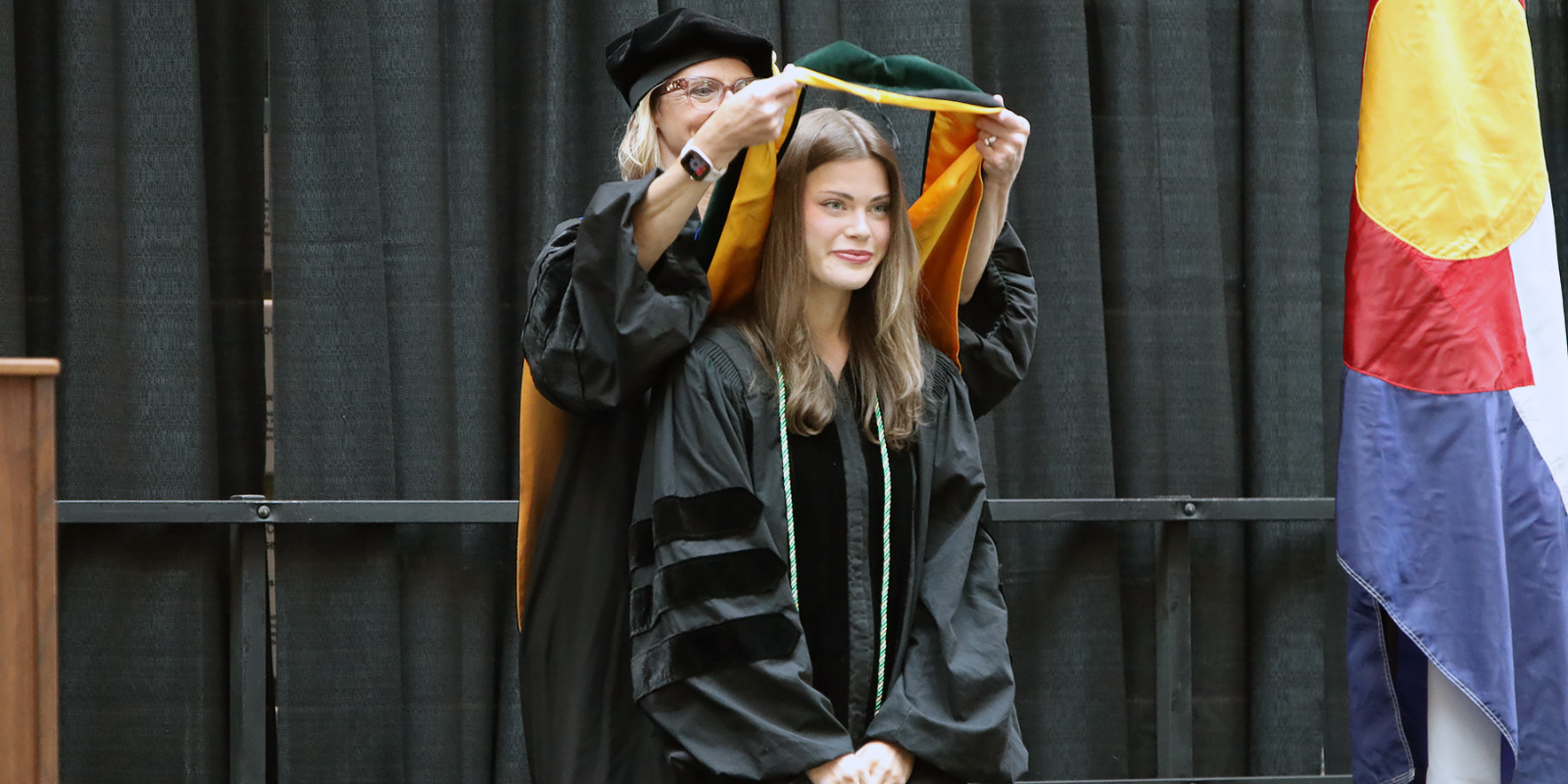
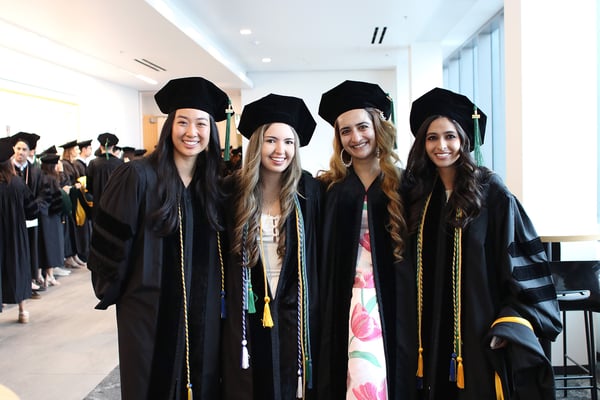
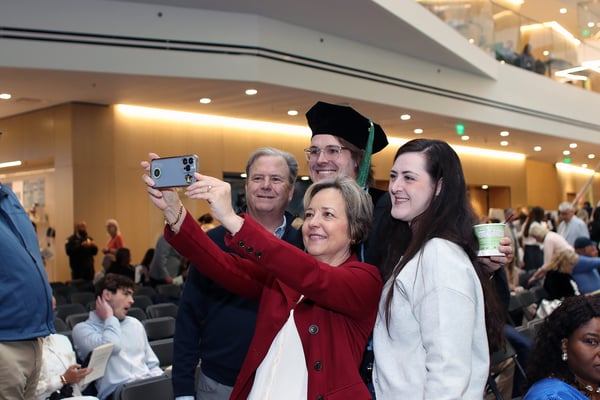
Cold and rainy spring weather may have moved the 2026 Hooding and Oath Ceremony indoors, but the change didn’t dampen the spirits of the more than 160 students who graduated from the University of Colorado Anschutz School of Medicine on May 18.
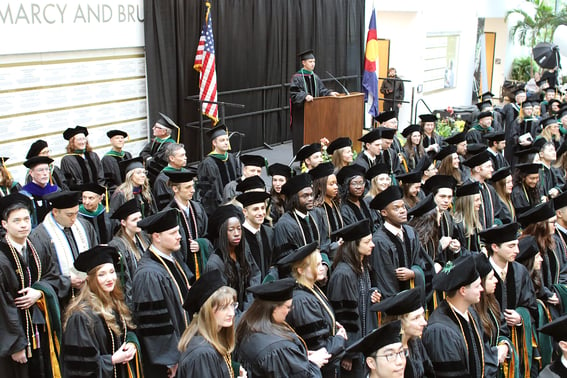
Packed into the soaring atrium of the Anschutz Health Sciences Building at CU Anschutz, the graduates and their families celebrated the end of one chapter of their medical training and the beginning of the next, as the new doctors prepare to enter residency programs this fall.
“One of my favorite quotes is that you can't connect the dots looking forward, you can only connect them looking backward,” Jeffrey SooHoo, MD, MBA, associate dean of admissions and student life, told the new graduates. “All the things that have brought you here to this point today, you couldn't have known how they would have all transpired, and you're just starting your story in medicine. This is the beginning of a journey, and we're excited to see where your careers take you.”
‘It’s about connection’
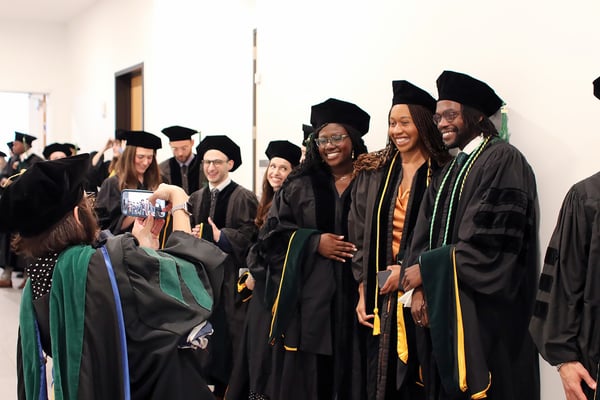
The ceremony also put a spotlight on the new levels of responsibility the graduates will take on when they begin their residencies, and how the true meaning of being a doctor lies in treating the human beings behind the diagnoses.
“The most important part of our careers will not be defined by the letters after our names, but by the work we choose to do with them,” said class speaker Peyton Boyd, MD, executive president of the medical student council. “It is defined by the hours we spend in the operating room, removing the gallbladder of an 80-year-old woman with early dementia who wants to get home for her grandchild’s birthday. It’s defined by the hours in clinic, holding your patient’s hand as they deal with their chronic muscular pain while talking about the joys and throes of raising a teenage son.
“Being a doctor is not just about knowledge, titles, or credentials,” Boyd added. “It’s about presence. It’s about connection. It’s about showing up for someone when they need it most, regardless of if it’s on the wards, in the OR, or in clinic.”
Trust and humanity
The ceremony’s guest speaker, Uché Blackstock, MD, author of the bestselling book “Legacy: A Black Physician Reckons With Racism in Medicine,” echoed Boyd’s sentiments in her remarks, reminding the students that medicine is “deeply human work” that is built on trust.
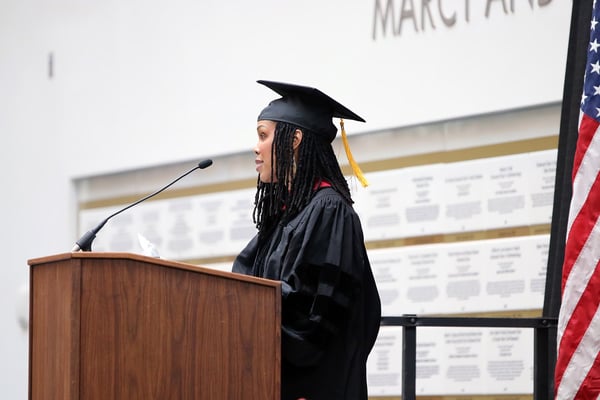
Keynote speaker Uché Blackstock, MD
“Today, you inherit a profession that carries extraordinary knowledge and extraordinary responsibility, and one of the most sacred parts of that responsibility is the trust that people place in you,” she told the graduates. “You'll shape whether medicine feels humane or distant, attentive or transactional, trustworthy or alienating. Those impressions aren't superficial, they matter deeply.”
Blackstock told the new doctors that they are entering the field “at a time of great possibility, and also very real strain.”
“The science is remarkable. The tools are more powerful than they've ever been. The pace of discovery is extraordinary, and there's so much reason for hope in what medicine can do now and in the near future,” she said. “But at the same time, many patients feel understandably overwhelmed by the systems they are expected to navigate. Many communities continue to experience medicine unevenly and unjustly. Many clinicians are practicing inside structures that reward speed, efficiency, and productivity at precisely the moment when our patients most need time, explanation, and care.”
The most important thing the graduates can do as they begin to navigate those complex realities, she said, is to “protect the part of yourself that first said yes to medicine.”
“The pressures of this profession are real, but your humanity isn't what gets in the way of your work,” she said. “It's actually one of the things that makes your work worthy of trust.”
Courage and compassion
Addressing his second graduating class as dean of the CU Anschutz School of Medicine, a post he assumed in 2024, John Sampson, MD, PhD, MBA, urged the new doctors to be compassionate, curious, and bold as they move forward in their medical careers.
“We are confident that you have the knowledge and the skills necessary to heal the wounds and relieve the suffering both of individual patients, but also our communities,” Sampson said in his address. “Spend more time listening to your patients and your colleagues than talking at them. A conversation develops a bond that makes you stronger. This transition will not be easy, but don't be afraid of this change. I hope you will remain deeply interested in our profession, and that you will also find it fun.
“Be courageous,” Sampson told the graduates. “Go out and change the world.”
Photos by Melissa Santorelli.
.png)