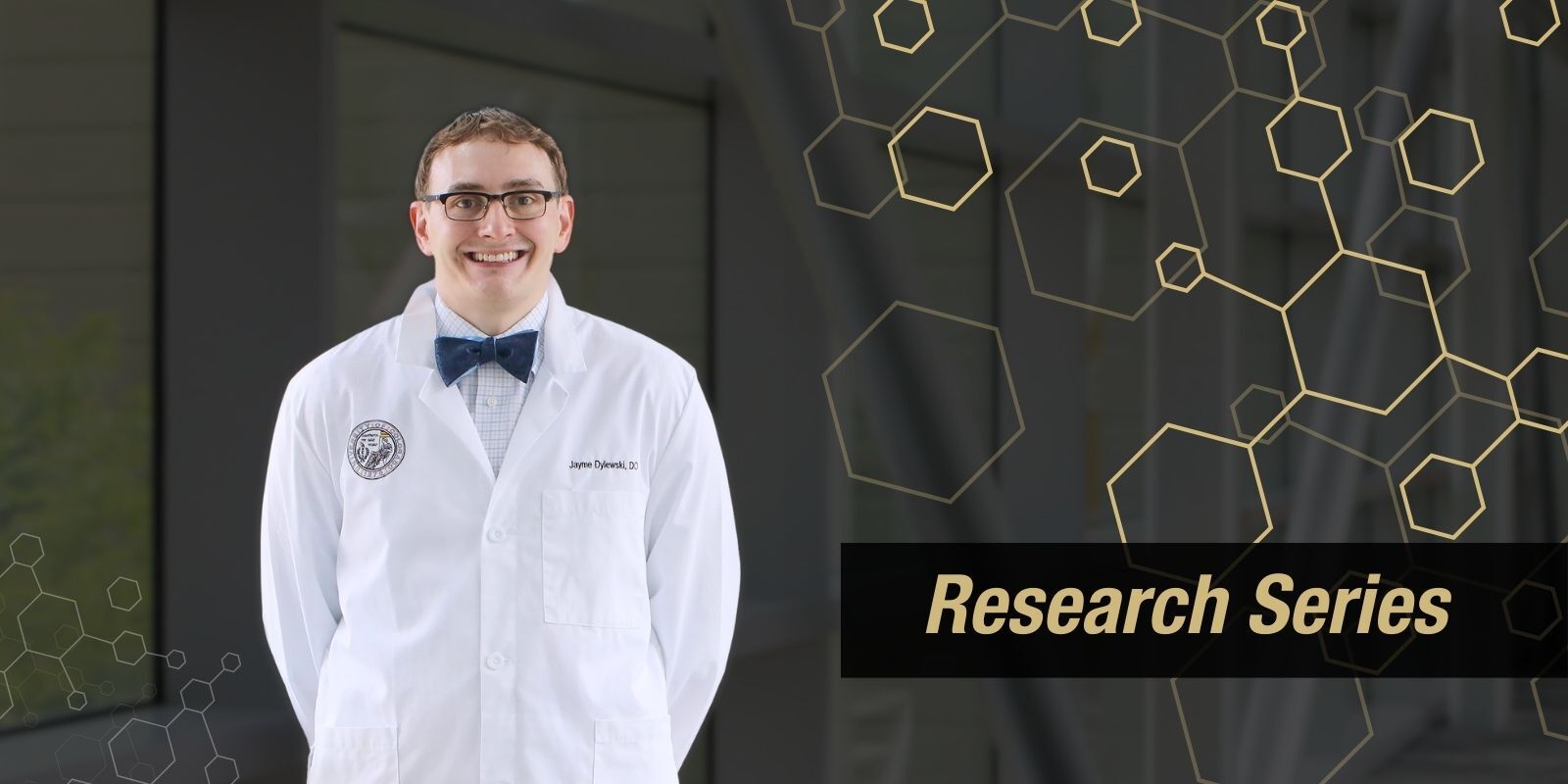
Nephrologist James Dylewski, DO, has one foot in the clinic and one in the lab – just the way he likes it. The associate professor of renal diseases and hypertension at the University of Colorado Anschutz School of Medicine focuses on glomerular diseases, most of which are rare.
Glomeruli, tiny filters in the kidneys, clean the body’s blood, but if they’re damaged, they can allow protein to leech into urine. This can cause a host of health challenges. There are a multitude of reasons why these diseases, under the umbrella of nephrotic syndrome, can manifest, but researchers aren’t exactly sure of their mechanisms and how they may play into treatment options.
“Sometimes the root of these diseases is genetic, sometimes it’s immune, sometimes it’s toxicity. Historically, we have lumped them altogether because we didn’t know how to parse them out,” Dylewski says. “That became very difficult for treating patients. If many different problems result in the same end point, but we don’t know how each individual person got there, treatments aren’t going to be all that successful.”
This has become the foundation for a group of researchers and clinicians, including Dylewski, who want to know more about these diseases, why the occur, and how to more effectively treat patients.
New discoveries with NEPTUNE
Each month, Dylewski joins a call with researchers from across the country to discuss data, potential biomarkers that may explain the spectrum of disease, and where patients may be a good fit for clinical studies through the Nephrotic Syndrome Study Network (NEPTUNE), a multi-year, multi-site collaborative study that conducts clinical and translational research on rare kidney diseases that are common causes of nephrotic syndrome.
The study may lead to new understanding for some rare kidney diseases, including focal segmental glomerulosclerosis, minimal change disease, and membranous nephropathy, which happens when the immune system mistakenly attacks the kidney’s filters.
Across all sites, there are more than 1,000 participants enrolled in the different cohorts of NEPTUNE. At CU, there are four patients enrolled in a portion of the study dedicated to Alport syndrome, a genetic disorder that affects the kidneys, hearing, and vision. To date, there is no cure.
→ Learn more about CU Anschutz School of Medicine's research community
Dylewski is also working on enrolling CU’s first patient to the MATCH trial, which seeks to pair participants with clinical trials that may be best for them by using their individual research data and samples collected from the NEPTUNE study.
Depending on the cohort, the study collects blood and urine samples and sometimes a piece of kidney tissue. The study follows patients for up to three years in an attempt to identify which stage of disease the patient is at to ultimately discover new targets for treatment.
“While their disease may be in remission, there may also be signs in their blood or urine that we haven't discovered yet, that may show a recurrence, or maybe a marker that this patient is going to stay in remission, and that can end up being a way for us to monitor these patients and other patients in the future,” Dylewski says.
Advancing the field
More than one in seven adults in the U.S. — about 35 million people total — are estimated to have chronic kidney disease. NEPTUNE, although committed to rare diseases of the kidney, is giving researchers more insight into these vital organs and helping to find effective treatments and doing it in a novel way. This may eventually lead to new knowledge that could inform treatment options for millions of people.
→ More research: Investigating the 'Dark Side' of Microbes in the Ost Lab
“The study encompasses so many different aspects, not only trying to solve a big problem that most people can't solve on their own, but it also helps us as researchers advance the field and find out new things and then take that knowledge and apply what we learned to patients and improving precision medicine and what works best for an individual,” Dylewski says.
The importance of this kind of research cannot be overstated, but it requires the willingness and dedication of patients who Dylewski says are often the best teachers because they’re the ones experiencing the symptoms and illness.
“We don't advance our understanding and ability to treat diseases without patients trusting us and thinking that this is going to be the next best thing,” he says. “While certainly it may not ultimately work, we learn from it not working. We find new things by testing and sometimes this ends up being the next golden treatment. If you're willing to take the chance, it helps us and helps anyone else like you.”