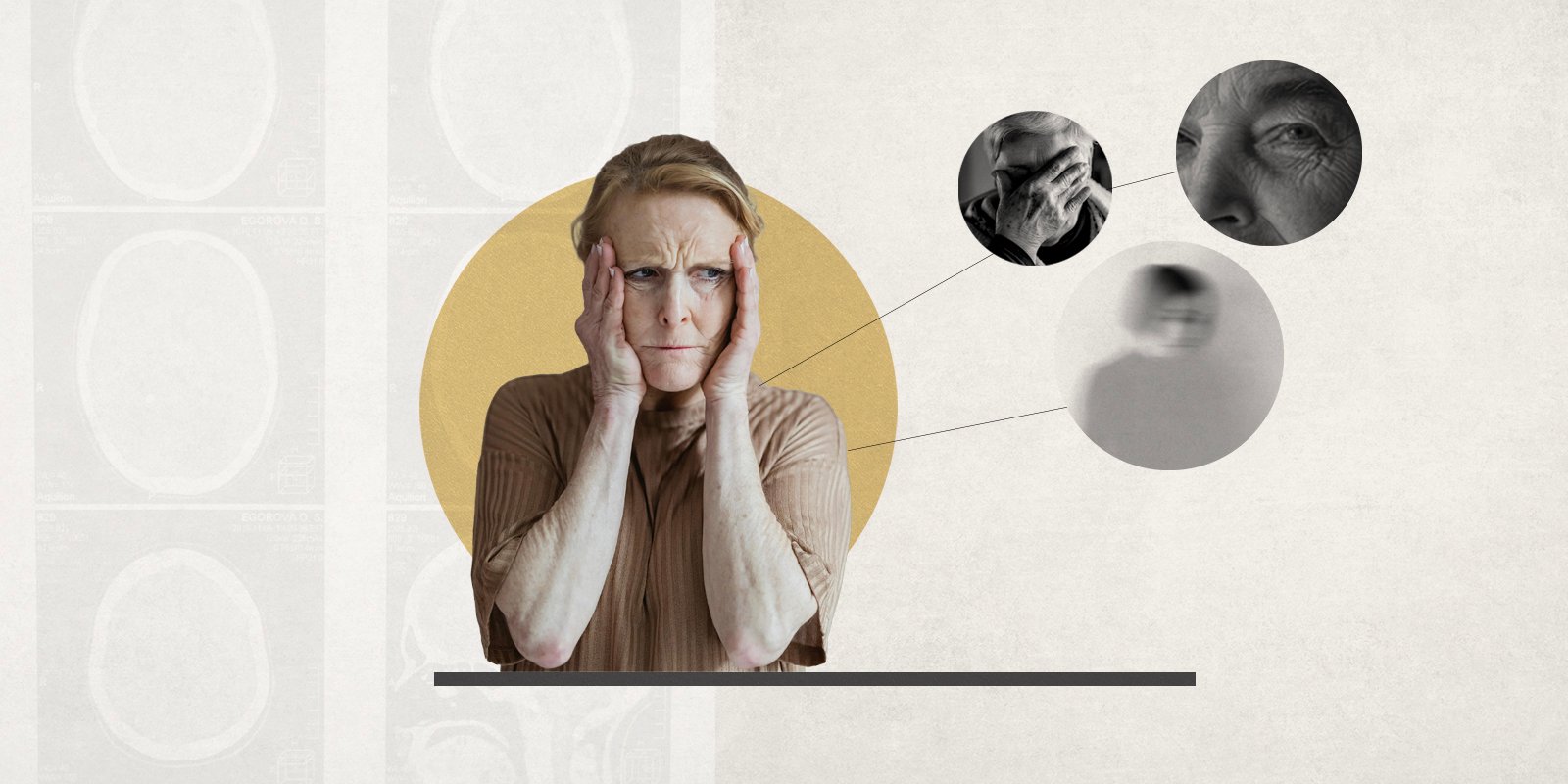
What are hallucinations in Parkinson’s disease?
Hallucinations are seeing, hearing or sensing things that aren't there. It's important to distinguish that hallucinations are coming about without any sort of external stimulus. By far the most common in Parkinson's is visual hallucinations, but sometimes a patient can have auditory, tactile, olfactory or even gustatory (taste) hallucinations. Common visual hallucinations tend to be the passage of someone or something in the periphery, small animals, insects, or people.
How do delusions present in Parkinson’s disease?
Delusions are fixed false beliefs not based on reality. Often, this presents like paranoia or even misidentification of someone or something:
- Jealousy or infidelity (the most common): suspecting that a spouse is having extramarital affairs or engaged in some nefarious behavior. We’ve seen this occur globally across cultures.
- Persecutory: feeling like people are out to get them.
- Somatic: believing that they have some sort of other illness or something physical going on or an injury that's not really there.
- Capgras syndrome or misidentification delusions: believing a loved one is an imposter.
Any and all of these types are extremely challenging for family or caregivers, because it’s so real to the person with Parkinson’s. There's really no talking someone out of it, despite all the proof you might offer.
What are illusions in Parkinson’s disease?
Illusions specifically are misperceptions. When you see something that is there visually and perceive it as something else – maybe a bedpost as a tree or a mailbox as a person.
Can these happen concurrently? Do they change?
They tend to be pretty consistent once a hallucination has now gone into other domains besides just visual and become more severe. The longer this persists and the more severe it becomes, they all kind of collect together.
For example, I knew a patient that started with an olfactory hallucination of smelling smoke. That evolved into a delusion where he believed that his wife was having an affair, and that the boyfriend was living in the attic and smoking. Eventually, he felt very confident that the boyfriend could come through walls and all sorts of things that couldn't happen in reality. This patient was a highly intelligent former professor that could not be talked out of this fixed elaborate set of hallucinations and delusions, especially as they stacked on one another. This really interfered with quality of life for everyone in the family and had to be addressed with medication.
How common are hallucinations, delusions and illusions in patients with PD?
Hallucinations are more common than delusions. However, delusions tend to be more severe and harder to address.
In terms of numbers, 20% to 40% of people with Parkinson's experience hallucinations or delusions at some point during the disease. But some broader studies, including the more minor symptoms like illusions, show a prevalence with even a wider range of 25% to 70% across the disease course.
With such a wide range, do we know what the particular causes or risk factors are for these different types of psychoses?
There’s growing evidence that suggests psychosis results from a few multifactorial disease mechanisms, such as:
- Neurodegeneration in visual and cognitive processing pathways.
- Imbalances in dopamine and serotonin neurotransmission.
- And structural brain changes in Parkinson’s disease.
However, there are some other risk factors and causes, including:
- Medications: Some medications can play a role, particularly dopamine agonists. Examples are ropinirole, pramipexole, rotigotine – those kinds of medications that trick the brain into thinking it's getting dopamine. These agonists can increase the risk of hallucinations, as can carbidopa/levodopa, our mainstay drug. So medication can unintentionally trigger psychosis symptoms, particularly in higher doses and in more advanced stages .
- Age and disease progression: Age, duration of time having Parkinson's, advanced stage of PD, cognitive impairment and certainly dementia can increase the risk of psychosis.
- Sleep disorders: These are pervasive in Parkinson's, and altered sensory processing and REM sleep dysfunction can also contribute to the risk of psychosis.
- Visual or hearing deficits: patients with significant pre-existing visual disturbances or hearing impairments may be more prone to hallucinations.
Why are hallucinations, delusions and illusions so dangerous in Parkinson’s disease?
There are many potential risks.
- Aggression, fear and unsafe behaviors: Especially with delusions, if somebody feels unsafe, they might start wanting to leave the home, get into a car and try to drive when they shouldn't be driving. Hallucinations can also cause or contribute to falls, wandering, or confusion.An example I’m familiar with is a patient who had a fixed belief that all of his belongings were coated in a filmy dust. He had a tactile hallucination, but the delusion part was he had an explanation for it. And he was found microwaving a book to try and get rid of these microbes that felt like dust. Of course, this creates a massive risk for a fire.
- Increased caregiver burden: Psychosiscan pose significantchallenges to caregivers. It does increase the risk of hospitalizations and one of the top factors for patients with Parkinson's to be placed in a long-term care facility is psychosis. It becomes difficult, if not impossible, for a single caregiver to manage for some people with severe symptoms.
Thankfully, it's not a given that this is going to happen to everyone. For some, they’re benign. I saw a woman recently who occasionally sees a cat in her house. She's OK with that. It doesn't interfere or scare her. It doesn't cause her to change her behavior. And that's not necessarily dangerous. We advise patients who have mild, benign hallucinations that if the severity suddenly worsens this is often the sign of a medical issue such as infection, dehydration, or side-effect from a new medication, for example. In such cases, once the medical issue is addressed, the psychosis improves.
When is treatment required for hallucinations, delusions and illusions in Parkinson’s disease?
Typically, when psychosis starts off as minor illusions, mistaking something and seeing it as something else, we don't have to treat it. However, if hallucinations and delusions that are bothersome, scary, or could interfere with safety then we absolutely have to treat them. Once there's a loss of insight,the care provider should also reassess and consider treatment. This is when the person no longer recognizes that this is not normal and starts potentially interacting with the hallucinations, potentially causing fear, distress, aggression or causing them to avoid doing things that they need to do.
What is involved with treating hallucinations and delusions?
Non-pharmacologic strategies are always a good place to begin.
First, we normalize it, name it and provide reassurance. When that progresses to mild non-distressing visual hallucinations like the cat I described, we don't necessarily have to treat that.
Then, we’ll talk through modifications at home, ensuring there's good lighting, reducing shadows, because shadows can lead to illusions and misperceptions, while also making sure that the patient has their proper prescription for any corrective lenses or proper hearing aids and that both are being regularly checked.
Adapting your home for Parkinson's Disease
In this story, Vaughan explains the alterations and adaptions to make around the house for Parkinson's disease.
After that, we look for triggers. If there are certain patterns or locations where these are more likely to become a problem, seeing things that aren't really there, misperceiving things in certain rooms, addressing that.
We also want to be looking at educating about other aspects as previously described,for example, infections can make hallucinations suddenly get worse. So we try to educate folks to look out for that and have check basic labs checked and make sure there's no metabolic derangement or anything else going on.
If those baseline things have been addressed but the psychosis persists and is becoming problematic, we’ll consider medication.
What if medication is needed?
First, we’ll look at a current regimen and see if there needs to be adjustments. Certain neurologic medications are more likely to contribute to psychosis than others: those with anticholinergic properties (trihexyphenidyl, amantadine), MAO-B inhibitors, dopamine agonists (as previously listed above), COMT-inhibitors, or even levodopa itself.
We would look at adjusting or stepping down these medicines, one at a time and gradually.
As a last step, we’ll add medication to help with the psychosis. However, we're fairly limited in terms of antipsychotics to help with this in the setting of Parkinson's or Lewy body disease, because most medications to treat psychosis block dopamine. Parkinson's is a largely dopaminergic disease where we're trying to replace dopamine. There are three antipsychotic drugs (pimavanserin, quetiapine and clozapine) that are safe to use but they have different pros and cons. Other antipsychotics out on the market, like risperidone or haloperidol can worsen motor symptoms and need to be avoided in Parkinson's and in Lewy body disease.
Do you have any caregiver tips for hallucinations, delusions or illusions with Parkinson’s disease?
Yes, as much as possible:
- Respond calmly and without judgment.
- Reassure rather than trying to confront these false beliefs or hallucinations.
- Maintain routines.
- Reduce sensory overload, especially in the evening.
- Track symptoms for any patterns or obvious triggers and communicate that with the providers, including any medication, sleep, infections.
Ultimately, Parkinson’s is a journey. Learn from each other, especially those going through it, so you can learn about more helpful strategies.. Your neurology team can absolutely help to identify and manage symptoms of psychosis and this can have a significant benefit to quality of life for both the person living with Parkinson’s and their loved ones.