

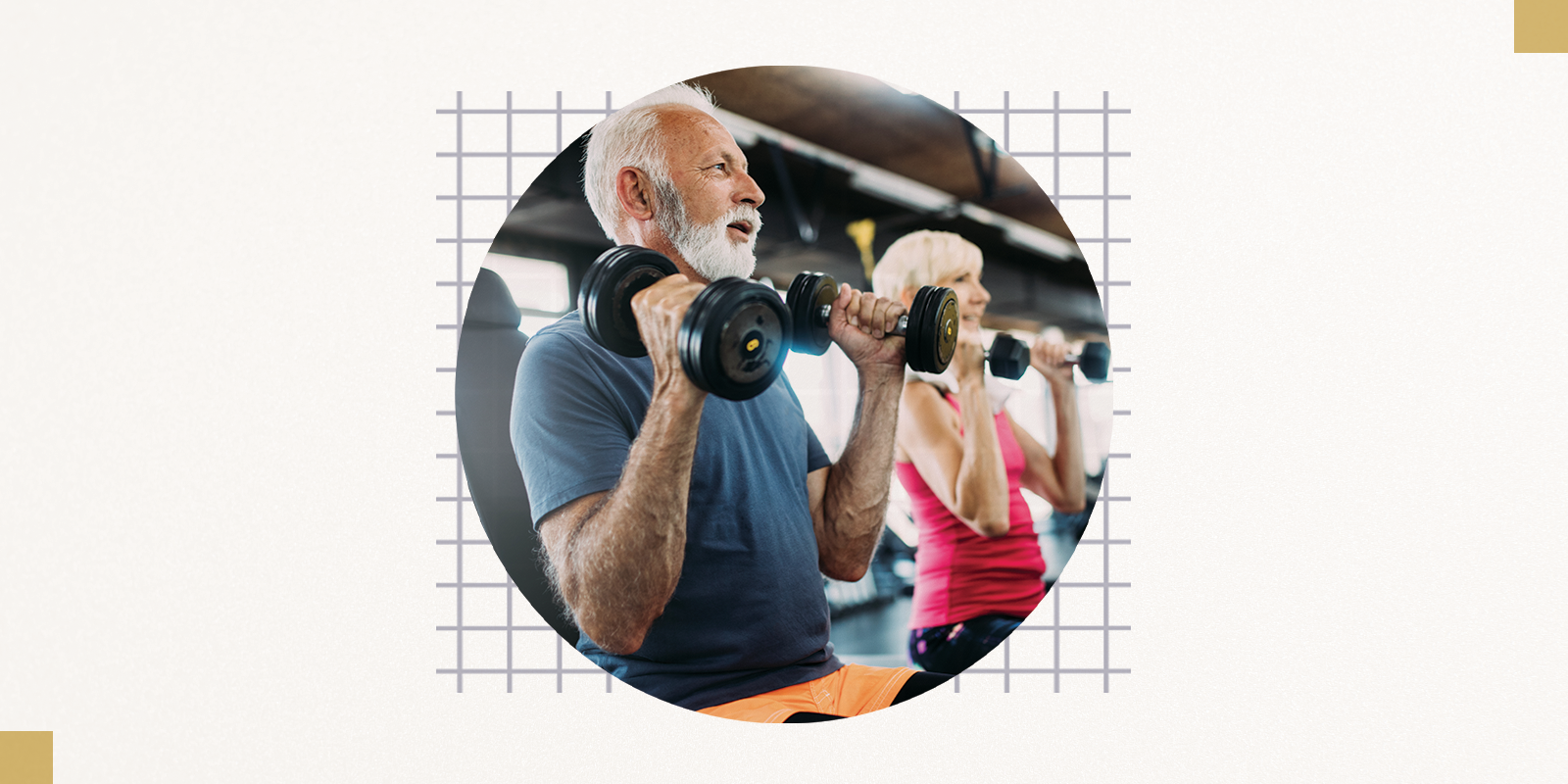
As the popularity of GLP-1 medications rises among her older adult clientele, Sarah Wherry, PhD, has noticed a serious oversight – many providers fail to emphasize the importance of strength training as they prescribe the weight-loss drugs.
The exercise physiologist and assistant professor of geriatrics at the University of Colorado Anschutz School of Medicine has dedicated her career to helping older people maintain health and quality of life. With age-related muscle loss (sarcopenia) being a primary driver of poor aging, resistance training has always been one of her top recommendations.
Weight loss – especially the quick and substantial loss that can come with GLP-1 (glucagon-like peptide-1) drugs – makes weight training in the golden years even more important.
“We are now starting to see these medications more frequently used in older adults for weight loss. What we know about GLP-1s for everyone, not just for older adults, is they're going to cause some bone loss, and they're going to cause some muscle loss. This is not specific to GLP-1s. This happens any way that you lose weight,” Wherry said.
“But the problem we're facing right now is, when people are starting these medications, they're really not getting a lot of guidance about what they should be doing in terms of exercise. They're told they should exercise, but that's all they get, and they don't really know where to start.”
Wherry, who took time away from writing grant proposals for studies focused on learning more about GLP-1’s effects on older people, shared recommendations for all older adults ready to join the growing strength-training movement.
How heavy should my weights be, and how many sets should I do?
Doing light weights with high repetitions can help with muscle endurance, but it's not really going to improve strength. With muscle loss, if you want to try to slow that loss or potentially build some muscle, you do need to be doing fewer reps at a heavier weight. The recommendation is a weight that you can lift only eight to 10 times. At that 10th repetition, you should feel like you can't continue. We frequently tell people three sets with eight to 10 repetitions. But that's the goal. It's OK to start with one set of six repetitions, or even less, and work your way up.
Should I use weight machines or free weights?
I prefer that people use what they're comfortable with. Just because that's what you start using doesn't mean you have to use that forever. What’s nice about weight machines is they tend to be user-friendly. It's a little bit easier for someone, especially as they're new to lifting weights, to be able to control that movement and get through a full range of motion. The benefit of free weights is they force you to use muscles beyond those that you're intentionally working with the weight itself. So, if you're doing a bicep curl with the free weight, you're also engaging your core and your lower leg muscles to help with that stance and that stability.
Do I need to warm up before strength training?
Yes, it’s important to not just go straight to the weight room. Walk on a treadmill or ride a stationary bike for five to 10 minutes. Or if you're doing these at home, do activities like arm circles or walking in place. We want to improve blood flow and have those joints loosened up so that you're able to get through that full range of motion.
How can I prevent injury from weight training?
If you're new to this, or it's been a while since you've done any type of strength-training program, start with body weight or really light weight. The most important thing is that we get your form correct. This is where it can be helpful to work with an exercise professional, especially someone who's experienced working with older adults. They can help modify an exercise according to underlying medical issues or past injuries.
Once you really get that form down, and you feel comfortable and safe with the movements, that's when we start aiming for that weight that you can lift about eight to 10 times in that single set. Also, make sure you're talking to a trusted healthcare professional before you start an exercise program. They will be able to provide some sort of guidance or suggestions on exercises to avoid and safety considerations. It’s also important to tell any exercise professional you’re working with about any medical conditions or injuries.
Can’t afford a personal trainer?
Sarah Wherry, PhD, suggests finding a class, program or reputable exercise video online focused on older adults for people who cannot afford personal training. For instance, Wherry is the director of Exercise Program Quality and Delivery for the local Gerofit program, which is a national VA program for older veterans that the CU Anschutz Health and Wellness Center hosts in partnership with the Rocky Mountain Regional VA Medical Center on campus.
- Gerofit also has exercise videos posted on YouTube that people can access at no cost, she said. They require small investments in equipment, such as resistance bands and dumbbells, or people can find alternate items at home, such as milk jugs or cans, she said.
- SilverSneakers is also a top program for people 65 or older and enrolled in a Medicare program that does a great YouTube video series on exercises for older adults that anyone can access, Wherry said.
How can I tell if I’m doing something wrong when lifting weights?
Make sure that you're listening to your body. Sometimes people jump in too quickly. Exercise is uncomfortable, a challenge, but it's not supposed to be painful. If there’s pinching, grinding with pain, or things that just don't feel quite right, it's OK to back off and talk to someone or modify your exercise. Your long-term progress is going to be better if you go slowly, learn the movements and progress gradually than if you go in trying to do too much too fast and end up getting injured.
How else can I make sure I progress in strength training?
Stick to a routine. Many times when I ask people who are frustrated with their progress what they are doing, they are not doing the same exercise every time. It's really hard to see or notice progress if you're doing different exercises every time you go. Have a set of the same exercises so that you're getting used to a stimulus, you’re working on that form, you’re progressing your strength. When you hit a plateau (after several weeks of consistently training at least two days per week), you can add different exercises or make what you’re already doing more challenging.
Can I actually decrease muscle loss from weight loss with strength training?
With GLP-1s, the data is not in yet. That’s part of what my proposed studies will focus on, if I get the funding. Based on regular weight loss and bariatric surgery data, there is a likelihood that resistance exercise will be able to attenuate some of that loss, though it’s unlikely that it will fully prevent it. But even if you're not able to prevent fully the loss of these tissues, strength training may help you maintain the quality of those tissues. It helps your body adapt. It challenges you. It helps with your strength and function, even as some of these tissues may be going down.
Seven Foundational Movements for Functional Strength Training
Most of Sarah Wherry’s clients aren’t coming to her for resistance-training guidance to bulk up or slim down. They just want to be strong enough to continue living well.
“When we think about a complete strength-training program, there's usually seven foundational movements: a hinge, a push, a pull, a squat, a carry, a lunge and a twist,” said Wherry, PhD, an exercise physiologist and scientist focused on aging. “These are all foundational movements of day-to-day life.”
For a total body workout, she suggests a routine with one exercise from each category two to three times a week. The exercises can also be divided into two shorter sessions. Just avoid working the same muscle groups two days in row.
See one example for each of the seven foundational categories in the photo carousel below. (Note: Always seek professional intruction before performing an unfamiliar lift.)



%20(1).png)

.jpg)