What is exploding head syndrome?
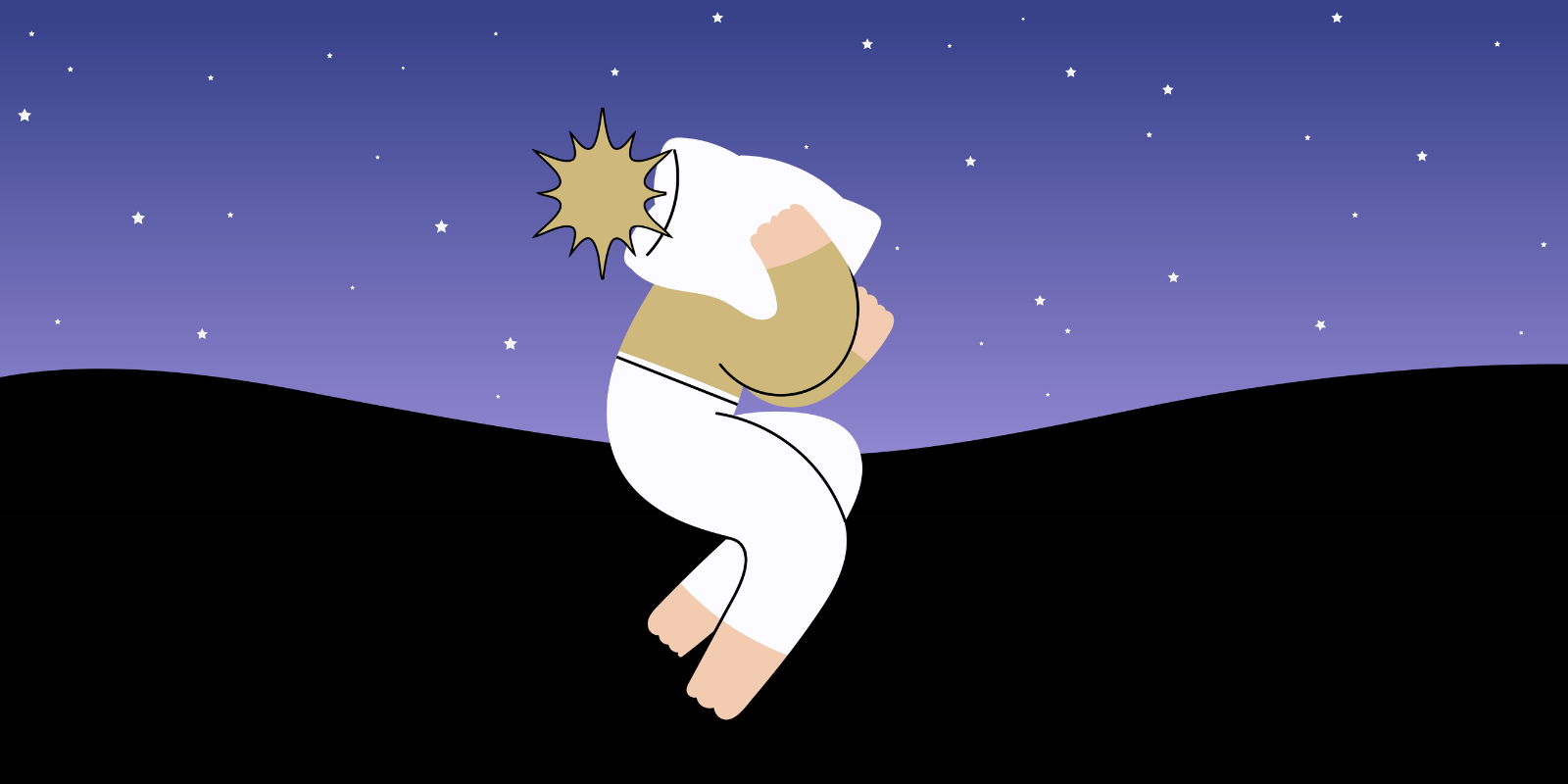
EHS is where a person hears a sudden loud noise, typically while falling asleep or sometimes – less frequently – when waking up. The descriptions of the sound are unique, but people frequently describe loud bangs like gunshots. Others hear a sudden buzzing sound, glass breaking or thunder. There's a variety of sounds patients report, but the common element is that they are very loud.
EHS is something called a parasomnia. A parasomnia is a sleep disorder with abnormal movements or behaviors and/or experiences when either falling asleep or waking up. According to the sleep medicine classification system we use as providers, it is defined as a “sleep-related hallucination” with the noise causing you to be fully awakened. It is also associated with excessive daytime sleepiness.
Despite the dramatic name, it typically is not associated with any actual pain or any physical harm whatsoever. Still, I can't call this an entirely benign disorder. With people who regularly have EHS, they're not getting enough sleep. They're scared to sleep.
Is there a spectrum to the symptoms of EHS?
There's definitely a spectrum, from frequency to intensity. Some people will have this on a nightly basis, creating a terrifying concern and anxiety that makes a normal bed routine challenging. Others can experience it monthly, yearly or only once in a lifetime. In general, however, it is very mild and often resolves on its own, often within a month or so.
Besides the loud sound, there can be other symptoms such as sleep paralysis, visual phenomena, sensations in your muscles.
Who experiences EHS and how common is it?
It happens in all ages, but the typical age group is middle age. And in at least one study, it's shown that there's a slight female preponderance, but very slight. Although it was rare in the past, what recent studies have shown is that between 10% and 15% of the population will have at least one event of EHS in their lifetime. With regards to those who will have the recurrent syndrome, that's much smaller, between 1% and maybe 2% of the population.
One of the biggest challenges in the field is often nobody's heard of this before. So providers historically dismissed it as if it was of no consequence, which led to patients saying, “This can’t be real; I’m not going to tell anybody about this because it’s too embarrassing.”
Now, with more public case studies and physicians being educated – even the public becoming more educated about sleep disorders – it is becoming more and more prevalent.
How is EHS diagnosed?
There’s no test currently. It doesn't show up on blood work, an MRI, an EEG, none of that. It has a long history and wasn’t a formal diagnosis until relatively recently.
EHS was originally described by an American neurologist, Silas Weir Mitchell at Columbia, back in the 1870s, but he called it “sensory discharges.” Subsequently, John M.S. Pearce, a doctor at Hull Royal Infirmary in the UK, called it exploding head syndrome in 1989, but it didn’t get diagnostic criteria until 2014.
Throughout all this, it was considered benign, and not a lot of people had studied it – despite the stress, anxiety and loss of sleep it can cause for some patients.
What are the potential causes of EHS?
We still don’t know the exact cause. However, we do know that there's abnormal firing of certain components of the brain during EHS. The tricky part is when we fall asleep the brain changes how it fires. As a result, you have to interpret all these signs within that context.
For example, as a field we’ve looked at something called the NMDA receptor. It’s a receptor set that may be involved because of the misfiring of the arousal parts of the brain, particularly in the sleep-wake transition. Alongside that, the limbic system may be connected where it’s not shutting off correctly when someone is falling asleep.
The stimulation itself could also be coming from the temporal lobe where our bodies have auditory components that are processing different areas that can both impact on hearing as well as sound generation.
The middle ear in and of itself can have some level of involvement. There have been some studies showing that the muscles that are in the inner ear have abnormal contractions, and that has been associated with EHS. The question, of course, is whether or not it's a cause or an effect, so we're not sure, but at least that's something that's been associated with this.
Stress has been associated with exploding head syndrome, subsequently allowing for arousal systems to be promulgated during sleep.
Why is EHS so difficult to treat and what are the options?
One of the biggest components of treatment is you have to know what you're treating. With EHS, we don't know exactly what's causing it – the true pathophysiology. Is it a specific localized issue, or more chronic because of brain lobe issues?
Because we don’t understand the root causes so far, we tend to be reductionist. The other component of it is since we don't have great diagnostic criteria, we only have clinical criteria to be able to say, "Great, it worked." It’s patient by patient, not formalized data so far.
We tend to emphasize something called sleep hygiene – basically good sleep behaviors, and almost everything that we do in sleep. Only when those aren't successful do we go into medications.
Because of the way the brain and arousal system work, we use certain types of antidepressants, as well as calcium channel blockers that are used for hypertension. In order to see whether or not those will work, we use a popular drug nowadays called gabapentin. And they work to a certain extent, but it's pretty much anecdotal.
What’s recovery like for EHS?
A lot of the time the prognosis is good as EHS goes away on its own. We tend to reassure patients that this is not harmful and emphasize good sleep behaviors going forward.
You recently published a case study alongside colleagues that treated an EHS patient with ketamine. What were the results?
This case study looked at a 75-year-old individual who had been struggling with EHS for over five years. He would experience EHS multiple times a week, with thunder sounds, sleep paralysis, visual phenomena, lightning-like sensations and excessive daytime sleepiness. I recall him saying, “I'm afraid to fall asleep.”
We had tried several medications – including gabapentin and amitriptyline – and nothing was effective. This led us to work with this patient and try ketamine as it affects the receptor I mentioned earlier – the NMDA receptor. Our thought was that if we were able to regulate the arousal in this area, we might be able to address his EHS by interrupting some of that pathologic activation.
After starting on the low-dose ketamine, which was a sublingual administration, the frequency of his EHS episodes started to decrease. Over a roughly six-month period, his anxiety, the sleep paralysis and EHS started to decrease in frequency and intensity, then went away.
He said, "I've literally got my life back. I'm not worried anymore."
Now it’s important to note: this is an anecdote, a case study. We need to investigate this more to actually see whether or not we can impact EHS in a more rigorous fashion with clinical trials that look at these kinds of agents that might be helpful with this particular disorder.



.png)
%20(1).png)
.jpg)