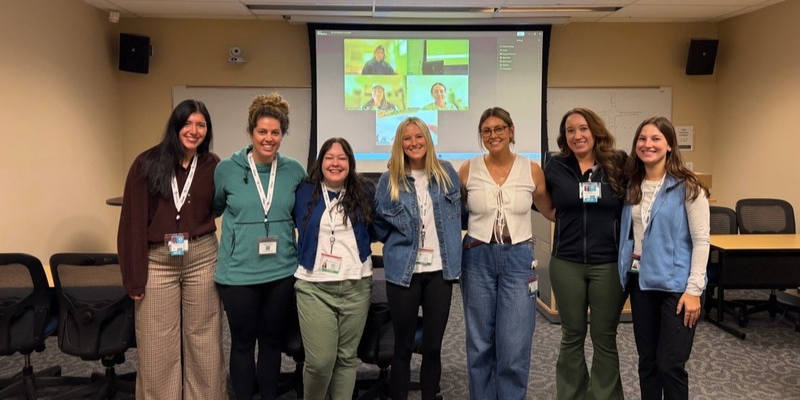
The University of Colorado Anschutz College of Nursing’s Primary Care Pediatric Nurse Practitioner class of May 2027 is a uniquely close-knit cohort. They support each other and have built strong friendships – all while being mostly remote.
Usually, they see each other on a Zoom screen, but once a month, the local members of the cohort meet on campus for classes.
For more than 30 years, CU Anschutz Nursing has offered graduate nursing education in a format that makes advanced degrees accessible to students regardless of where they live. While that flexibility allows the college to attract students from across the country, it can also make building personal connections more challenging than in a traditional campus-based program.
Faculty intentionally create opportunities for students to come together, helping foster the sense of community that this cohort has embraced. One of these faculty members is Dr. Jennifer Rosen. She is the specialty director of the Pediatric Primary Care Nurse Practitioner program.
“What makes our programs truly unique is the diverse group of learners we attract, each bringing valuable clinical experiences and perspectives from communities across the metro area, throughout our state, and across the region,” she says. “Because much of our coursework is delivered online, we are intentional about creating opportunities for students to connect, collaborate, and build meaningful relationships. These connections become an important source of support throughout the program and often evolve into lasting professional networks.”
Casey Garcia says it took some time to grow their connections, but having in-person meetings made a huge difference.
“This in-person connection has been so great, and I think we're all pretty social. I think our faculty have also been really helpful in trying to bring us together even outside of these days,” she says.
Rosen has organized social events like group Pilates classes and ski days for the cohort.
“I could tell instantly that this cohort was cohesive. While they may connect with each other outside of class, what stands out most to me is how engaged they are during our in-person days,” she says. “They ask great questions, build on each other’s ideas, and genuinely support one another’s learning. In graduate education, the tendency can be towards a competitive environment. I am thrilled by the culture that this cohort has created for our program.”
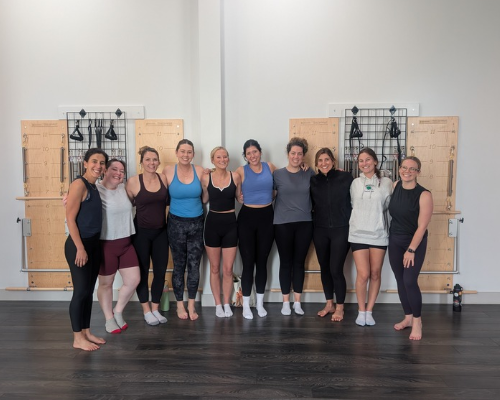
Dr. Jennifer Rosen organized a group Pilates outing for the cohort. |
The cohort has started finding more times outside of class to get together.
“We try to do things that are not just school-related, that are just for pure fun. But I feel like that helps us too. Just to remember that we're all just people enjoying each other's company without school,” says Samantha Haimbaugh.
Haimbaugh says being a graduate student with lots of responsibilities can be isolating, especially when she's not surrounded by other students in her personal life.
“There's no built-in group like there was for a lot of your schooling previously,” she says. “I think having people that know exactly what you're going through and can support you is huge because your relationships outside of this, like they can support you, but they don't fully understand.”
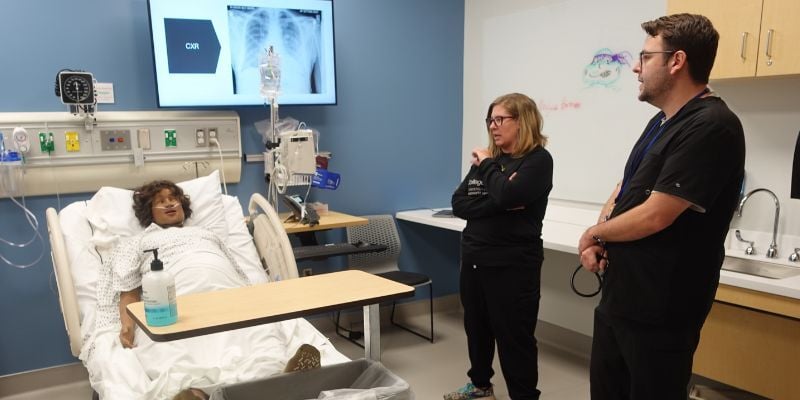
These relationships also have academic benefits. Deborah Holloway says collaborating during in-person learning exercises has strengthened her connections with her peers.
“The program has simulation days where we walk through some simulations together or in small groups, and I think that that helps too because we can learn alongside each other and kind of see that we're all walking the path together,” Holloway says.
They all joined the program to provide advanced care for children. But each person took their own path to get there. For Haimbaugh, the clinical rotations and the flexible schedule were major draws to the program.
“CU Anschutz Nursing organizes the clinical rotations, which was a big draw for me. So we didn't have to find our own rotations, and then the fact that it was hybrid, as far as online and in-person learning, I thought that was really flexible,” she says.
When Garcia realized she wanted to be a pediatric provider, she was excited to find that the CU Anschutz Nursing program was exactly what she was looking for.
“Pediatric primary care as a nurse practitioner program is actually very rare around the country. Colorado has also always stood out as a wonderful location,” she says.
Each person came to the program with differing health care experience. Marissa Young says the wide range has helped inform the group on specific topics.
“We all have different things that we draw into and can support each other, especially in different modules. In a sense we have a lot of different experts to learn from,” she says.
As they think ahead to their future careers after graduation, there is a common feeling of figuring out their next steps together. Many students say it will be nice to not feel so alone while applying for jobs or preparing for interviews.
“We will all be able to reach out to someone, and ask ‘what do you know about this?’ or just to get more education on a topic,” Kira Charrier says. “It’s so important to have that support because being a new provider can be really overwhelming.”