For 15 years, Dan Pollyea, MD, MS, has been treating patients at the University of Colorado Anschutz Cancer Center, including those with a stubborn form of fast-growing adult leukemia called acute myeloid leukemia (AML).
Over those years, Pollyea says, the relationships between clinicians and their AML patients have changed in a key way: These days, the relationships often last longer.
In the 1990s, older patients diagnosed with AML had a median survival period of two months and a two-year survival rate of 6%, a 2002 Boston Health Economics study showed.
Pollyea recalls that when he was a trainee in the early 2000s, “the conversations with patients with AML were pretty grim. We were talking about either very toxic therapies, or therapies that had very little chance of success.”
Today, he says, “it’s a very different conversation, a different tone. We have a lot of optimism when we first diagnose a patient that we’re going to understand what's making their disease tick, and that we’re going to find a really effective treatment for them. We have long-term AML patients, which used to be rarely possible. There’s still a lot of work we need to do, but we’re so much better off than we were.”
Now, when patients do well, Pollyea and his colleagues “have these longitudinal relationships with them that leukemia doctors didn’t used to have. In my clinic now, this patient was diagnosed three years ago, and that patient five years ago. These are long-term AML patients, which used to be rarely possible. It’s a much different vibe.”
As the CU Anschutz Cancer Center’s clinical director of leukemia services and holder of the Robert H. Allen, MD, Endowed Chair in Hematology Research, Pollyea is one of many clinicians and scientists at the cancer center who have made the search for answers to AML a mission.
Their work has led to new treatments and new hope for patients. It has also helped build a global reputation for the CU Anschutz Cancer Center in AML research and treatment.
Forging a partnership
“We are definitely leaders in this area,” says James DeGregori, PhD, interim director of the CU Anschutz Cancer Center. “Over the past 15 years, we’ve been making major contributions.”
DeGregori points to the cancer center’s multi-year Specialized Center of Research (SCOR) grant from Blood Cancer United (formerly the Leukemia & Lymphoma Society) that funds AML research in several labs. He calls the grant “an extremely prestigious team award that demonstrates the impact we’re having in this area.”
As key players tell it, the cancer center’s progress against AML stands on years of building a talented team in the lab and the clinic, of encouraging innovation and fresh thinking, and of fostering a spirit of collaboration.
Along the way came the forging of a professional partnership between Pollyea and Craig Jordan, PhD, his colleague in the CU Anschutz Department of Medicine’s Division of Hematology, who leads the SCOR grant. Their work and that of others has broadened understanding of leukemia stem cells, a type of therapy-resistant cancer cell that often causes AML to come back after treatment makes it go into remission.
Changing the field
A decade ago, Pollyea, Jordan, and their colleagues were pivotal in developing the drug venetoclax (Venclexta) as a standard-of-care AML therapy, and research continues into finding ways to make the drug work better for more patients. They also have worked to understand how leukemic stem cells help AML resist treatment, and how that resistance can be overcome.
New talents have brought fresh ideas to the AML mission, such as physician-scientist Maria Amaya, MD, PhD, who worked in Jordan’s lab and is now both a leading investigator and a clinician treating leukemia.
“I got here in 2015 as a trainee, when the AML group was a lot smaller,” says Amaya, an immigrant from Venezuela. “Now we have several AML doctors, and more researchers, too. We have led a lot of clinical trials that are changing the field. A lot of people are looking up to us to see what new things we're doing.”
On the clinical side, the cancer center offers patients seasoned specialists, Amaya says. “We see a lot of cases each year, which helps improve our expertise in treating patients. And here you have access to a lot of clinical trials, which are important for any cancer, but particularly for AML. I always recommend that patients come here first.”
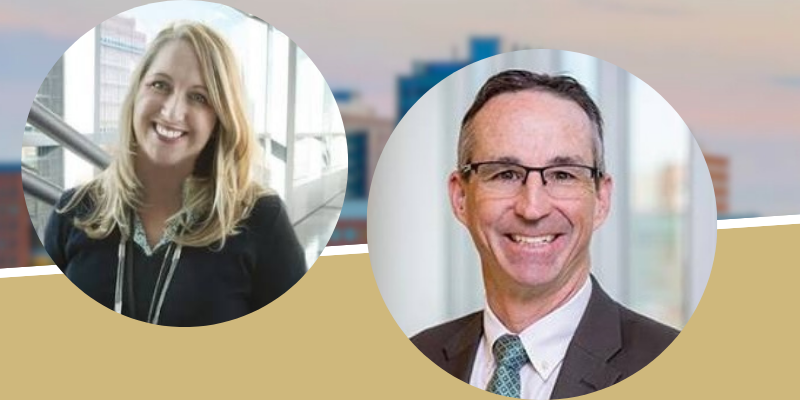
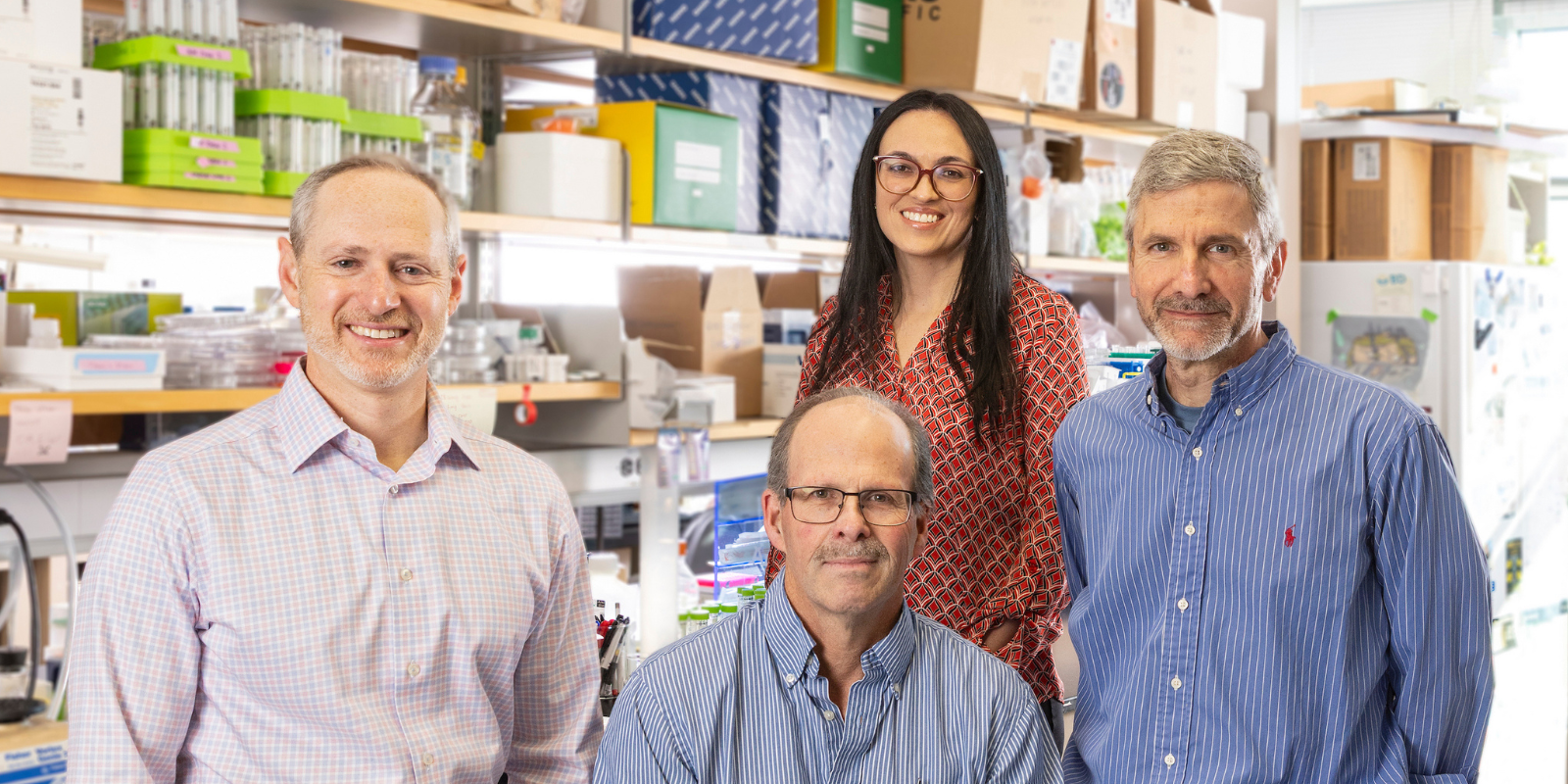
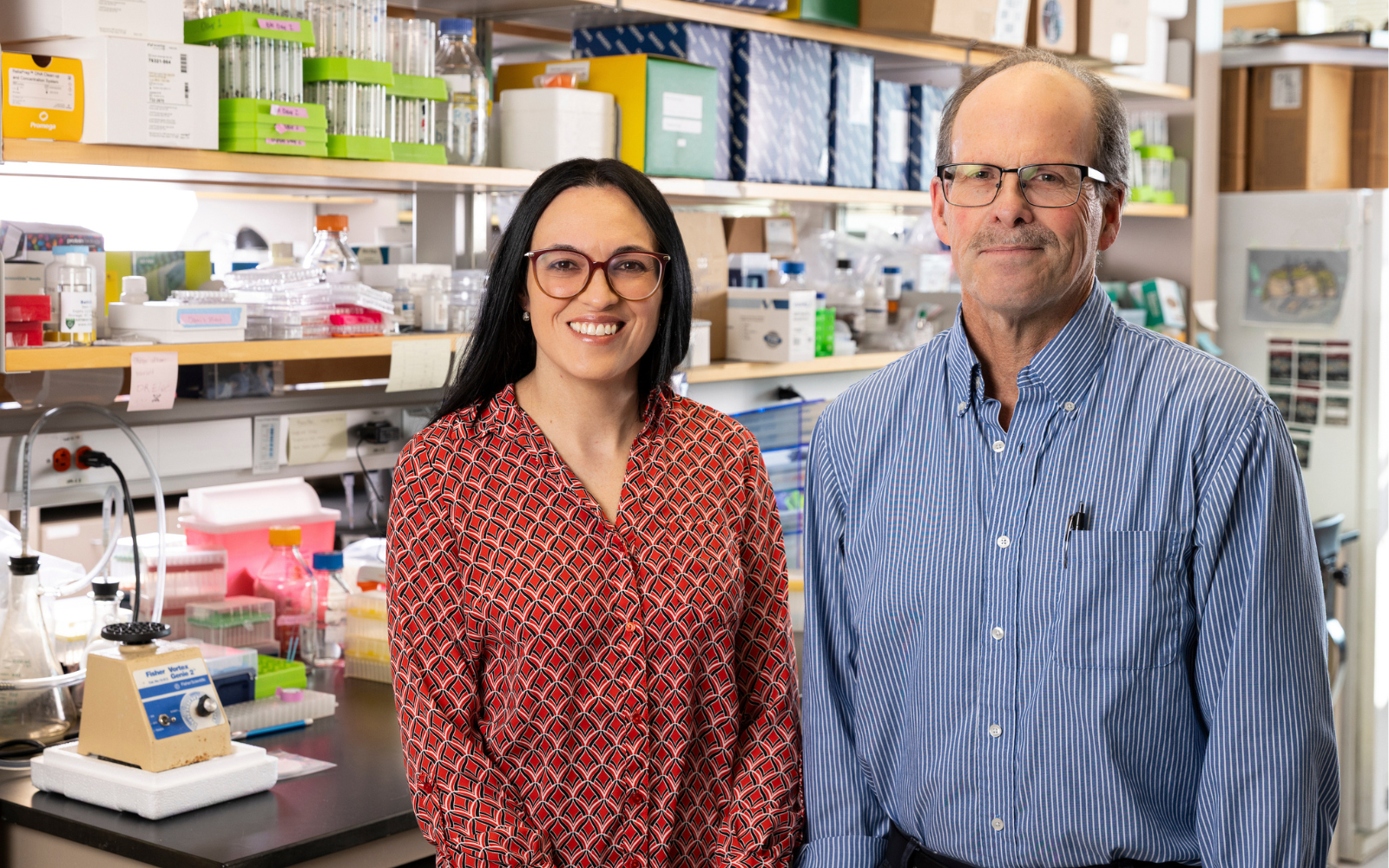
Photo at top: From left, Dan Pollyea, MD, MS; Craig Jordan, PhD; Maria Amaya, MD, PhD; and James DeGregori, PhD, in DeGregori's lab. Below: Amaya and Jordan. All photos by Justin LeVett for the CU Anschutz Cancer Center.
What is AML?
Leukemias are a group of cancers of the blood. AML is one of the most common forms of leukemia in adults, accounting for about one in three adult leukemia cases. The disease is uncommon among people under age 45, and the average age at first diagnosis is 69, according to the American Cancer Society (ACS).
AML starts in the myeloid tissue of the bone marrow, the spongy material inside bones where new blood cells are made. Usually, it develops in early forms of myeloid cells that would normally become infection-fighting white blood cells, then moves rapidly into the blood.
"Acute" means the cancer is fast growing, as opposed to "chronic" (slower growing). Sometimes AML can spread to other parts of the body, including the lymph nodes, liver, spleen, brain, spinal cord, and testicles.
The ACS estimates that about 22,720 people in the United States will be diagnosed with AML this year (out of 67,790 leukemia diagnoses), and about 11,500 will die from the disease (out of 23,910 leukemia deaths).
Weeds in your lawn
Jordan says the combination of chemotherapy drugs still used today to attack AML was developed more than 50 years ago. “They can knock down the tumor pretty well for a while in many patients, but the majority will relapse,” he says. Also, he says, these drugs have major side effects.
Jordan compares traditional AML treatments to “running your lawnmower over weeds in your lawn. You cut off the top of it, but you don’t get the root, and it grows back. The biological organization of AML is the same. We have many therapies that cut off the top of the weed. But if you don’t kill the root, it’s going to come back.”
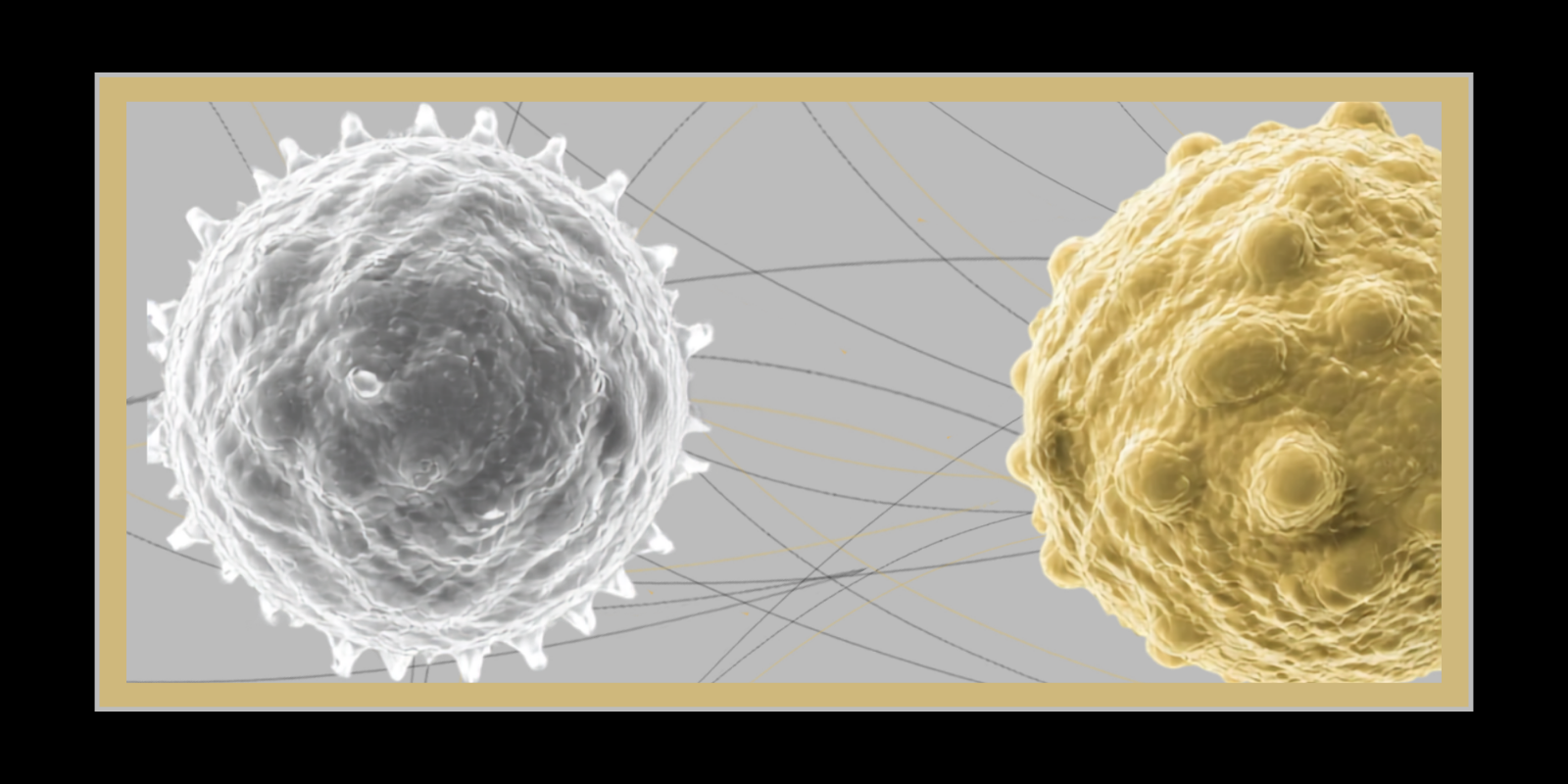
The “root,” in the case of AML, is the leukemic stem cell—a rare subset of AML cancer cells that can trigger relapse after the cancer has been treated with chemotherapy. They often lie dormant during initial AML therapy, evading the impact of treatment, and then spring to life later, causing a relapse.
That’s why therapies targeting leukemic stem cells and warding off relapses have long been “a huge priority for the field,” Jordan says.
At the same time, Amaya says, CU Anschutz Cancer Center researchers have been working “to find therapies that are effective but also better tolerated by patients. We want them to have a longer life, but also better quality of life. And a lot of treatments we’re investigating are pills, not chemotherapy, which helps to make them accessible to patients across Colorado.”
On the same page
Jordan joined the CU Anschutz School of Medicine in 2013 as head of the hematology division, two years after Pollyea joined the faculty. Jordan “really organized our AML efforts,” DeGregori says, “and has been a leader, not only in bringing us together, but also in keeping us focused on key missions.”
hen Jordan arrived, he says, “the adult hematologic malignancies program on this campus was quite fragmented. The Department of Medicine chair at the time, David Schwartz, MD, wanted to reconstitute a unified Hematology Division. He took an unconventional approach by appointing me to lead the research and academic part of the program, and Clayton Smith, MD, to lead the clinical operations of the Hematology Division.”
Working closely together, Jordan and Smith led a massive expansion, building out comprehensive research and clinical teams.
“What’s particularly special about this is the clinical and the research programs are extremely well integrated here,” speeding the bench-to-bedside translation of lab research to the clinic, Jordan says.
“Everybody talks about doing that, but it's actually quite hard to do,” he says. “Back in 2013, we were very intentional about building a leukemia community where those two worlds talk to each other. Because being a laboratory scientist and being a medical doctor are totally different jobs. So working closely together on things that will improve patient care is very hard to do. Bench to bedside is something we walk the walk on.”
Pollyea says he and Jordan “agreed early in our working relationship that we were going to develop something unique here. It’s not like you’ve got two different teams in the lab and in the clinic that don't intersect, coming up with their own ideas. Here, everybody is on the same page.”
Dan Pollyea, MD, MS
The path to venetoclax
A prime example of that spirit of collaboration is the work Jordan and Pollyea did on a breakthrough in treating AML.
In 2016, the U.S. Food and Drug Administration approved venetoclax for treatment of certain cases of chronic lymphocytic leukemia—a slow-growing cancer that’s the most common form of leukemia in adults—that had relapsed or that didn’t respond to initial treatment.
Venetoclax works by inhibiting a protein called BCL-2, which helps cancer cells resist chemotherapy and survive. The drug binds to BCL-2, releasing other proteins that trigger cancer cell death.
“The drug company that was developing venetoclax for other reasons didn’t appreciate that it might work for leukemia stem cells, which is something we recognized some time ago,” Jordan says.
Pollyea led the first clinical trials testing venetoclax as a single agent in certain cases of relapsed disease – trials that produced intriguing results. But when venetoclax was used in newly-diagnosed patients and combined with a low-dose chemotherapy called azacitidine, the results were “amazing,” Jordan says.
The resulting milestone paper in 2018 – co-authored by Pollyea, Jordan, and more than a dozen of their CU Anschutz colleagues—reported that “venetoclax in combination with azacitidine results in deep and durable remissions and is superior to conventional treatments” for older AML patients.
'Absolute heroes'
“The early clinical trials conducted by Dr. Pollyea and others were the dawn of the venetoclax era,” Jordan says. “It’s much less toxic than conventional chemotherapy, so can be given to frail or elderly patients who cannot tolerate chemotherapy.”
“Some of our hypotheses about how we could use venetoclax weren't necessarily part of the conventional wisdom several years ago,” Pollyea adds. “It’s exciting to see how many of our theories were correct, and to see how others in the hematology community have built out parts of the story that are very complementary and exciting. We're all learning from each other.”
In 2020, the National Cancer Institute presented Jordan with its Outstanding Investigator Award, a seven-year, $6 million grant, in recognition of his AML work. And in 2025, Blood Cancer United honored Pollyea with its Career Development Achievement Award for his work on venetoclax and leukemia stem cells. Pollyea is also chair of the AML committee at the National Comprehensive Cancer Network, a consortium of 33 cancer centers.
Siri Lindley, a world-champion triathlete, coach, sportscaster, and motivational speaker, was diagnosed with 2019 with AML. She was enrolled in a venetoclax clinical trial led by Pollyea, and went into remission. Then she received a stem cell transplant as part of another clinical trial led by CU Anschutz Cancer Center member Jonathan Gutman, MD. After the transplant, she learned she was cancer free. In 2025, she was featured in a documentary, “Tri Me: The Siri Lindley Story.”
“My doctors are my absolute heroes,” Lindley said in a 2021 interview. “I have no doubt they saved my life. It is a miracle. I will make the most out of this life, I will love, I will share, every single moment of life is a gift. I am just so grateful.”
Much to discover
Since those early trials, the CU Anschutz Cancer Center’s AML researchers have been working to expand on these early findings about venetoclax—and, in particular, to find ways to help patients who may respond to venetoclax initially but eventually develop resistance.
“We’ve had a series of research projects around that question, looking for specific drugs and strategies to have the next line of therapy available for those patients,” Jordan says. “That’s a very active area of research and clinical trials.”
Several other cancer center members are working alongside Jordan, Pollyea, and DeGregori on AML studies and trials. One is Amaya, an assistant professor of hematology and program liaison for developmental therapeutics at the CU Anschutz Cancer Center.
During her PhD studies, Amaya had a broad focus on hematology, including sickle cell anemia, “but then we did a project on AML in the lab that was very interesting to me.” That, plus encountering Jordan’s work on AML, influenced her to come to CU Anschutz for physician-scientist training and to join Jordan’s lab.
“I really liked his work and his mentorship,” she says. “Craig, Dan, and James have been my mentors all along, officially and unofficially. I owe a lot to all three of them.”
James DeGregori, PhD; and Dan Pollyea, MD, MS
Rapid translation
Amaya is corresponding author of research published in February on a project that was led by Kellen Gil, MD, at the time a resident mentored by Amaya. The study showed that a protein called STAT3 travels into AML cells’ mitochondria—the powerhouses of cells—where it connects with another protein called VDAC1 on the mitochondria's outer surface.
Together, STAT3 and VDAC1 regulate how calcium enters the mitochondria, which is essential for the mitochondria to produce energy for AML cells. The study found that when STAT3 is blocked, VDAC1 disappears from the mitochondria, calcium levels drop, energy production falls, and ultimately the cancer cells die, including leukemic stem cells resistant to venetoclax.
The discovery could be key to developing a promising new treatment strategy. Clinical trials targeting STAT3 in AML are already underway, “and we want to expand on those,” Amaya says. “And downstream of STAT3, we think we can target proteins that STAT3 interacts with using some inhibitors that are already out there, so we can potentially study those in the context of AML. We’re really excited about moving that forward. That’s a lot of what we try to do here: rapid translation of what we find in the lab to clinical trials.”
Separately, Amaya and Pollyea recently completed accruing participants for an investigator-initiated clinical trial—one that’s led by independent researchers and not a pharmaceutical company. The trial involves treating AML with two pills—venetoclax and a pill version of azacitidine, which usually is delivered intravenously.
“We’re trying to turn a therapy that used to be really difficult to give into something more feasible and better tolerated for patients,” Amaya says. “In the past, we treated most AML patients with high-intensity chemotherapy, and they had to stay 30 days in the hospital for treatment. If eventually they can just pick up a couple of pills and take them home, that’s improving their quality of life.”
Improving access
Amaya also is passionate about improving accessibility to state-of-the-art therapies across the state of Colorado. “Having these AML therapies in pill form allows us to work with community providers and treat patients across a wide area,” she says.
Meanwhile, Andrew Kent, MD, PhD, another hematology colleague, is leading a clinical trial springing from research by Jordan and Pollyea into using yet another cancer medicine called mitoxantrone to help overcome resistance to venetoclax.
And last year, Blood Cancer United awarded $1 million to support a clinical trial steered by newly arrived cancer center member Mathew Angelos, MD, PhD, also in the hematology division, to test CART64, a form of personalized CAR T-cell therapy developed at CU, as a therapy for cases of AML that resist standard therapy.
Angelos is working on the trial with cancer center member Terry Fry, MD, a professor of pediatrics and executive director of the Gates Institute, which is involved in the regulatory and biomanufacturing processes involved in the project. The trial stems from previous research led by Jordan showing that leukemic stem cells in AML have a unique surface marker called CD64—the target for the CART64 therapy that Angelos is testing.
James DeGregori, PhD,
Finding ways to fight relapse
DeGregori says that research continues into better ways to ward off relapses of AML, but an outright cure remains elusive. A type of bone marrow transplant called allogeneic hematopoietic cellular transplantation, or allo-HCT, after chemotherapy can potentially cure AML, he says, but many older people with AML are not healthy enough for a transplant.
“Most patients will go into remission, but we do know that without a transplant, most patients are going to relapse,” DeGregori says. “The challenge the team has been addressing of late is what leads to relapse, and how can we be smarter about heading off that relapse before it comes back. Because the current standard of care is you just wait until they relapse, and then you start treating again. That basically cedes the game to the leukemia. The leukemia is in control instead of the oncologist.”
The key, he says, “is to figure out what fraction of the initial AML cells will contribute to the relapse by evolving toward resistance, and what their vulnerabilities are so we can target them, most likely when they’ve gone into deep remission.”
In 2022, Hae “Harry” Park, MD, PhD, then a student working in DeGregori’s lab, led research revealing a signaling pathway making some AML cells resistant to therapy. The research pointed to a promising strategy of using a combination of two targeted cancer therapies—mTOR inhibitors and FLT3 inhibitors—as a way to ward off resistance and making relapse less likely. DeGregori says that a clinical trial testing the combination, led by Kent, is likely to open before the end of the year.
Separately, DeGregori and Pollyea are co-principal investigators on a study funded through a prestigious R01 grant from the National Institutes of Health. The study looks at a method of moving back and forth between two therapies as a more effective way to target certain mature AML cell populations that are resistant to venetoclax-based therapy. Some drugs exploiting this vulnerability have already passed early clinical trials.
Culture of collaboration
AML researchers say that a key to research success at CU Anschutz is the spirit of collaboration that flourishes across the campus.
“It’s the reason I've stayed here for almost 30 years,” DeGregori says. “We are very collaborative, very open. I've lost track of how many papers I've published with Dan, Craig, Eric Pietras, PhD, and others.”
Says Jordan: “One of the things that drew me here in the first place is the phenomenal level of collegiality on this campus. I feel comfortable walking down the hall and knocking at anyone’s door, and very likely they’ll say, ‘Come on in. Let’s talk.’ That’s not the case in many places.”
DeGregori says it’s not the style at the cancer center for PhDs like himself to conduct basic research in the lab, then hand it off to clinicians.
“It's a continued collaborative process,” he says. “They are coming to our meetings where we're talking about designing preclinical experiments, and saying, ‘Yeah, we think we could develop into something impactful for our patients,’ or, ‘No, that’s not going to tell us whether we can put this in the clinic.’ And once it gets to a trial, the close collaboration continues, because labs like mine are analyzing samples from those trials. We say, ‘These were the people who responded beautifully to the treatment, and this group of people responded poorly. What's the difference molecularly between these? Can we learn from that? Do we have a solution for that?’ We have to think strategically, and I think we do that very well as a team.”
Ground zero
The end result is global stature for the AML program at the CU Anschutz Cancer Center.
“When I go all over the world, talking about AML and venetoclax and leukemia stem cells, it’s clear we’re an internationally recognized center for what we do,” says Pollyea, who has succeeded Jordan as hematology division head. “The expertise that Craig came with all those years ago and that I hitched my wagon to is exactly what we are known for. We're ground zero. We're ground zero for venetoclax. We're ground zero for understanding leukemia stem cells and how to target them. And now, we've become leaders in understanding who's resistant to venetoclax, how we predict those patients, and how we treat them.”
For older patients, today’s AML treatment strategies can mean they live a normal lifespan, DeGregori says.
“Given the average age of onset of AML is close to 70, If we can make it so a person doesn’t die of their leukemia, that’s a big win,” he says. “It’s not just extending a life. It’s extending a quality life, with therapies that are well tolerated, where the person is enjoying the rest of their life. I think that's what we would all want.”
“We’re living in an exciting time,” Amaya adds. “Before, it used to take decades to transform what you do in the lab into something you can put in a patient. Now, we have a really nice group here that can make that happen fast.”
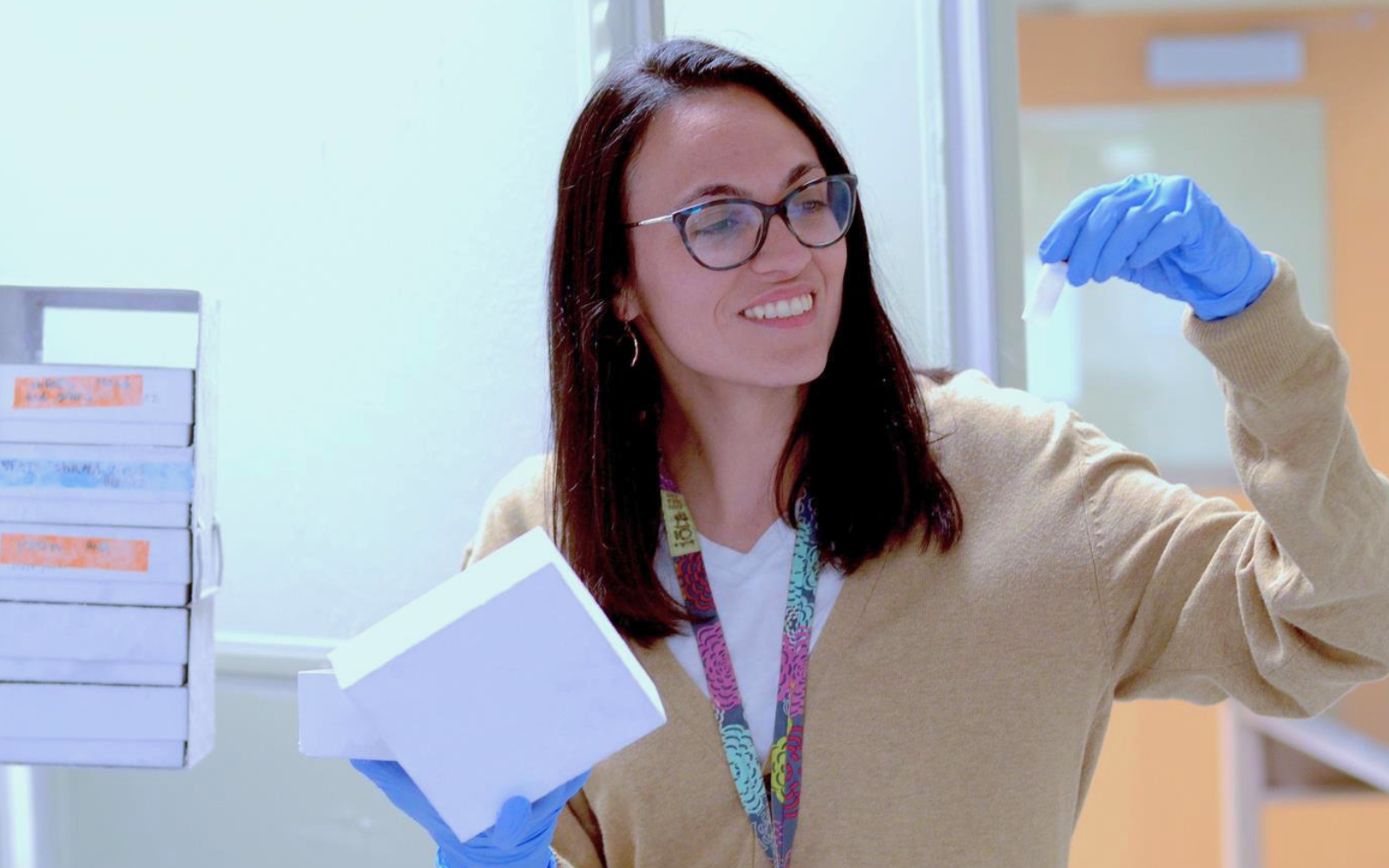
Maria Amaya, MD, PhD.