The FDA advisory on GLP-1s specifically mentions medullary thyroid cancer. What does that mean?
There are two main types of thyroid cancer. One is called differentiated thyroid cancer, which starts in the follicular cells that make thyroid hormone. The other is called C cell-derived, or medullary, thyroid cancer, which starts in the cells that regulate how calcium is handled. Medullary thyroid cancer makes up maybe 3% of all thyroid cancers, so it's a very small proportion, but that's the one you see the warnings about in the commercials. That came out of animal model studies, where they gave large amounts of these drugs, and the animal model would get what's called C cell hyperplasia. The C cells in the thyroid would grow, which is a precursor to medullary thyroid cancer.
So that’s why the FDA issued the warning?
There's no evidence saying these drugs cause C cell hyperplasia in humans, so the FDA gave it a black box warning until we know more. If you have medullary thyroid cancer or genetic testing that puts you at risk for thyroid cancer, or you have a family member who has medullary thyroid cancer, they say you shouldn't use these drugs.
What about differentiated thyroid cancer? Is there any evidence that GLP-1s could contribute to those?
There have been several studies that show no increased risk for differentiated thyroid cancer, but some of the most recent studies — metanalyses of randomized control trials of GLP-1 agonists vs. a non-GLP-1 agonist —show that overall, thyroid cancer is increased in people who take GLP-1s. The research doesn't, unfortunately, parse out whether it's differentiated or medullary, but we know the most common type of thyroid cancer, by far, is differentiated. There was a French study about a year ago that showed increased risk specifically in papillary thyroid cancer, which is the most common differentiated thyroid cancer.
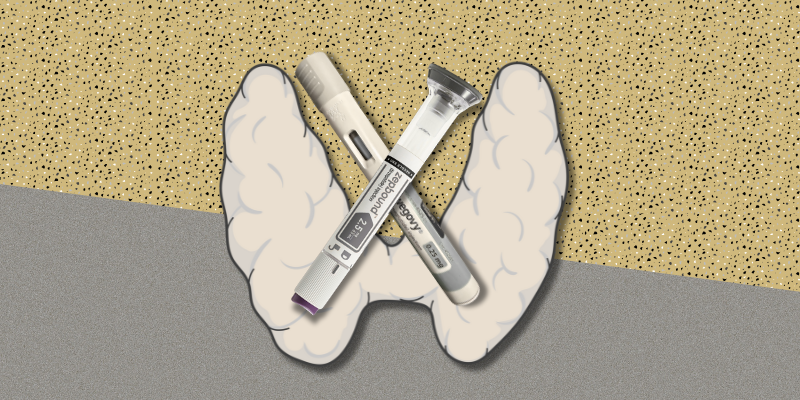
How do GLP-1s, like Zepbound or Wegovy, affect people with papillary thyroid cancer?
Papillary thyroid cancer, for the most part, is very slow-growing, kind of like small prostate cancer. Ninety-five percent of small papillary thyroid cancers — tumors smaller than 1 centimeter — don't grow or cause trouble for patients. I'm doing research on the GLP-1 connection with papillary right now, because I see patients with thyroid cancer who have obesity and they're at high risk for recurrent thyroid cancer. They might even have some metastases that are small and stable, and I want to know if we should give them this drug or not.
For papillary thyroid cancer, the most recent meta-analyses say there might be a signal there, that there might be an increased risk. For my differentiated thyroid cancer patients, I say, “If you're obese, your metabolic health is going to cause more harm than an indolent thyroid cancer.” There is research that shows that even if you slightly increase the thyroid cancer risk, you decrease the overall risk of all types of cancer if you reduce somebody's weight and get them to a metabolically healthier weight. And that doesn’t even take into account cardiovascular disease and diabetes.
So you advise patients with papillary thyroid cancer that it’s OK to take GLP-1s?
For my medullary patients — the ones with the FDA warning — I'm still saying, until we have better data, I can't recommend it. But for papillary thyroid cancer, the evidence is mixed. I think medically, it's safe, because we can watch their tumor marker. We can watch imaging. And if something looks like it's growing, we just stop the medication and take care of it. Cancers feed off the fuel of bad metabolism, so if you improve that, you're actually going to help people.




.png)