More than 15 million Americans — nearly 5% of the population — have been diagnosed with an autoimmune disease. These conditions include rheumatoid arthritis (RA), Type 1 diabetes, multiple sclerosis, lupus, psoriasis, and others, and occur when the immune system mistakenly attacks part of the body.
Treatment is not always straightforward. With RA, as many as half of people diagnosed with the condition don’t respond to the limited number of treatment options available. For Fan Zhang, PhD, that challenge has been the foundation for her lab at the University of Colorado Anschutz School of Medicine.
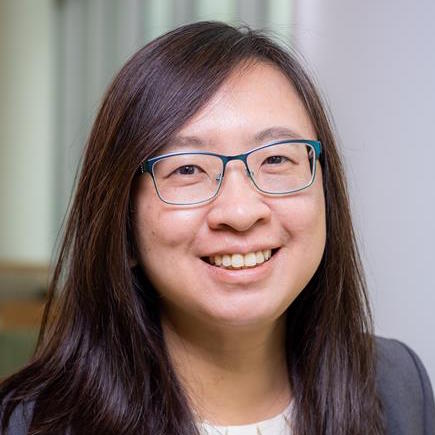
Zhang, an assistant professor of rheumatology and a faculty member in the Department of Biomedical Informatics, focuses on single-cell data-driven computational method development and systems immunology. The terminology can be a mouth full, she admits, but those methods paired with artificial intelligence (AI) are helping lead the way toward potential new treatment options for RA and other autoimmune diseases.
“The goal in our work is to identify new biomarkers for drug targets, and to do that we use cutting-edge single-cell technologies and create advanced data tools that can dig into huge amounts of data,” says Zhang, who this summer received $2 million from the National Institutes for Health (NIH) R01 grant to use AI and single-cell technologies to study novel immune cell interactions that could be helpful in discovering new RA therapeutic strategies.
The Zhang Lab also recently received $500,000 in NIH funds to focus on women’s health and autoimmune diseases.
These grants, and other awards Zhang has earned over the years, are instrumental in pushing research forward with a goal of creating life-changing treatment options for millions of patients.
Why data and technology matter
The road to new autoimmune condition treatments is paved with data – and lots of it. More high-dimentional sequencing data means researchers can place patients into different subgroups based on immunology and genomics. This ultimately results in a more personalized approach to treating conditions such as RA.
“Without more data we cannot describe anything with clarity,” Zhang says. “Single-cell technology gives us that depth to achieve getting the necessary amount of data, and it’s high-dimensional to see the full picture.”
→ Learn more about CU Anschutz School of Medicine's research community
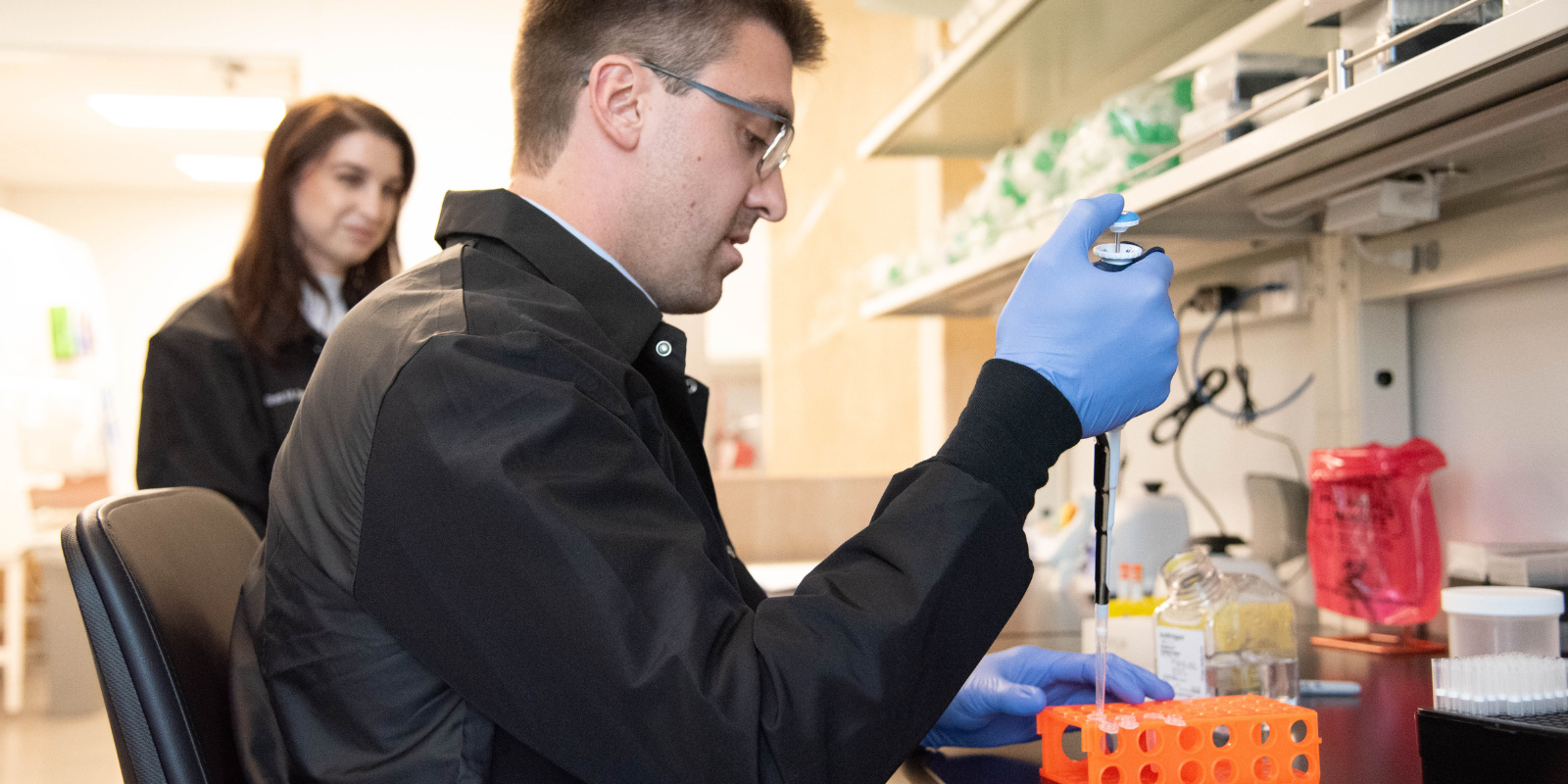
Single-cell transcriptomics — the Zhang Lab’s specialty — is used to study gene expression of individual cells from patients. Doing so unveils important information about a single cell’s composition, how it’s developed, and the role it plays in health and disease. Collecting that data on many single cells, sometimes across the body, gives researchers a more complete picture of what’s happening and potentially why.
In a 2023 research paper published in Nature, Zhang and colleagues from the CU Anschutz described omics efforts that yielded a cell atlas revealing six different subgroups of RA based on their cellular makeup. Then, in 2025, her lab and collaborators published another study in the Journal of Clinical Investigation identifying immune signatures that may point to new ways to prevent the disease.
Zhang describes these efforts as a starting place for precision medicine discovery. Now, the data is there for researchers to build on and attempt to create treatments that are better suited for specific patient populations within RA.
“Sometimes the current treatment strategy for RA just does not work for certain patients,” Zhang says. “With single-cell sequencing, we can stratify the patient heterogeneity based on their unique molecular profiles, which helps guide more personalized care.”
With the recent NIH grant, Zhang and her collaborators — CU rheumatology professor V. Michael Holers, MD, and researcher Laura Donlin, PhD, from the Hospital for Special Surgery in New York — will work together to integrate cutting-edge single-cell spatial transcriptomics with advanced AI methods to uncover novel immune cell interactions. These efforts will focus on the connection between pathogenic macrophage subsets and complement activation pathways.
“This project provides a direct translational path, bridging single-cell spatial technologies, AI, and systems immunology to identify mechanisms that can drive the development of personalized treatments for RA, with broader relevance to other immune-mediated diseases and cancer,” Zhang says.
Complexities between sex and disease
While Zhang and her lab staff have taken a keen interest in RA, their efforts are not contained to just one autoimmune disease. The research can be translated to other conditions as well and help decipher the differences men and women face with these diseases.
The grant from the NIH’s Office of Research on Women’s Health is focused on deciphering sex-biased phenotypes. Zhang and her lab will use the funds to continue developing novel computational AI methods that may help unravel the complex interactions between sex and autoimmune disease.
This work is especially important as women are often more prone to developing autoimmune diseases than men. In RA, women are three times more likely to develop the condition and experience more intense symptoms.
However, men seem to have a higher mortality rate. Diving into this data and understanding what immune cells and genetics are doing and why could be helpful for all patients with those conditions.
Help from AI
Making a difference in patient’s lives will ultimately come with the help of AI technologies.
“In medicine, there’s a bottleneck of what do to for precision medicine. When these treatments that are readily available don’t work, there’s a need for something else,” Zhang says. “What we’re doing is exciting because AI helps us to integrate data from multiple angles so we can move along the process faster and with greater accuracy.”
To make it all work, Zhang must have a foot in many worlds: Computational AI, immunology, and medicine. It’s almost like speaking different languages, says Zhang.
→ More research: How a clinical researcher is learning more about rare kidney disease
“Being a primary investigator requires I know the biology, not just the coding. I understand the translational medicine need and then I can write a proposal that covers all of that,” she says.
It helps that the CU School of Medicine is a collaborative environment, Zhang adds.
“I came here and I learned more about disease by being in the Department of Medicine, but I’ve also been able to apply my computational skills to address clinical needs. I appreciate our institution a lot because it’s diverse and supportive,” she says.